
Issue 242 – 2 April 2026
|
Welcome to Practice Connect, a fortnightly update for practice managers, principals, nurses and administration staff on relevant issues, upcoming events and education. |
Medicare and MyMedicare updates
MyMedicare Minute from the Department of Health, Disability and Ageing
|
MyMedicare Minute – Week Three One key message. One minute to read. |
|
MyMedicare is voluntary and patients can continue receiving care as usual whether they choose to register or not.
What practices need to know
Resources We encourage you to utilise the Department of Health, Disability and Ageing or Services Australia websites for more information. |
Practice news
Hepatitis B resources to support people from multicultural communities

Resources have been developed to assist GPs and practice nurses with supporting people from multicultural communities, who are at a higher risk of Hepatitis B.
The Hep B – WA GP Pack includes practical, ready-to-use resources for starting the conversation about Hepatitis B testing, reassuring patients about migration concerns, and guiding patients towards appropriate follow-up care.
The resources are part of the Hep B Get Tested community awareness campaign that includes videos for Chinese and Filipino communities.
For free hepatitis B clinical support, call HepLink on 1800 437 222 or email heplink@hepatitisaustralia.com
Free clinical support for hepatitis available via HepLink

HepLink is a free, confidential service that links health professionals and patients to hepatitis information, support and treatment.
Health professionals can access in‑consultation support through HepLink’s Nurse Navigator service, which provides real-time guidance on clinical decision making, treatment pathways and managing complex patient needs.
HepLink can also assist with referral and linkage pathways for patients living with hepatitis by finding suitable s100 prescribers, specialists, pharmacies and social services.
For further information, visit the HepLink website, call 1800 437 222 or email heplink@hepatitisaustralia.com
Medicare Mental Health SmartForm now available in HealthLink

GPs and other health professionals can now refer patients to the Medicare Mental Health phone service using the HealthLink SmartForm, directly from within the patient’s record.
E-referrals bring significant benefits for referrers and consumers, including:
- No faxing or printing.
- Faster processing = faster access for patients.
- Instant confirmation that referrals have been received + referral tracking.
How to refer:
- Within your patient’s clinical information system (CIS) navigate to the HealthLink icon. The position of this may differ dependent upon your CIS.
- Select Medicare Mental Health 1800 595 212 HealthLink SmartForm.
- Select your Primary Health Network (PHN)
- Country WA PHN.
- Perth North PHN.
- Perth South PHN.
- Complete and submit the form.
- Check your results inbox for status updates.
To locate your PHN use the Primary Health Network (PHN) locator map | Australian Government Department of Health, Disability and Ageing.
For step by step guides on how your clinical information system interfaces with HealthLink please navigate to HealthLink.
For practices that do NOT have access to HealthLink, the External Referral Form can be used.
For direct HealthLink support contact 1800 125 036 helpdesk@healthlink.net or contact Practice Assist on 08 6278 7900 or via email practiceassist@wapha.org.au
New campaign and staff education to increase syphilis awareness
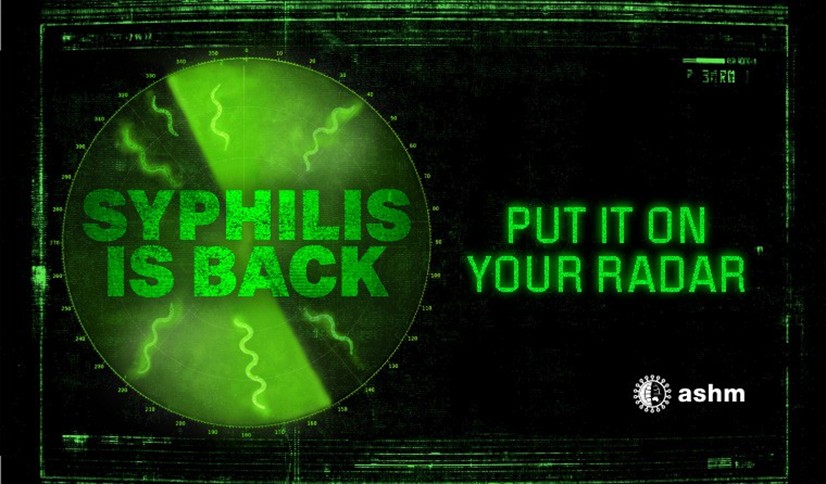
Infectious syphilis case numbers in Western Australia (WA) have surged by almost 300 per cent over the past 10 years, from 162 in 2015, to 774 in 2025. All of WA is now a declared outbreak area.
The new ASHM Stop Syphilis campaign has been launched to increase syphilis awareness amongst general practice teams, with the key message being ‘Syphilis is back, put it on your radar’. The campaign includes an excellent syphilis conversation guide to assist with bringing syphilis into every day consultations and encouraging testing, and to help educate your patients about this infectious disease.
Additional staff and patient education options include:
- Consider doing a practice education session on syphilis with your colleagues, using the ASHM Stop Syphilis campaign resources and local data.
- The WA Notifiable infectious disease dashboard contains real-time information about syphilis notifications broken down by sex, age-group, region and Aboriginal status. It is a great resource to help discussions with patients and colleagues about syphilis.
- Display posters and patient education materials in your waiting room, you can find out how to order resources from the “ordering resources” page on the WA STI and BBV guidelines page.
The surge in overall rates of infection is also reflected in increasing cases of congenital syphilis, a preventable cause of stillbirth and neonatal and lifelong complications. Read more about Syphilis and affected babies – Why syphilis needs to be on your radar in the latest edition of GP Connect.
Disaster recovery and general practice

Recent disasters across Western Australia have shown that recovery can last months or years after the immediate incident has passed. Communities continue to experience disruption, displacement, trauma and increased health needs long after initial response operations end.
During these recovery periods, general practices are a critical point of stability for communities. Practices may see increased demand for chronic disease care, mental health support, medication continuity and care coordination, whilst also managing the impact of disasters on their own staff, premises and systems.
Now is the time for practices to:
- Review disaster and business continuity plans with recovery in mind.
- Prepare for potential increases in patient demand following disaster events.
- Support staff wellbeing during extended recovery phases.
By practices planning for recovery, not just response, it will help communities heal, adapt and rebuild after disasters, while protecting their own sustainability and workforce.
To learn more about the phases of disaster, you can complete our eLearning course which includes information on WA Emergency Management frameworks and what general practice can do in each phase.
eLearning can be accessed here – Building Capacity in Disaster Preparedness and Response for General Practice – WAPHA
Immunisation and cancer screening updates
2026 GP Influenza Grant Program (WA): Up to $2000 to support your clinic’s flu vaccination efforts

Eligible general practices (GPs) and Aboriginal Medical Services (AMS) in Western Australia can access a one-off grant payment of up to $2000 through the 2026 GP Influenza Grant Program, provided by the Government of Western Australia Department of Health, to help offset costs associated with influenza vaccination program activities delivered during May and June 2026.
To be eligible, participating practices must:
- Register by 5.00pm AWST 30 April 2026.
- Provide a minimum number of influenza vaccinations across May and June 2026:
- Perth metropolitan area: at least 50 influenza vaccinations.
- Country WA locations: at least 20 influenza vaccinations.
From 1 July 2026, registered GPs and AMS will be able to submit a claim. Practices will be asked to demonstrate the following activities undertaken during May and June 2026:
- Promotional activities (for example SMS reminders, email campaigns, patient letters, external signage, or social media posts).
- Clinic schedules showing extended hours or weekend availability, where applicable.
- A short summary of challenges encountered, and solutions implemented to support future quality and process improvement.
Registration for the 2026 GP Influenza Grant Program
GPs and AMS are invited to register by completing the registration form using the unique link provided to the practice via email from the Government of Western Australia Department of Health.
Important: The survey link is unique to your practice and should not be forwarded.
If more than one practice is linked to the same email address, you will have received separate emails, each with its own individual survey link.
If your practice does not intend to participate, respond “no” to Question 1 in the form to prevent reminder emails.
Registrations close: 5.00pm AWST 30 April 2026
Claims open: 1 July 2026
For queries about the 2026 GP Influenza Grant Program, contact: influenza.reimbursement@health.wa.gov.au
Checking expiry dates on swabs and LBC medium for cervical screening
The checking of expiry dates on swabs and liquid-based cytology (LBC) medium for cervical screening is one of the most practical ways to avoid failed cervical screening specimens.
The self-collection swab and the LBC medium vial, whether ThinPrep® (Hologic) or BD SurePath™ all carry manufacturer expiry dates that must be checked before every collection.
There has been a high number of rejected samples recently due to expired stock; a recollection is the only remedy once an expired vial has been processed.
Practical tips for your practice:
- Rotate stock so older kits are used first.
- Assign a staff member to check expiry dates and re-order cervical screening test (CST) consumables monthly.
- Do not store kits in areas subject to temperature extremes (e.g. car boots, near windows, in storerooms adjacent to heating/cooling units, or in cold rooms).
- Never apply labels over the swab type code or expiry date on the COPAN swab – these must remain visible for laboratory processing.
Expired vials cannot be processed and will require a recollection appointment – an inconvenience that is entirely preventable.
New SKAI resource: Supporting your conversations with parents about HPV vaccination to improve adolescent uptake

As school vaccination programs roll out across Australia, a new Sharing Knowledge about Immunisation (SKAI) conversation guide is helping providers engage confidently with parents and carers about the importance of timely Human Papillomavirus (HPV) vaccination in adolescents.
HPV vaccination coverage among Australian adolescents has continued to decline since the onset of the COVID-19 pandemic, with the greatest drops occurring between 2023 and 2024 – falling to 81.1% in girls and 77.9% in boys in 2024.
Developed as part of the evidence-based SKAI communication suite, the ‘Talking with parents about human papillomavirus (HPV) vaccination’ conversation guide is designed to help providers engage in confident, respectful and supportive conversations with parents and carers who have questions or concerns about adolescent HPV vaccination, including when sensitive topics arise.
Access the new guide here.
NCIRS influenza webinar videos now available
Recordings of the National Centre for Immunisation Research and Surveillance (NCIRS) webinar ‘Influenza vaccination in 2026: a new era of protection’ held on 5 March 2026 can now be viewed online.
The session was hosted by NCIRS Director Professor Kristine Macartney and covered recent trends in influenza burden and vaccine coverage, as well as important changes to this year’s national seasonal influenza program.
The webinar also addressed common questions about the intranasal live attenuated influenza vaccine, FluMist, which is available for the first time in Australia for children and adolescents aged 2 to less than 18 years.
The intranasal vaccine is available on the private market for children across Australia, but can also be accessed for free through the state-funded programs for children aged 2 to less than 12 years in Western Australia.
Watch the webinar here.
Education and events
Immunisation – Winter Wellness Webinar
Presented by WA Primary Health Alliance
14 April (7pm to 8pm)

In recognition of the crucial role of GPs and vaccine providers in educating patients, and ensuring vaccine coverage for all ages, WA Primary Health Alliance invites you to join Professor Paul Effler and Professor Chris Blyth as we discuss the following topics:
- The implementation strategies for the 2026 influenza program.
- The eligibility criteria for older adults, pregnant women and infants in the 2026 RSV program.
- The distribution process and availability of the immunisations.
- The new COVID-19 vaccine ATAGI guidelines.
To find out more, view the flyer and register today.
Webinar two: Refugee health in primary care
Presented by WA Primary Health Alliance and WA Health
22 April (6pm to 7pm)

Join us for the second webinar in a six-part series about refugee health in primary care, presented in conjunction with WA Health.
This event will provide information about cultural and language considerations and the provision of trauma-informed care.
To find out more, view the flyer and register today.
Webinar: Early detection and management of chronic kidney disease (CKD)
Presented by WA Primary Health Alliance and Kidney Health Australia
23 April (6pm to 7pm)
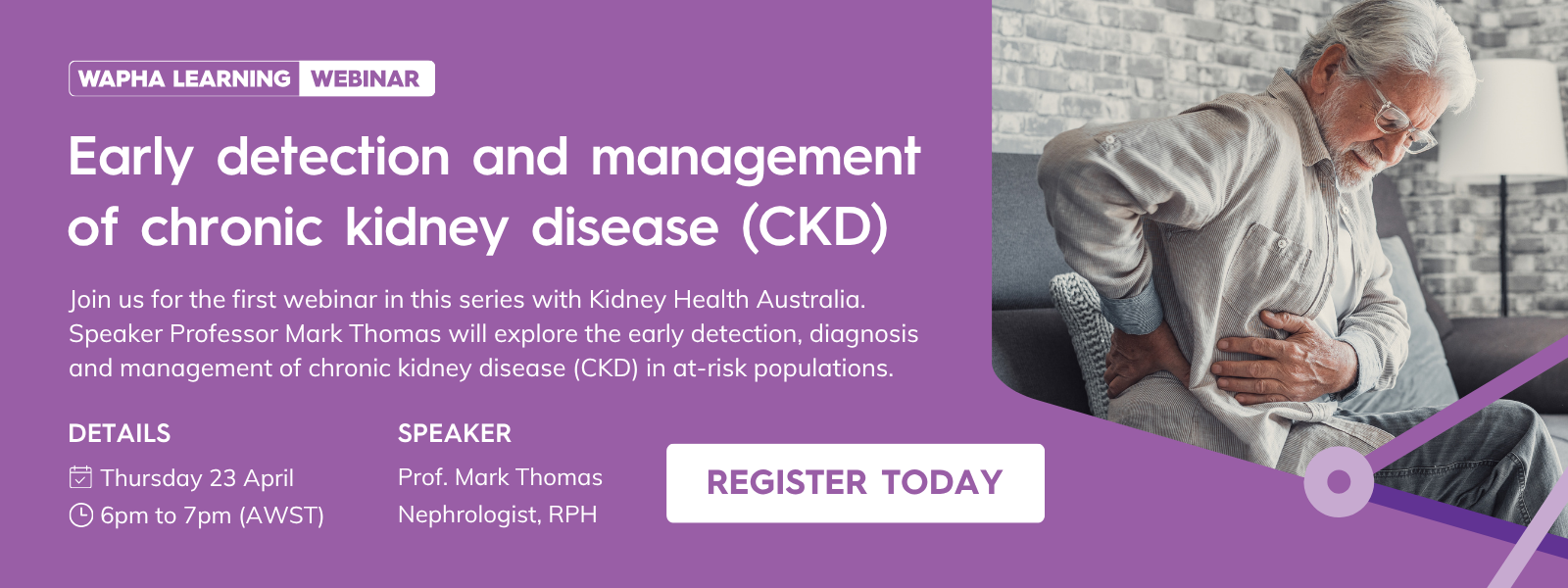
Join us for the first webinar in this series with Kidney Health Australia.
Guest speaker Professor Mark Thomas will explore the early detection, diagnosis and management of chronic kidney disease (CKD) in at-risk populations.
To find out more, view the flyer and register today.
Preventative Health Forums – Strengthening immunisation and cancer screening in general practice
Presented by WA Primary Health Alliance
6 May and 13 May (6pm to 9pm)

WA Primary Health Alliance invites practice nurses in Perth South and Perth East to attend our Preventative Health Forums.
These face-to-face events will provide information about the National Immunisation Program (NIP), vaccine safety and administration, and the national cancer screening programs.
To find out more, view the flyer and register for the Perth South Forum or the Perth East Forum today.
Other Webinars, Events & Workshops
Acknowledgement
WA Primary Health Alliance acknowledges and pays respect to the Traditional Owners and Elders of this country and recognises the significant importance of their cultural heritage, values and beliefs and how these contribute to the positive health and wellbeing of the whole community.