
Issue 230 – 2 October 2025
| Welcome to Practice Connect, a fortnightly update for practice managers, principals, nurses and administration staff on relevant issues, upcoming events and education. |

New Bulk Billing Incentive and Bulk Billing Practice Incentive Program Calculator released for practices and GPs

Changes to bulk billing incentives from 1 November 2025 will expand the eligibility of bulk billing incentives to all Australians with a Medicare card.
Currently, general practitioners (GPs) only receive Medicare bulk billing incentives if they bulk bill children under 16 years old and Commonwealth concession card holders.
Additionally, from 1 November 2025, practices can choose to register and participate in the Bulk Billing Practice Incentive Program (BBPIP) and will equally share in the additional incentive payment of 12.5% of Medicare Benefit Schedule (MBS) billings for eligible services.
A new calculator has been released for general practice owners, managers and individual general practitioners to estimate annual earnings from Medicare Bulk Billing Incentives (BBIs) and the new Bulk Billing Practice Incentive Program (BBPIP), starting 1 November 2025. Access to the Bulk Billing Incentives Calculator can be obtained here.
A Bulk Billing Incentives Calculator User Guide is also available.
The calculator uses data to build an average annual provider and practice payment estimate for BBPIP MBS eligible services for your practice type and location. The payment model can be used as a baseline to estimate if you will benefit from joining BBPIP.
To get the most accurate estimate, have these details handy before you commence using the calculator:
- Select your role as a General Practitioner (GP) or a Practice Manager (or equivalent)
- Practice location by Modified Monash Model (MMM) classification
- Percentage of billings paid to the practice
- Billing type – bulk billing only, mixed billing or private billing
- Number of BBPIP MBS eligible services provided per year
- Percentage of BBPIP MBS eligible services provided to concession card holders or children under 16 years old
- Your bulk billing rates, average privately billed fees and annual proportion of BBPIP MBS eligible service types, including:
- Short (level A)
- Standard (level B)
- Long (level C)
- Extended/Prolonged (level D/E)
- Management plans and reviews
- Other BBPIP MBS eligible services
These details can be found in your practice management system. Please refer to the User Guide for step-by-step instructions to support use of the calculator.
Additional resources including fact sheets and videos are available at here.
An Expression of Interest (EOI) form is also available here for providers that intend to join the Bulk Billing Practice Incentive Program. Practices that complete the EOI form will be mailed communications material for their practice to display from 1 November when they register for BBPIP.
Further details and instructions on how to register for BBPIP will be provided soon, and registration for BBPIP will be available from 1 November 2025.
To participate in BBBPIP, practices will need to be registered for MyMedicare. Instructions on how to register for MyMedicare are available on the Services Australia Health Professional Education Resources website.
Participation in BBPIP is voluntary for practices. If a practice chooses to participate, all general practitioners at that practice must bulk bill all eligible services.
For practices continuing to operate a mixed billing model, the RACGP has materials for practices to help plan and communicate their billing arrangements to patients.
- RACGP – Optimising your billing strategy
- RACGP – Guide to introducing mixed billing in your practice
For information or support on the Bulk Billing Practice Incentives or MyMedicare please contact the Practice Assist Help Desk on 08 6278 7900 or via email practiceassist@wapha.org.au
Better Access Mental Health Program Changes – New fact sheets now available
From 1 November 2025, changes will be made to the Better Access to Psychiatrists, Psychologists and General Practitioners Initiative through the Medicare Benefits Schedule, subject to the passage of legislation. These changes will enhance continuity of care by linking the preparation of a Mental Health Treatment Plan (MHTP), referrals for treatment, and reviews of a MHTP to either a patient’s General Practitioner (GP) or Prescribed Medical Practitioner (PMP) at a patient’s MyMedicare practice or their usual medical practitioner.
New fact sheets have now been released with an overview and information for general practitioners and allied health providers. Click here for the new fact sheets.
Further information will be available as it is released closer to 1 November 2025.
If you would like further assistance with the upcoming changes please contact Practice Assist on 08 6278 7900 or via email practiceassist@wapha.org.au

Prepare your practice and patients for the high-risk natural season

Western Australia is entering a high-risk natural hazard season which includes bushfires, cyclones, heatwaves, thunderstorms, and the wet season.
General practices play a vital role in supporting communities during such events and it is timely to prepare your practice and your patients.
Prepare your practice:
- Review and complete your Emergency Response Planning Tool. Consider things like power outages that impact cold chain management, access to patient records, air conditioning, and other key considerations.
- Review your business continuity plan and ensure all information is up to date.
- Promote the use of digital health tools, such as My Health Record, which can assist in patient care during emergency situations.
Assist your patients:
Encourage patients who are at most risk to prepare:
- Plan to have sufficient medications on hand,
- Suggest that they establish a reliable location to go to in the event of evacuation,
- Encourage patients to review emergency plans and,
- Direct patients to the most appropriate source of information (see below).
Who is most at risk?
- Children, older people, pregnant women, people experiencing homelessness and people living with a disability.
- Patients living with chronic conditions and/or on multiple medications.
- Patients that are unable to adapt due to dementia, disability, substance abuse, pregnancy, breastfeeding or other factors.
- Those impacted by environmental factors, e.g. outdoor workers.
- Aboriginal population living in remote areas.
For up to date information, see below resources:
- Emergency WA – State-wide incident information
- RACGP – About ERPT
- Practice Assist – Free ERPT resource
- ABC – Live emergency information
- Bureau of Meteorology – Weather data
- Main Roads – Road closures and diversions
- DFES – Emergency prevention and preparedness
WAPHA Primary Care Reporting Portal – Self Service Administration now available

The Primary Care Reporting Portal (PCRP) has been developed by WA Primary Health Alliance (WAPHA) to manage and provide timely, safe, secure and reliable access to your practice’s information.
The PCRP is designed for general practices who share data with WAPHA via Primary Sense, and will give on demand access to the following:
- My Practice Data Report – This is a data summary report for practices sharing data with WAPHA for PIP QI and for practice quality improvement activities.
- News Feed – This feed will keep you up to date with the latest news on the Primary Sense tool and other information specific to general practice.
PCRP-Self Service Administration is now available. This additional functionality will enable practices to manage access to their data reports through the PCRP. All existing users will be made nominated administrators, who will be responsible for adding additional users to the PCRP and linking to the practice’s My Practice Data Report. The ongoing maintenance of user access will be the responsibility of the nominated administrators for the practice.
Resources
There is no change to how you log into the PCRP for users who have existing access.
For further information or assistance with the Primary Care Reporting Portal or Primary Sense tool, please contact Practice Assist on 08 6278 7900 or via email practiceassist@wapha.org.au
Urgent Care Clinics tender opportunity now open

WA Primary Health Alliance, in conjunction with the Australian Government Department of Health, Disability and Ageing, is seeking expressions of interest from general practices to participate in the next tranche of Medicare Urgent Care Clinics for Western Australia.
These clinics will be situated in, or near, Geraldton, Mundaring and Yanchep.
Accredited general practices and Aboriginal Community Controlled Health Services located in these areas, as well as nearby suburbs, are eligible to apply, provided they can satisfy all relevant criteria. Tender applications close 7 October 2025.
To find out more and submit your proposal, visit our Tenders webpage.

Supporting older patients to manage their electronic prescriptions

A token management tool such as Active Script List (ASL) can help enable patients (especially older patients with multiple medications) to manage their electronic prescriptions (eScripts) and reduce the workload associated with lost prescriptions.
Once the patient registers at their preferred pharmacy, eScripts and their repeats are automatically added to their ASL. Patients no longer need to keep track of each eScript token and can walk into any participating pharmacy to dispense their medicines.
Patients can choose for their medicines not to be added to the ASL at the point of prescribing and GPs can manage these requests via their clinical software.
Visit the Australian Digital Health Agency website for information and resources for prescribers or patients.
The WA Primary Health Alliance (WAPHA) Digital Health team is also available to support practices with troubleshooting eScript issues. Contact Practice Assist on 08 6278 7900 or via email practiceassist@wapha.org.au
Supporting older patients who need intensive assistance to aged care and other supports
The Care Finder program can support your older patients who are not able to arrange My Aged Care and other support services (without intensive support) and do not have family members or friends who can help.
The service is available to people 65 years or older (50 years for Aboriginal or Torres Strait Islander people) or 50 years or older on a low income and homeless or at risk of being homeless who:
- Need intensive support to understand and access aged care services as well as to connect with any other supports they need, such as health, housing services, and social supports.
- Could otherwise fall through the cracks due to isolation, communication or cognitive issues, or a history of past experiences with institutions or government.
WA Primary Health Alliance (WAPHA) has commissioned care finder service organisations in its three Primary Health Networks (PHNs) to form part of the national network of care finders who support improved integration between the health, aged care and other systems at the local level.
Patients can be directed to the fact sheet and list care finder organisations in Perth North, Perth South and Country WA PHN regions on the My Aged Care website.
Education and training on the care of older Australians
WA Primary Health Alliance (WAPHA) supports the professional development of health professionals with our online learning modules, webinars and events.
In partnership with WA Health, WAPHA has developed the following online modules supporting integrated, high quality care of older Australians:
- Ageism Online Learning Module
- Recognising, Responding and Reporting the Abuse of Older People
- Medication Management E-Learning
More information and links to education and other resources are available on the WAPHA website.
New sensory loss project resources available
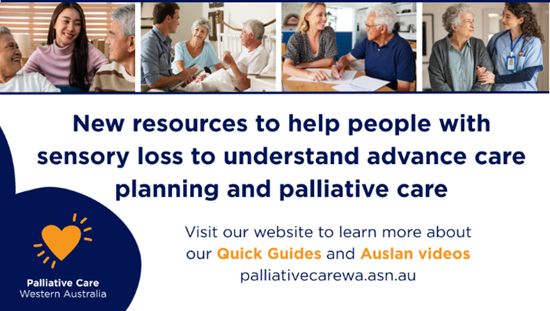
New resources aimed at enhancing access to advance care planning for those with sensory loss are now available. Developed in collaboration with Palliative Care WA, the resources include a series of quick guides, reports and Auslan videos.
“The outcomes of this project will enhance access to advance care planning and reduce barriers experienced by people living with sensory loss. It has been a privilege to be part of this work, and I am excited to watch how it evolves.” – Tish Morrison, Activity Lead – Palliative Care at WAPHA.

Needle free-flu vaccine for children next year

The WA Department of Health has announced that children aged between two and under 12 years old will have access to a needle-free alternative to the traditional injectable influenza vaccine ahead of the 2026 flu season.
The intranasal vaccine is administered as a gentle nasal spray into both nostrils, making it convenient for children who experience needle anxiety.
It is safe and effective, providing the same protection against influenza type A and B viruses as currently available influenza vaccines for this age group.
More information will be available to immunisation service providers closer to the flu season.
To read the press release, click here.
New stickers for vaccines affected by cold chain breach

The WA Department of Health has produced a new sticker resource to assist practices in the management of vaccines impacted by a cold chain breach.
These stickers are designed to be affixed to boxes containing impacted vaccines.
The stickers will help:
- Clearly identify affected vaccines
- Alert providers to use affected vaccines first if they have been advised that the vaccines are viable and within expiry
- Ensure appropriate stock rotation
- Support safe vaccine administration
- Support vaccine management practices in line with cold chain guidelines.
To order the stickers, please visit Quickmail and enter the search term “Vaccine Cold Storage Stickers” into the search bar (product code: IMM-014795).
Catch-up vaccination plans
Catch-up vaccination aims to provide optimal protection against disease as quickly as possible by completing a person’s recommended vaccination schedule in the shortest but most effective time frame.
Take every opportunity to review a person’s vaccination history and give them appropriate catch-up vaccines, as needed. If a person has not received the vaccines scheduled in the National Immunisation Program appropriate for their age:
- plan and document a catch-up schedule
- discuss this planned schedule with the person who needs the vaccine or their parent/carer
Assess vaccination status based on the schedule for the National Immunisation Program, as well as for the state or territory that the person lives in.
If a person has recently moved from interstate, they may need catch-up vaccination.
For assistance with catch up plans, vaccination providers are encouraged to contact their local public health unit.
Metro practices can use the online catch up request form – which goes straight to Boorloo public health unit.
Requesting assistance on a catch-up plan at least one week prior to an immunisation appointment will ensure that the plan is ready and current for the appointment date.
WA Department of Health measles update
While Australia’s overall vaccination coverage rates are still strong by international standards, measles, mumps and rubella (MMR) vaccine coverage has decreased in recent years and fallen below the aspirational 95% coverage target.
This led the interim Australian CDC, and the Australian Health Protection Committee to urge health professionals and the community to prioritise measles vaccination.
MMR childhood vaccination coverage for 2 year olds in WA is below 90%. Western Australia has recorded 39 measles cases in 2025, compared to six in 2024.
There is currently an active measles alert in the Perth and Pilbara regions.
The National Immunisation Program (NIP) and the Western Australian Department of Health provide measles-containing vaccines for individuals most at risk in Western Australia, including:
- infants aged 6 months to under 12 months, who are travelling overseas to countries experiencing a measles outbreak (after an individual risk assessment undertaken by a medical professional), or to infants between 6 and 12 months of age if they have recently been exposed to someone with measles while they were infectious
- children at 12 months and 18 months
- individuals born after 1965 who have not already received two doses of MMR vaccine.
Providers are urged to discuss measles vaccination with their patients to ensure they are up to date with the recommended measles vaccination schedule.
As the global status of measles continues to evolve, the National Centre for Immunisation Research and Surveillance (NCIRS) has published a brand-new measles FAQ resource along with a new hub.
Designed for both health providers and consumers, the FAQ resource aligns with the Australian Immunisation Handbook measles chapter and offers a summary of current recommendations and clear answers to common questions about measles and its prevention.
National COVID-19 Vaccination Program (NVCP) ceasing clinical advice
From 19 September 2025, the National COVID-19 Vaccine Program (NCVP) ceased providing clinical advice to vaccine administrators regarding vaccine administration errors (VAEs).
Providers are requested to continue to report VAEs to the WA Vaccine Safety and Surveillance (WAVSS) system.
WAVSS is WA’s reporting service for adverse events after immunisation and is part of the National reporting hub called SAFEVAC, which provides safety advice and clinical services.
To access WAVSS, please click here.
Immunisation education opportunities
Presented by WA Health
Ongoing education
As immunisation providers, staying informed and up to date on new research and innovations, current immunisation programs, the latest practices and guidelines is essential to delivering safe and effective care.
Whether you’re looking for information about your education requirements, online learning, immunisation event recordings and presentations, the WA Health Immunisation Education webpage is your go-to resource.
Why check in regularly?
- New events are added throughout the year
- Topics cover clinical updates, vaccine safety, cold chain management, and more
- Opportunities for networking and peer learning
All providers are encouraged to bookmark the page to ensure you don’t miss out on valuable learning opportunities.
Your commitment to ongoing immunisation education helps keep our communities safe and healthy.
Access the education page here.

National Lung Cancer Screening Program engagement packs

The Department of Health, Disability and Ageing has recently sent engagement packs for the National Lung Cancer Screening Program to all general practices and Aboriginal Medical Services.
The packs include posters and information on NCSR integration, CT form tear off pads, fact sheets and brochures.
If your practice did not receive the engagement pack or you would like another pack delivered please email cancerscreeningcommunications@health.gov.au with your postal address for delivery.
BreastScreen WA eligibility
BreastScreen WA specifically targets women aged between 50 and 74 years and invites them for a free screening mammogram every two years. This is because the evidence of benefit is strongest in this age group.
Women aged between 40 and 49 years, or 75 years and older can also have a free screening mammogram through BreastScreen WA.
Screening mammograms are not effective for women under 40 years.
Screening mammography is for asymptomatic women.
Women with any breast symptoms (eg. breast lumps, nipple discharge) should be thoroughly assessed and investigated elsewhere. Referral to a screening service is inappropriate in this situation and may cause unnecessary delay in diagnosis and anxiety for women.
A negative mammogram does not alter the necessity for a full clinical assessment and investigation of a breast symptom.
More information about screening mammograms and eligibility available here.

Help inform the development of the State Government’s Older Adults Community Integrated Care Hubs

The WA Department of Health is committed to improving the care of older adults and recognises the vital role that general practitioners play in supporting patients to stay well in the community.
The State Government is establishing three Older Adult Community Integrated Care (OA CIC) Hubs. These hubs will pilot a one-stop-shop model for local older adults with chronic and complex conditions, offering a range of dedicated older adult services and facilitating access to other services needed to help them remain well and avoid preventable hospitalisations.
The WA Department of Health wants to ensure that the development of the hubs is guided by the insights and experiences of GPs who work directly with these patients. Your feedback will help shape how the hubs operate, ensuring they genuinely complement general practice, add value to your work and provide meaningful support for older adults and their families.
Access the survey here or follow the QR code below.
Survey closes on Thursday 16 October 2025

Invitation to participate in an ethically approved targeted health service survey regarding post-sepsis models of care in Australian health care settings
This study is a collaboration between two research programs. SEPSIS SUPPORT is being led by The George Institute in partnership with The Australian Commission on Quality and Safety in Healthcare, Sepsis Australia, and Clinical Excellence Queensland, with NHMRC (Partnership Grant) funding. Paediatric Models of Care is being led by Queensland University of Technology in partnership with Children’s Health Queensland, Health Translation Queensland, Clinical Excellence Queensland, Sepsis Australia, The University of Queensland, and Qld Family and Child Commission, with NHMRC Collaborations in Health Services Research funding.
Survivorship after sepsis is a national health care priority with more than 70% of sepsis survivors (45 and up) readmitted to hospital within 1-year post-discharge. Sepsis costs the health system an estimated AU$4.7 billion direct and indirect cost per annum.
This survey aims to identify what post-sepsis services exist within the Australian health system, and is aimed at health care staff who know of health services that provide:
- Follow-up post-sepsis or post-critical illness care/support after discharge from an acute care setting for survivors, parents, carers, and families.
- Services for all age groups (neonate, paediatric, adult, maternity, aged care).
- Bereavement services for those who have lost a loved one to sepsis.
Access the 15 minute online survey about your service here.

Breast Cancer Awareness Month
October is Breast Cancer Awareness month, and it is the perfect time for you to encourage your patients to “check in” when they pop in for a check-up!
“Check in” with breast health
Having regular screening mammograms is one of the best things you can do to detect breast cancer early. Routinely checking when the last screening test was completed for all patients between the ages of 50 to 74 (and even from 40 years of age) can help them keep on top of this important screening program. Booking online is easy via the BreastScreen WA – Book Online webpage.
“Check in” with breast awareness
Encourage your patients to be breast aware. What is normal for them in size, shape and feel?
If a change is noticed they should be checked out by their GP.
For information on being breast aware and what breast changes to look for, go to the BreastScreen WA – Breast awareness webpage.
“Check in” with breast health
Having regular screening mammograms is one of the best things you can do to detect breast cancer early. Routinely checking when the last screening test was completed for all patients between the ages of 50 to 74 (and even from 40 years of age) can help them keep on top of this important screening program. Booking online is easy via the BreastScreen WA – Book Online webpage.

“Check in” with breast friends
Advertise Breast Cancer awareness month in your practice and advocate for ladies to discuss breast care with their GP and their friends. Many women find comfort and strength in doing things with friends, why should breast screening be any different?
BreastScreen WA can provide FREE presentations to groups of women 40 years and over. They can also book women in for their mammograms, check when they are due, or update their details at the presentation or event.
Learn more via the BreastScreen WA – Information sessions webpage.
In the Pink!

BreastScreen WA (BSWA) is seeking support from general practices in promoting breast cancer awareness in October. This is the 24th year BSWA has run this activity with GPs. It is an opportunity for GPs and staff to “be in the pink” for breast cancer, which affects 1 in 7 women in Australia and causes 3000 deaths annually.
A gift hamper prize will be awarded to the practice with the most decorative and innovative display that promotes BreastScreen WA and breast cancer screening.
Judges are looking for:
- innovation and creativity
- use of BSWA resources (order form here)
- message about screening
- overall effort
Photographs of the winners may be published on Facebook, websites and in print media.
Please send your photos to breastscreenwa@health.wa.gov.au

General Practice in Aged Care Incentive: Your Questions, Answered
Presented by WA Primary Health Alliance
9 October (12pm to 1pm)

The General Practice in Aged Care Incentive (GPACI) was introduced in July 2024 to support GPs in delivering proactive, patient-centred care. Twelve months in, we recognise that some practices continue to face some challenges in meeting GPACI service requirements.
Join our virtual Q&A session as we cover all things GPACI. Whether you’re seeking help with service requirements, tracking and monitoring patients, setting up PRODA and HPOS, or simply want to better understand how to apply GPACI in your practice, we’re here to help.
Shared care for ADHD in children – webinar 2
Presented by WA Primary Health Alliance
22 October 2025 (6pm to 7pm)

Join us for a webinar series designed to support general practitioners with increasing their skills in identifying, diagnosing and treating children with attention deficit hyperactivity disorder (ADHD), including prescribing and monitoring stimulants.
The three webinars are accredited for 3 RACGP EA CPD hours (1 hour each webinar).
Webinar 2: Wednesday 22 October 2025
This webinar will cover the following topics:
- Co-occurring conditions with ADHD and the functional impact of ADHD.
- Non-medication approaches and psychosocial support for patients and families.
To find out more, view the flyer and register for webinar 2 today.
VAD Practitioner Training Day
Presented by NMHS Voluntary Assisted Dying (VAD) service
29 October 2025 (8.30am to 4.30pm)
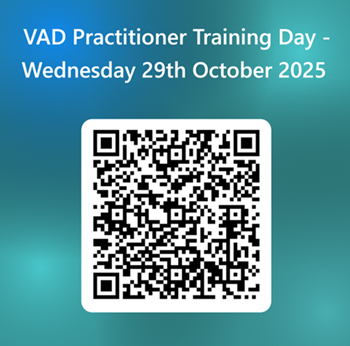
The NMHS Voluntary Assisted Dying (VAD) service would like to invite you to attend a VAD Practitioner Training Workshop on Wednesday 29 October 2025, at Sir Charles Gairdner Hospital (SCGH).
This free workshop is designed for medical and nurse practitioners interested in completing the mandatory WA VAD Approved Training, as required under the Voluntary Assisted Dying Act 2019 (WA).
Participation in the workshop provides valuable insight into the VAD process in Western Australia. This knowledge can help individuals and their teams better support their patients who may be considering or accessing VAD services. There is no obligation to practise as a VAD provider upon completion.
To register your interest and secure a spot on the day please click here or scan the QR code above. We encourage early registration due to limited availability.
Enhancing men’s and women’s health in primary care
Presented by WA Primary Health Alliance
19 November 2025 (12pm to 1pm)

Join us for a practical and engaging quality improvement (QI) webinar designed to support primary care professionals with delivering gender-responsive health care.
This webinar will cover the following topics:
- Understanding QI
- Data-driven decision making
- Gender-specific health issues
- Primary care led initiatives
- Health promotion
- Further education
To find out more, view the flyer and register today.
Free suicide prevention training
Presented by WA Primary Health Alliance
Online course

The thought of talking to someone about suicide isn’t easy, but you can learn how and it could help them get better.
For a limited time, WA Primary Health Alliance is providing fully subsidised licences to access a one-hour training course for non-clinical staff.
Developed by The Black Dog Institute, Recognise and Respond – Suicide Prevention for Everyday Life is an online course to reduce and prevent suicides in Australia. It provides the tools and confidence your staff may need to have a key conversation and respond to a friend, family member or colleague who may have suicidal thoughts.
Register now for a Clinician Assist WA live demonstration
Presented by Clinician Assist WA
Tuesday 18 November – 12:30pm to 1:15pm

Clinician Assist WA is a secure website providing GPs and other health professionals with guidance for assessing, managing and referring patients across Western Australia. It has replaced HealthPathways WA, offering the same trusted local guidance, features and functionality and remains available at no cost.
The Clinician Assist WA team will run online demonstrations facilitated by a GP Clinical Editor throughout 2025 to support users. These sessions will demonstrate how to maximise integration of Clinician Assist WA into your clinical practice. Learn key functionalities of the website and how to access condition specific tools and resources, Referral Access Criteria (RAC) (where available), GPbook Specialist Directory and visiting specialist rosters.
Sessions have been approved for 1 CPD Educational Hour with RACGP and will be held online. This will be the final live demonstration for 2025 with no further sessions planned for 2026. If you are interested, register now.
Demonstrations are open to general practitioners, general practice staff and other health professionals registered to practice in WA.
Other Webinars, Events & Workshops
| Diagnosing and Managing Youth Mental Illness in Primary Care Presented by ASHM 6 October |
| Wesley LifeForce Suicide Prevention Training Primary Care Support Staff Workshop (Online) Presented by Wesley LifeForce 7 October |
| Fracture and Injury Management Course Presented by Benchmarque Group 8 October |
| Navigating Burnout Presented by Black Dog Institute 8 October |
| Course in Wound Closure Presented by Benchmarque Group 8 October |
| BreastScreen WA visit to Beverley Presented by BreastScreen WA 9 October to 16 November |
| National Kidney Summit 2025 Presented by Kidney Health Australia 10 October |
| Wesley LifeForce Suicide Prevention Training Primary Care Support Staff Workshop (Two Rocks) Presented by Wesley LifeForce 14 October |
| Wesley LifeForce Suicide Prevention Training Primary Care Support Staff Workshop (Online) Presented by Wesley LifeForce 15 October |
| BreastScreen WA visit to York Presented by BreastScreen WA 17 October to 6 November |
| BreastScreen WA visit to Roeburne Presented by BreastScreen WA 21 October to 23 October |
| BreastScreen WA visit to Bridgetown Presented by BreastScreen WA 21 October to 5 December |
| Wesley LifeForce Suicide Prevention Training Primary Care Support Staff Workshop (Broome) Presented by Wesley LifeForce 23 October |
| Dealing with Depression Presented by Black Dog Institute 25 October |
| BreastScreen WA visit to Pannawonica Presented by BreastScreen WA 27 October to 28 October |
| Wesley LifeForce Suicide Prevention Training Primary Care Support Staff Workshop (Carnarvon) Presented by Wesley LifeForce 28 October |
| Wesley LifeForce Suicide Prevention Training Primary Care Support Staff Workshop (Geraldton 5.30pm) Presented by Wesley LifeForce 29 October |
| ACNP National Conference Presented by Australian College of Nurse Practitioners (ACNP) 29 October to 31 October |
| Wesley LifeForce Suicide Prevention Training Primary Care Support Staff Workshop (Geraldton 1pm) Presented by Wesley LifeForce 30 October |
| BreastScreen WA visit to Karratha Presented by BreastScreen WA 30 October to 22 December |
| Wesley LifeForce Suicide Prevention Training Primary Care Support Staff Workshop (Wanneroo) Presented by Wesley LifeForce 4 November |
| Wesley LifeForce Suicide Prevention Training Primary Care Support Staff Workshop (Online) Presented by Wesley LifeForce 5 November |
| Wesley LifeForce Suicide Prevention Training Primary Care Support Staff Workshop (Online) Presented by Wesley LifeForce 7 November |
| Asia Pacific Autism Conference (APAC) Presented by Autism Association of Western Australia 13 November to 15 November |
| Wesley LifeForce Suicide Prevention Training Primary Care Support Staff Workshop (Online) Presented by Wesley LifeForce 15 November |
Acknowledgement
WA Primary Health Alliance acknowledges and pays respect to the Traditional Owners and Elders of this country and recognises the significant importance of their cultural heritage, values and beliefs and how these contribute to the positive health and wellbeing of the whole community.