
Issue 228 – 4 September 2025
| Welcome to Practice Connect, a fortnightly update for practice managers, principals, nurses and administration staff on relevant issues, upcoming events and education. |

Important tips for MyMedicare for General Practices

MyMedicare is designed to create and maintain a link between patients and one preferred general practice location for ongoing care, where patients can also access their preferred GP.
To ensure your MyMedicare journey is smooth sailing for you and your patients, use the checklist below to make sure your MyMedicare setup is current. You may wish to incorporate some of these into your practice processes.
Top tips for MyMedicare for general practices
1. Register your practice for MyMedicare*
2. MyMedicare practices should setup and maintain their Organisation Register including:
- Ensure your Organisation Site Record details are correct (see Organisation Register – Health Professional Education Resources).
- Make sure providers are linked from the date the Organisation Site Record was created or the day they commenced working from the practice (this includes GPs, Registrars, Nurse Practitioners, Practice Nurses, Aboriginal Health Workers and Practitioners, see MyMedicare Registration Steps and Tips)
- Link your patients to their preferred GP in the Organisation Site Record (see MYMEDM02-Managing patient registrations)
- Keep your Organisation Register up to date when providers change at your practice (when a provider leaves or a new provider starts at your practice).
- Keep your accreditation up to date – check your accreditation record and ensure your accreditation certificate number is added correctly to PRODA (see ORGREGM06 – Amend your Organisation Site Record through HPOS – Page 8).
3. Switch on your HPOS notifications by email, and understand HPOS notifications
4. Communicate with your patients about MyMedicare registration*.
- If you are the patient’s usual practice they wish to attend for ongoing care (such as GP Chronic Conditions Management care), encourage patients to register for MyMedicare with your practice.
- If a patient prefers to visit another general practice for ongoing care, do not register them for MyMedicare at your practice. Encourage them to register for MyMedicare and attend their preferred practice- particularly for care that is ongoing care (such as GP Chronic Conditions Management Items).
*MyMedicare Registration is voluntary for both patients and practices. Patients can self-register using the MyGov app. Practices must always gain informed consent from patients for MyMedicare registration.
5. If you are receiving a MyMedicare-related error code when processing claims, check that the patient is registered for MyMedicare with your practice and check the provider linkage with the MyMedicare program is current. Noting that if you have more than one practice location, the patient needs to be registered at the location that the claim is being made.
To maintain care continuity between the practice and the patient, some MBS Items and general practice incentives are subject to a MyMedicare conditional rule requiring patients MyMedicare registration with a MyMedicare general practice.
MBS Items and Incentives linked with a MyMedicare conditional rule include:
- The General Practice in Aged Care Incentive
- GP Chronic Conditions Management Plans
- Telephone Level C and D MBS items
- Triple Bulk Billing Incentives for video and telephone consultations that are longer than 20 minutes1 (Levels C, D and E) for eligible MyMedicare patients registered with the practice.
| It is important to remember that not all claim rejections are related to MyMedicare. Co-claiming restrictions may apply. There are also long-standing MBS rules that apply to GP chronic condition management items that may result in a claim being rejected. |
You can find more information about MyMedicare here.
For further information on GP chronic condition management plans please see:
- MBS Online – Upcoming changes to the MBS Chronic Disease Management Framework
- MBS Online Explanatory Notes including AN.15.3 and AN.0.47.
For further support, please contact the Practice Assist Help Desk on 08 6278 7900 or via email practiceassist@wapha.org.au

Syphilis declared a Communicable Disease Incident of National Significance

In order to bring together resources from across the country to coordinate a strong national response, Australia’s Chief Medical Officer, Professor Michael Kidd AO, has declared syphilis a Communicable Disease Incident of National Significance (CDINS) in Australia.
In 2024 in Australia, there were:
- 5,968 cases of infectious syphilis
- 10 cases of congenital syphilis, resulting in 4 infant deaths.
This year, as of 12 August, Australia has already recorded
- 3,647 cases of infectious syphilis
- 11 cases of congenital syphilis, leading to 4 infant deaths.
In Western Australia, 479 cases of infectious syphilis and 3 cases of congenital syphilis have been recorded in 2025.
STI testing guidelines for asymptomatic pregnant and post-partum women in WA include:
|
The Australian Government Department of Health, Disability and Ageing (DHDA) will continue to work closely with the states and territories, and other key stakeholders, to coordinate the response and progress key actions in the latest National Syphilis Response Plan.
More information from DHDA is available at:
Visit the WA Department of Health Silver Book for further information including clinical presentations, investigations and notification.
Contact syphilisresponse@health.gov.au with questions about the syphilis CDINS.
Tender open for establishment of After Hours General Practice Services
A tender is now open for the establishment of after hours general practice (GP) services in priority locations across Western Australia.
General Practices accredited against the RACGP Standards for general practices, are invited to submit an application for the tender with applications closing 2pm, Thursday 25 September 2025. It is important that applications meet the location and other minimum requirements.
About After Hours in General Practice
WA Primary Health Alliance is commissioning after hours in general practice services with funding provided by the Department of Health, Disability and Ageing. The new services will be located within existing facilities, such as general practices.
Commissioned after hours GP services will be expected to offer routine general practice appointments after hours, including diagnosis, treatment, screenings, vaccinations, mental health advice, family planning, referrals, and chronic disease care. They will also provide treatment for non-urgent and non life-threatening illnesses.
The services will operate a minimum of two days a week during the after hours period and be staffed with doctors and nurses with training and experience in general practice care.
If your practice meets the minimum requirements and you wish to apply, please visit Tender – WAPHA for more details on the application process.
As this is part of a competitive tender process, all queries must be sent to tenders@wapha.org.au
Help inform an improved referral submission pathway for WA public outpatient services
The Department of Health is reviewing the referral submission pathways for WA public, medical-led outpatient services, and feedback is being sought from GPs and Nurse Practitioners.
They invite you to share this brief, online survey with your practice staff.
The survey aims to gather valuable feedback on:
- How referrals are currently submitted,
- Awareness of available public outpatient services,
- Challenges or barriers encountered in the referral process.
The insights collected will help inform improvements to referral submission pathways and ensure patients are directed to the most appropriate care.
The survey takes just 5 minutes to complete and will close on Wednesday 10 September 2025.
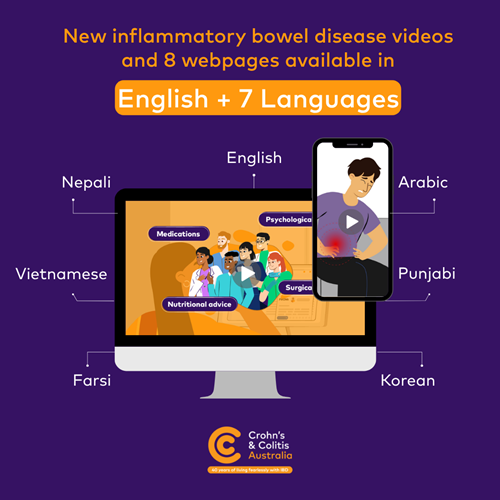
New inflammatory bowel disease videos and resources available in 8 languages
Crohn’s & Colitis Australia (CCA) has released a suite of multilingual resources to support awareness and management of inflammatory bowel disease (IBD).
Two new educational videos and eight webpages are now available in English, Nepali, Korean, Arabic, Vietnamese, Mandarin, Punjabi, and Farsi.
- The new “What is IBD?” video explains Crohn’s and colitis in simple language, highlighting common symptoms and guidance on when and how to seek help.
- The “Managing my Crohn’s or colitis” video helps people with IBD get the most out of their healthcare and develop skills to communicate effectively with multiple healthcare professionals.
- CCA’s 8 educational webpages now include Korean and Nepali alongside 5 other languages.
Watch the “What is IBD?” video in English here.
Watch the “Managing my Crohn’s or colitis” video in English here.
Explore all resources in other languages here.
DVA’s new quick guides to support allied health providers
Department of Veterans’ Affairs (DVA) has released two new quick guides designed to help allied health providers’ understanding of DVA’s healthcare arrangements and processes.
The Allied Health Treatment Cycle quick guide provides clear information on what DVA’s allied health treatment cycle arrangements mean for veterans and providers, including eligibility and referral requirements.
The Rehabilitation Appliances Program (RAP) quick guide provides information about the program, including what items are available, who can prescribe, how to apply and eligibility requirements.
You can find more information tailored to your profession on the DVA website.
If you have any questions or feedback on the new quick guides, please email providerengagement@dva.gov.au

Quality improvement in 75+ health assessments

The 75+ health assessment is an opportunity for a practice to proactively provide patients in this age group with a comprehensive, personalised health and wellbeing check. It ensures that these patients’ chronic conditions are well managed, preventative health lifestyle measures are in place, and social wellbeing is looked after. Patients receive the opportunity to ask questions or receive advice relating to their care, supporting independence and preventing hospitalisation for these patients.
According to the Australian Institute of Health and Wellness, in 2023 31.3% of people over 75 self-assessed their overall health as fair or poor. This demographic, whilst making up 17% of the population, accounted for 44% of hospitalisations or 52% of hospital stay days.
Medicare funds a 75+ health assessment annually. As long as the service meets the criteria set out in their explanatory notes (Note AN.0.39 | Medicare Benefits Schedule), practices have the opportunity to shape the assessment and service offering in the best way to benefit their patients and to complement the skills and capabilities of the practice. These considerations can form the basis of many Quality Improvement (QI) activities, both qualitative and quantitative. Here are some suggestions for QI activities:
Qualitative Health Assessment QI Activity suggestions:
- Improve health assessment offerings by bringing in other members of the multidisciplinary team.
- Use the health assessment to identify care requirements for chronic health conditions.
- Increase the assessments offered to target particular cohorts such as by using the ‘Frailty Care Management’ report on Primary Sense to identify patients at high risk of poorer health outcomes and offering additional frailty testing.
- Compile a compendium of community services that may benefit patients’ social wellbeing, as well as health outcomes (e.g. Probus clubs, Men’s sheds, Senior Citizen’s Centre events and classes).
- Provide health education and lifestyle risk resources to patients.
- Offer eligible patients preventative health screening and immunisations.
- Incorporate education on Advance Care Planning (WA Primary Health Alliance | 75+ Health Assessments and Advance Care Planning).
- Extend the service to offer home visits to patients who are unable to attend the practice.
Quantitative Health Assessment QI Activity suggestions:
- Track the number of patients who have a 75+ health assessment each month.
- Target offering the 75+ health assessment to higher risk populations (i.e. utilising Primary Sense complexity reports to identify patients with ACG scores 4 or 5) and track the number of patients seen within that cohort.
- Track the number of patients seen as above who have then gone on to have better chronic condition management (i.e. patients who are then offered comprehensive management plans and reviews).
- Track the number of patients missing NIP funded vaccines, who are then offered this in their health assessment appointment.
- Track the number of patients for whom chronic conditions have been identified early because of this assessment and managed through primary care.
For further information on either commencing the process of offering this service, or improving the service already offered, please reach out to our team of Quality Improvement Coaches at QI@wapha.org.au
Upcoming webinar – Reducing the risk of hospitalisation for older adults in primary care
The QI team is running a webinar ‘Reducing the risk of hospitalisation for older adults in primary care,’ on September 10 2025 at 12.00pm, which will feature the 75+ health assessment.
Collaborating to optimise residential aged care: Phase two launch
WA Primary Health Alliance (WAPHA) is pleased to announce that a second round of joint funding from the Australian Government Department of Health, Disability and Ageing and the WA Department of Health has been awarded to support the second phase of the National Partnership Agreement: Optimising Primary Care Coordination for People Living in Residential Aged Care Homes project.
The project will focus on enhancing the coordination of primary and palliative care for people living in residential aged care homes (RACH). WAPHA undertook an expression of interest process, and four aged care organisations were successful. The funding enables each organisation to employ a full-time registered nurse across two RACH sites to facilitate this work. WAPHA was delighted to kick off this project last month, with an induction day attended by key representatives from participating organisations.
Continue reading the full article here.

Updated advice from WA Health as measles continues to circulate in the Perth Metropolitan area
There is ongoing risk of measles in the community, with new locally acquired and overseas-acquired cases in the Perth Metropolitan area. With 3 of the most recent cases acquired overseas in Bali, and October school holidays approaching, the WA Department of Health has provided the following information for WA clinicians:
- There have been 13 cases of measles identified in WA in July and August 2025, of which 4 have been in returned overseas travellers and 9 have been locally acquired.
- Check the WA Health Measles alert July and August for new and updated exposure locations. Additional exposure locations have occurred that have been managed by public health and are not publicly listed, so please be aware of this if you receive a call from a symptomatic person who has been notified by public health.
- Refer to the new Measles Quick Guide for information on testing, management and notification in primary care.
- Isolate and urgently notify all suspected measles cases by telephone to your local Public Health Unit or the on-call Public Health Physician after hours; contact details are also available in the Measles Quick Guide. Public Health can then undertake a risk assessment, facilitate testing to be expedited, and commence early contact tracing and post-exposure prophylaxis if warranted.
Patients seeking more information on vaccination pre-travel can be directed to the WA Health media release published 27 August. Information for clinicians on the WA measles immunisation program is available on the WA Health website.
Notifiable infectious disease dashboard
The WA Department of Health has a Notifiable infectious disease dashboard that you can access at any time for real time data.
Learn how many measles cases we have had in Western Australia in 2025 and what age group they are predominantly affecting, or see the real time surge of Pertussis in the past 2 years.
The Power BI dashboard gives each notifiable disease rates over the past 5 years, breaking the disease statistics down to each region, age group and gender.
Keep yourself up to date with the latest trending data, by checking out the dashboard here.
Changes to the Pneumococcal Schedule commenced on 1 September

Immunisation Providers are reminded that from 1 September 2025, the 20-valent pneumococcal conjugate vaccine (20vPCV) Prevenar 20 will replace both Prevenar 13 and Pneumovax 23 on the National Immunisation Program (NIP) childhood and adolescent vaccine schedules, as the Australian Government Department of Health and Aged Care announced recently.
The aims of the changes – which are based on advice from the Australian Technical Advisory Group on Immunisations (ATAGI) – are to simplify the vaccine schedule and cover more pneumococcal disease strains while reducing the number of doses children aged under 5 years and adolescents with specified medical conditions require.
Full details of the updated schedules for different population groups can be found in the Department’s recently released fact sheet for health professionals.
A new consumer fact sheet and frequently asked questions fact sheet have also been released to support the changes.
For further information from the Department of Health, Disability and Ageing, click here.
Handbook, NCIRS pneumococcal FAQs updated for 1 September NIP schedule change
The Australian Immunisation Handbook pneumococcal chapter has been revised to align with changes to the National Immunisation Program (NIP) childhood and adolescent pneumococcal vaccine schedules, which was implemented from Monday 1 September. The NIP change will see the 20vPCV vaccine Prevenar 20 become the new standard pneumococcal vaccine for children and adolescents across all Australian states and territories.
The Handbook Catch-up vaccination chapter has also been updated to support catch-up schedules for Aboriginal and Torres Strait Islander children who were born after 1 March 2025 as well as other children, including those with risk conditions.
National Centre for Immunisation Research and Surveillance (NCIRS) has also revamped the pneumococcal vaccines FAQs resource to reflect the Handbook updates and to align with the schedule update.
As well as revising data on pneumococcal disease prevalence and adverse events, the FAQs now include updated vaccine recommendations, including on vaccine type, and advice for transitioning to the new 20vPCV dosing schedule for:
- infants and children aged under 5 years
- Aboriginal and Torres Strait Islander children aged up to 18 years
- children aged up to 18 years with specified medical risk conditions.
Access the FAQ’s here.
NCIRS co-administration guide for vaccination in adults
The National Centre for Immunisation Research and Surveillance (NCIRS) has developed a co-administration guide to assist immunisation providers to ensure administration errors are avoided.
While most vaccines can be co-administered at the same National Immunisation Program (NIP) or WA Immunisation Schedule point, separate injection sites should be used where possible.
If the same muscle is used to administer more than one vaccine, ensure a distance of 2.5 cm between injection sites.
The co-administration guide should be used in conjunction with the Australian Immunisation Handbook which provides detailed advice on vaccine dosage, administration, contraindications and precautions.
Access the NCIRS co-administration guide here.
Read the full vaccine update here, and register for vaccine updates here.
Aboriginal-led immunisation education toolkit
A new toolkit has been released that includes resources to support research findings from a recent series of ‘Keeping Mob safe: yarning about vaccinations’ workshops. This toolkit supports culturally tailored, Aboriginal-led education and training to improve vaccine acceptance and uptake.
A study led by four Aboriginal women, Elizabeth Harwood, Kylie Taylor, Katrina Clark and Kristy Crooks, assessed the effectiveness of the Aboriginal-led vaccine conversation workshops.
Key findings from the study emphasise the vital role of Aboriginal-led education in strengthening vaccine knowledge and confidence, and highlight the ongoing need for culturally appropriate support and resources to empower service providers and community members to have meaningful conversations about vaccination.
Drawing on insights from the workshops, the new toolkit, ‘Having the Yarn: a practical resource for health workers facilitating vaccine workshops for Aboriginal communities’, has been developed to help guide health workers in planning and delivering immunisation workshops that build trust, encourage participation and support culturally safe communication.
Access the toolkit and study here.

Pertussis update
Presented by Immunisation Coalition
17 September 2025 (4.00pm to 5.00pm AWST)
The Immunisation Coalition is hosting a webinar to provide an update regarding pertussis epidemiology and current trends in vaccination rates.
Low pertussis booster rates in Australian adults impact the epidemiology of the disease.
This webinar will explore what current literature indicates are the barriers and potential enablers to improving pertussis vaccination rates in Australia and therefore reducing disease burden and complications.
To register and for further immunisation, click here.
Spotlight on Uterine Cancer: Diagnosis, Risk Factors and Shared Care Pathways webinar
Presented by Cancer Council WA
Thursday 18 September 2025 (6pm to 7pm AWST)
In recognition of Gynaecological Cancer Awareness Month, join Associate Professor Emma Allanson, Head of the Western Australian Gynaecologic Cancer Service at King Edward Memorial Hospital, for an informative session designed for primary care health professionals, hosted by Cancer Council WA.
Learning outcomes:
- Describe the epidemiology and clinical relevance of uterine cancer in general practice.
- Identify key symptoms and appropriate investigations for suspected uterine cancer.
- Outline the modifiable and non-modifiable risk factors of uterine cancer.
- Outline shared care approaches for uterine cancer survivorship.
- Identify relevant guidelines and referral pathways.
For further information and to register, click here.
Register for NCIRS’ upcoming webinar: What’s new in pneumococcal vaccination for infants, children and adolescents
Presented by National Centre for Immunisation Research and Surveillance (NCIRS)
Thursday 25 September 2025 (10.00am AWST)
This webinar will provide an overview of pneumococcal vaccination in Australia, including details of the NIP schedule changes for infants, children and adolescents, as well as practical guidance for implementing the new recommendations.
The webinar has been designed for immunisation providers, public health professionals and clinical stakeholders and will explore the rationale behind the program review, provide a detailed clinical update on the changes and offer practical guidance for implementing the new recommendations.
This session will equip healthcare providers with the knowledge and tools to confidently navigate the transition to 20vPCV, support families and ensure high-quality immunisation delivery under the updated schedule.
Register here.
Respiratory Infectious Disease Podcast series
Presented by Immunisation Coalition
Online – podcasts
The Immunisation Coalition have recently released a podcast series on respiratory Infectious disease to provide medical education from expert clinicians and epidemiologists on common respiratory infection.
Covering disease identification, prevention of disease and management options.
Episodes 1 and 2, available now, cover influenza and respiratory travel infections.
To register and listen to these podcasts, click here.
Cold chain education for staff working in immunisation in WA
The Western Australian Department of Health Guidelines for the Management of Cold Chain for Immunisation Service Providers (Guidelines) have now been published.
The Guidelines sit alongside the National Storage Guidelines Strive for 5 as a Western Australian specific reference for all Immunisation Service Providers who receive government-funded vaccine and immunisation products.
Download and/or read the guidelines here.
To support the Guidelines, an eLearning Cold Chain Management training module has also been developed.
This stand-alone module aims to assist all immunisation providers, health care professionals and administration staff in the safe storage and management of vaccines.
Registration instructions for accessing the eLearning platform are available on the Immunisation Education webpage.
All staff at existing sites who receive government-funded vaccines and immunisation products are required to complete the training module by 31 December 2025.

Daffodil Day serves as a reminder for HPV vaccine

August 21 marked Daffodil Day, a timely reminder on the important role your practice plays in protecting the community against vaccine-preventable cancers.
- Cervical Cancer is almost entirely preventable and caused by human papilloma virus (HPV), a common but highly contagious sexually transmitted infection.
- In Australia, around 930 women are expected to be diagnosed with cervical cancer this year; an estimated 250 will die from it.
- Australia’s national HPV vaccination program has significantly reduced HPV infections and is credited with saving lives.
- The HPV vaccine is offered to all year 7-aged students across Western Australia. Young people who haven’t received an HPV vaccine can receive a free catch-up dose up until the age of 26.
Australia has a target to eliminate cervical cancer by 2035, with a goal of 90% HPV vaccination coverage by 2030.
HPV vaccination coverage in adolescents at 15 years of age is lower than the 90% coverage target.
In order to eliminate cervical cancer, it is crucial to reverse the declining vaccination rates and increase HPV vaccination uptake in all adolescents and adults under the age of 26.
As a trusted immunisation provider, general practice plays a vital role in protecting young Australians from future HPV-related cancers, including cervical cancer, and advice from a trusted medical professional is crucial in influencing vaccination decisions.
Please ensure that:
- HPV vaccination status is checked during patient visits, regardless of reason for presentation.
- Catch-up vaccinations are offered to eligible individuals aged under 26.
- Informed conversations are supported with patients who have questions or concerns.
Cervical screening – in clinic testing recommended
All cervical screening participants now have a choice, clinician collect or self collect.
Self-collection cervical screening should be offered in-clinic wherever possible.
Eligible people can collect their own vaginal sample in a private space, with instructions and a swab provided by a healthcare professional, to overcome barriers to regular screening, such as discomfort with speculum exams.
However self-collection can occur in other settings at the discretion of the requesting healthcare provider and with the recommended self-collection swab.
Patients should be reminded to ensure they return the sample to the clinic or directly to pathology as soon as the sample is collected.
For further information view the National Cervical Screening Program – National Cervical Screening Policy and the National Cervical Screening Program – How to collect your own vaginal sample for a Cervical Screening Test.

R U OK? Day is Thursday 11 September 2025
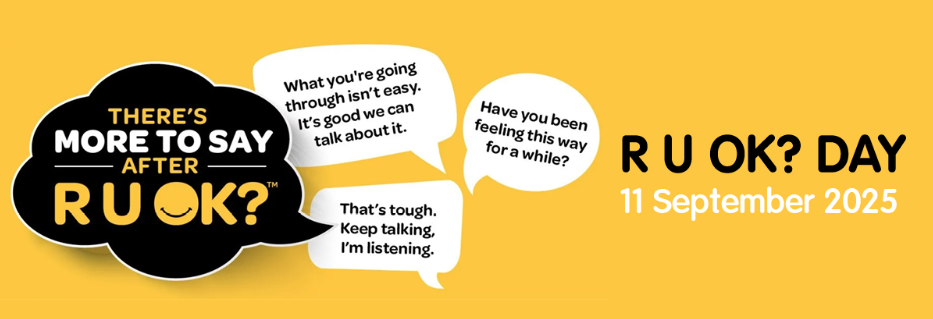
Ask R U OK? Any Day because life happens every day.
Thursday 11 September is R U OK? Day but whether it’s a friend, family member, partner, or colleague, the people around us go through life’s ups and downs every day. That’s why R U OK? Day aims to help everyone feel confident to check in with the people they care about and Ask R U OK? Any Day.
Research has found that those who are regularly asked, ‘are you OK?’ report increased feelings of wellbeing, and that a third of Australians say they’ve been asking others more often over the past year. That means many of us are already showing up for others in meaningful ways when it comes to conversations about how we’re really going.
Ask R U OK? Any Day of the year because a conversation could change a life.
Host a R U OK? event
Hosting an event is a great way to bring people together and share the R U OK? message.
Register here to access free resources to help you share the message in your practice. The resources include:
- Guide to Supporting R U OK?
- Posters
- Videos
- Conversation guide
- Social tiles and digital assets
- Calendar planners

Event invitation – October 2025
Reform, funding and future proofing general practice
WA Primary Health Alliance would like to extend an invitation to two events focused on the future of general practice led by primary care reform experts.
Whether you’re a GP looking to understand upcoming reforms, or part of a practice team ready to embed change, this is an opportunity to gain fresh perspectives and hear about innovative solutions.
Register soon as places are limited. Registrations close on 19 September.
GP Breakfast
Presented by WA Primary Health Alliance
17 October 2025 (7am to 9am)

This breakfast is designed for GPs to explore the long-term picture for funding reform, what to expect and how to adapt without compromising clinical outcomes.
Keynote speakers:
- Dr Walid (Wally) Jammal – GP Principal and national leader in primary care reform and innovation, including designing integrated models of care.
- Dr Kirsten Meisinger – primary care physician and renowned international expert on patient-centered medical homes and healthcare system transformation.
Futureproofing General Practice
Presented by WA Primary Health Alliance
18 October 2025 (9am to 3.30pm)

Get actionable strategies and tools from the experts who will share a road map to reform, funding and the future of general practice, including two interactive workshops:
- WA practices showcase their successes.
- Embedding reform in a WA context.
Informal networking accompanied by afternoon tea from 3:30pm onwards.
Keynote speakers:
- Dr Walid (Wally) Jammal – GP Principal and national leader in primary care reform and innovation, including designing integrated models of care.
- Dr Kirsten Meisinger – primary care physician and renowned international expert on patient-centered medical homes and healthcare system transformation.
Shared care for ADHD in children – webinar
Presented by WA Primary Health Alliance
22 October 2025 (6pm to 7pm)

Join us for a webinar series designed to support general practitioners with increasing their skills in identifying, diagnosing and treating children with attention deficit hyperactivity disorder (ADHD), including prescribing and monitoring stimulants.
The three webinars are accredited for 3 RACGP EA CPD hours (1 hour each webinar).
Webinar 1: Wednesday 24 September 2025
This webinar will cover the following topics:
- ADHD identification in primary care.
- Overview of ADHD assessment and diagnosis.
- Introduction to ADHD management.
- WA specific context for S8 stimulant prescribing (key facts).
- Stepwise approach to safe S8 stimulant prescribing and shared care.
- Introduction to the Clinician Assist pathway.
To find out more, view the flyer and register for webinar 1 today.
Reducing the risk of hospitalisation for older adults in primary care
Presented by WA Primary Health Alliance
10 September (12pm to 1pm)

Join us for an engaging and practical webinar for general practice teams committed to improving care for older adults.
This webinar will explore how quality improvement (QI) activities can be embedded into everyday workflows to support safe, effective, person-centred care for older patients, leading to increased independence and prevention of hospitalisation.
Webinar topics include:
- Understanding current hospitalisation rates.
- Identifying at-risk patients using Primary Sense.
- Applying preventative care strategies through structured health assessments.
- Promoting vaccination for preventable disease.
- Implementing chronic condition management plans and falls prevention that support long-term health and independence.
- Utilising QI methodologies to ensure continuous enhancement of outcomes and service delivery.
To find out more, view the flyer and register today.
Register now for a Clinician Assist WA live demonstration
Presented by Clinician Assist WA
Multiple Times & Dates Online

Clinician Assist WA is a secure website providing GPs and other health professionals with guidance for assessing, managing and referring patients across Western Australia. It has replaced HealthPathways WA, offering the same trusted local guidance, features and functionality and remains available at no cost.
The Clinician Assist WA team will run online demonstrations facilitated by a GP Clinical Editor throughout 2025 to support users. These sessions will demonstrate how to maximise integration of Clinician Assist WA into your clinical practice. Learn key functionalities of the website and how to access condition specific tools and resources, Referral Access Criteria (RAC) (where available), GPbook Specialist Directory and visiting specialist rosters.
Sessions have been approved for 1 CPD Educational Hour with RACGP and will be held online on the following dates:
Demonstrations are open to general practitioners, general practice staff and other health professionals registered to practice in WA.
General Practice in Aged Care Incentive: Your Questions, Answered
Presented by WA Primary Health Alliance
9 October (12pm to 1pm)

The General Practice in Aged Care Incentive (GPACI) was introduced in July 2024 to support GPs in delivering proactive, patient-centred care. Twelve months in, we recognise that some practices continue to face some challenges in meeting GPACI service requirements.
Join our virtual Q&A session as we cover all things GPACI. Whether you’re seeking help with service requirements, tracking and monitoring patients, setting up PRODA and HPOS, or simply want to better understand how to apply GPACI in your practice, we’re here to help.
Join a GP Balint group
Facilitated through the RACGP and Accredited Balint leaders
Introductory meeting in September – online

Improve challenging patient interactions, professional satisfaction and wellbeing.
Join an ongoing 12-month Balint group to reflect on cases with colleagues. During each small-group online session, you can expect to improve how you handle difficult situations and overall sense of professional satisfaction.
View the flyer here for more information and to register.
Other Webinars, Events & Workshops
| WA Sexual and Reproductive Health in Primary Care Presented by ASHM 6 September (Part 1) and 13 September (Part 2) |
| Integrating Digital Resources into Mental Health Care Presented by Black Dog Institute 8 September |
| BreastScreen WA visit to Manjimup Presented by BreastScreen WA 8 September to 20 October |
| WA Test and Cure Hepatitis C – What’s New in the National Hepatitis C Testing Policy Presented by ASHM 10 September |
| Reshaping asthma management in Australia Presented by National Asthma Council Australia 16 September |
| Wesley LifeForce Suicide Prevention Training Primary Care Support Staff Workshop (Rockingham) – cancelled Presented by Wesley LifeForce 16 September |
| Wesley LifeForce Suicide Prevention Training Primary Care Support Staff Workshop (Mandurah) Presented by Wesley LifeForce 17 September |
| BreastScreen WA visit to South Hedland Presented by BreastScreen WA 23 September to 17 October |
| Wesley LifeForce Suicide Prevention Training Primary Care Support Staff Workshop (Esperance) Presented by Wesley LifeForce 23 September |
| BreastScreen WA visit to Butler Presented by BreastScreen WA 23 September to 29 January |
| Wesley LifeForce Suicide Prevention Training Primary Care Support Staff Workshop (Kalgoorlie 11am) Presented by Wesley LifeForce 24 September |
| Wesley LifeForce Suicide Prevention Training Primary Care Support Staff Workshop (Kalgoorlie 5.30pm) Presented by Wesley LifeForce 24 September |
| Virtual Diabetes In-depth Presented by Diabetes WA 24 September |
| WA Curing Hepatitis C in Primary Care Presented by ASHM 25 September |
| Diagnosing and Managing Youth Mental Illness in Primary Care Presented by ASHM 6 October |
| Fracture and Injury Management Course Presented by Benchmarque Group 8 October |
| Course in Wound Closure Presented by Benchmarque Group 8 October |
| National Kidney Summit 2025 Presented by Kidney Health Australia 10 October |
| Wesley LifeForce Suicide Prevention Training Primary Care Support Staff Workshop (Two Rocks) Presented by Wesley LifeForce 14 October |
| Dealing with Depression Presented by Black Dog Institute 25 October |
| ACNP National Conference Presented by Australian College of Nurse Practitioners (ACNP) 29 October to 31 October |
| Asia Pacific Autism Conference (APAC) Presented by Autism Association of Western Australia 13 November to 15 November |
Acknowledgement
WA Primary Health Alliance acknowledges and pays respect to the Traditional Owners and Elders of this country and recognises the significant importance of their cultural heritage, values and beliefs and how these contribute to the positive health and wellbeing of the whole community.