
Issue 238 – 5 February 2026
|
Welcome to Practice Connect, a fortnightly update for practice managers, principals, nurses and administration staff on relevant issues, upcoming events and education. |

New public campaign launched: Bulk Billing for all Australians

The Australian Government has recently launched a public awareness campaign to promote the broadened eligibility criteria for MBS bulk billing incentives and introduction of the Bulk Billing Practice Incentive Program (BBPIP), which have resulted in an increased number of general practitioners offering bulk billed appointments to Medicare-eligible patients.
- Information about the Bulk Billing campaign.
- More about Bulk Billing practices.
- Interactive map of Bulk Billing practices.
- 15 second advertisement translation video.
- Resources on Bulk Billing.
For further information on the changes to MBS bulk billing incentives or the BBPIP, contact Practice Assist or your Primary Care Navigator on 08 6278 7900 or via email practiceassist@wapha.org.au
Organisational change guidance update

Organisational change guidance has recently been added to the MyMedicare Program Guidelines. It outlines what practices must do when relocating, changing ownership, merging, separating, or altering their business structure. Following the guidance helps practices continue to meet Accreditation and MyMedicare eligibility requirements.
The new information in the MyMedicare Guidelines includes sub‑sections on permanent relocation, sales, mergers, separations, accreditation requirements, payment arrangements, and notification obligations.
Practices and providers can access the updated guidance by downloading the full MyMedicare Program Guidelines from the Department of Health, Disability and Ageing website.
For further information, contact Practice Assist or your Primary Care Navigator on 08 6278 7900 or via email practiceassist@wapha.org.au

Practice Assist news and updates
Practice Assist Hours
From 5 January we have made the following changes to our services:
- Operating hours are from 8:30am to 4:30pm Monday to Friday excluding public holidays.
- Our phone number has changed to 08 6278 7900, with the 1800 number no longer in operation.
Practice Assist Website Maintenance

Practice Assist would like to advise that the Practice Assist website is currently undergoing maintenance to ensure that it is up to date and functioning well to support general practice in WA.
This maintenance may cause some temporary interruptions to website access.
If you experience any issues accessing our website please contact Practice Assist or your Primary Care Navigator on 08 6278 7900 or via email practiceassist@wapha.org.au
Referrals to WACHS Midwest Specialist Outpatient Services transitioning to CRS
Upcoming Change: Referrals to WACHS Midwest Public Specialist Outpatient Services
From Monday 16 February, all external referrals (from GPs, nurse practitioners, and private specialists) to nine WACHS Midwest public medical-led outpatient specialties will be managed through the Central Referral Service (CRS). This means the CRS will be the single intake point for these services.
This change supports ongoing outpatient reform to streamline referral processes and improve access to specialist care.
Key primary care referrers have been advised of the change and will be supported through Q&A sessions and training resources.
For further information and contact details for support for your practice or, please see the flyer.
Thank you for your continued support as we work together to improve access to public specialist outpatient services in the region.
Please see the flyer for more information and contact details for support.
Maintain benzathine benzylpenicillin stock in your doctors bag
The TGA has reported that the current Bicillin L-A (benzathine benzylpenicillin, Pfizer) shortage has been extended until 31 August 2026.
Lentocillin S 1200 benzathine benzylpenicillin is a TGA-approved, PBS-listed alternative (see About the shortage of Bicillin L-A). It is a powder requiring reconstitution with a diluent (packaged with the powder) which contains lidocaine to reduce the pain associated with treatment.
Benzathine benzylpenicillin should be prioritised for use in the following conditions:
- Treatment and secondary prophylaxis of acute rheumatic fever (ARF), and secondary prophylaxis of rheumatic heart disease (RHD).
- Patients who require treatment for group-A streptococcal infection of the respiratory tract and skin who are at high risk of acute rheumatic fever, rheumatic heart disease or acute poststreptococcal glomerulonephritis (APSGN), where oral therapy is not acceptable or the likelihood of non-adherence is high.
- Treatment for syphilis in proven or suspected cases, or if identified as a sexual contact of syphilis.
To ensure your patients’ access to benzathine benzylpenicillin:
- Maintain adequate stock in your doctor’s bag.
- Contact your local public health unit if urgent supply is needed for a patient with infectious syphilis, or contact a public sexual health or infectious diseases clinic to refer the patient for urgent treatment.
- Be aware that emergency supplies are available directly from Pfizer Australia (call 1800 675 229 for information).
Royal Perth Bentley Group – new HealthLink address for direct-to-site (non-CRS) referrals
Immediate outpatient referrals (requiring review within seven days) and out of scope CRS referrals (other than mental health referrals) to Royal Perth Hospital (RPH) and Bentley Health Service (BHS) can now be sent securely via the new Royal Perth Bentley Group (RPBG) HealthLink address: rphbhref.
The following referrals cannot be processed by the RPBG HealthLink address:
- Referrals in scope for CRS – continue to send via the CRS HealthLink address: crefserv.
- Mental Health referrals – continue to follow usual processes.
- Emergency Department or direct admission referrals (e.g. Ambulatory Unit) – continue to follow usual processes.
The RPBG HealthLink address be used for:
- Immediate outpatient referrals: Referrals where the GP directly consults the RPBG specialty doctor by phone and receives approval to book the patient within the following week. To expedite referral processing, include the name of the RPBG speciality doctor.
- Sending through an urgent investigation report to accompany a referral the GP previously sent via CRS or direct to RPBG.
- Referrals to RPBG allied health and nurse led clinics. Check which services accept GP referrals and eligibility on Clinician Assist WA before referring.
- Referrals from all non-GP and specialist community health professionals to RPH and BHS outpatient services (i.e.: optometrists, dentists, allied health professionals).
Always include all mandatory referral information (including current patient mobile number and email) as per WA public outpatient referral requirements and essential Referral Access Criteria.
RPBG requests that GPs and practice staff share this information with colleagues. It is hoped this will support GPs to provide outpatient referrals in a secure and time efficient manner.
For more information, contact the RPBG Outpatient Referral Office. Email RPH.OutpatientReferrals@health.wa.gov.au or phone 6477 5195 or 6477 5198.
Royal Perth Hospital Breast Clinic referral update
Imaging and pathology results must accompany Royal Perth Hospital (RPH) Breast Clinic referrals to ensure referral acceptance and urgency triaging.
A complete work up of breast lumps prior to surgical review includes the triple assessment:
- Physical examination.
- Mammogram and ultrasound of breasts and axilla are required for baseline imaging of suspected breast cancers.
- Core biopsy of the breast lesion(s) is preferred to fine needle aspiration (FNA).
Referrals should include mammogram, ultrasound and pathology reports including receptor status (if available). If unable to attach reports, paste results into the body of the referral and include investigation date(s) and facilities where investigations were performed.
Patients with all required imaging and pathology results provided on referral can bypass breast physician assessment and be booked directly with a breast surgeon to facilitate earlier treatment. Patients who require biopsy or further investigations are triaged to the breast physician clinic for triple assessment completion before the breast physician can refer patients who need surgical treatment to a breast surgeon.
For breast conditions requiring immediate referral, such as inflammatory breast cancer, breast abscess, breast cancer in pregnancy, or rapidly progressing disease that needs review within seven days, please call 08 9224 2244 and ask to speak with the Breast Surgery Registrar, or if after hours, the General Surgical Registrar on call. Send the immediate referral, including the name of the RPH clinician who accepted the referral, to rphbhref via HealthLink. Please refer to Clinician Assist WA: Breast Symptoms for more information.
The RPH Breast Clinic aims to see patients with diagnosed or suspected breast cancer within two to four weeks of receipt of referral from CRS and provides services for screen-detected breast cancers in collaboration with the screening clinics.Women at high risk of breast cancer are also managed through the dedicated Familial Cancer Clinic.
RPH does not accept referrals for routine screening. Please direct these requests to BreastScreen WA or privately.

My Health app has now transitioned to 1800MEDICARE app
The 1800MEDICARE app is a secure and convenient way for individuals to view key health information that they, their healthcare providers or representatives, have uploaded to My Health Record.
Features include:
- access to Medicare information as well as MyMedicare enrolment and claiming services.
- access to electronic prescriptions and the Active Script List.
- access to pathology and diagnostic imaging results.
- viewing Advanced Care Planning documents.
- easy management of privacy and access settings.
Available for mobile and tablet since 1 January 2026. The My Health app has now transitioned to 1800MEDICARE app on devices where automatic update settings are enabled.
| Old Version of the “My Health” APP |  |
| New Version “1800 Medicare” APP |  |
For more information visit: digitalhealth.gov.au/1800MEDICAREapp
NASH certificate renewals to maintain access to digital services
For many general practices it may be time to renew your NASH certificates. A National Authentication Service for Health (NASH) Public Key Infrastructure (PKI) certificate allows healthcare providers to securely communicate and exchange health information electronically.
NASH PKI certificates expire 2 years from the date of issue. An expired NASH certificate may prevent:
- Access to the Health Identifiers (HI) Service.
- Access to My Health Record.
- Sending and receiving health information using secure messaging systems.
- Sending electronic prescriptions and the transfer of paper-based prescription information via barcodes.
See the Digital Health Toolkit for steps on how to check your NASH certificate expiry or request a new certificate in HPOS or contact the Contracted Service Provider (CSP) that manages the certificates on behalf of your practice to check your NASH certificate status. A CSP is an organisation that provides technology services or health information management services to your practice.
For more information and support, contact Practice Assist or your Primary Care Navigator on 08 6278 7900 or via email practiceassist@wapha.org.au
My Health Record – Better, faster access

New laws were recently introduced which mean that more of your patients’ health information will be automatically uploaded and will also be available sooner in My Health Record. This change will help your patients, and you as healthcare providers, to have quicker access to the latest information, supporting better care.
Faster access
Automatic uploading of health information means patients can get their results sooner, helping them to take a more active role in their health and wellbeing.
- Most pathology reports (like blood and urine tests) are available for your patients to view in My Health Record or the 1800MEDICARE app as soon as they are uploaded.
- Some results, including anatomical pathology, cytopathology, and genetic testing, are viewable after a 5-day delay reduced from the previous 7-day delay.
From March 2026:
- X-ray reports for limbs (arms and legs) will be available for your patients to view immediately after uploading.
- Other x-rays and types of diagnostic imaging reports (like CT scans, mammograms, MRI and PET scans, and ultrasounds) will be viewable after 5 days, reduced from the previous 7-day delay.
Better access
Healthcare providers delivering pathology and diagnostic imaging tests (like blood tests and x-rays) will be required to upload written reports to My Health Record by default. These changes are expected to transition into effect throughout 2026, giving healthcare providers time to get ready.
- Your patients’ test results will be uploaded to My Health Record, unless they ask for them not to be.
- Healthcare providers involved can access the latest reports, supporting more connected and safer care for your patients.
- All their key health information is together in one secure place, making it easier to manage their health, especially if they see different healthcare providers or move between hospitals, pathology providers, medical imaging practices or clinics.
Resources
If you have any further questions, please contact Practice Assist on 08 6278 7900 or via email practiceassist@wapha.org.au
Healthcare Providers – Accessing My Health Record via the National Provider Portal
Healthcare providers who do not have conformant clinical software can access an individual’s My Health Record through the National Provider Portal (NPP). The NPP is a web-based, read-only site that lets healthcare providers view information in a patient’s record. Uploading documents is not supported.
Each practitioner is required to access the My Health Record via the NPP through their personal PRODA account. Administration staff are also eligible to register for a PRODA account.
The first time you access My Health Record via the NPP, you will be required to input your individual health provider identifier HPI-I. You will only be required to input your HPI-I the first time that you access My Health Record via the NPP.
Click here for more information on HPI-Is.
Further information:
- To register: Create a PRODA account.
- Accessing the National Provider Portal.
- Video: Logging into a patient’s My Health Record using the NPP [0:34 sec].
Please refer to www.digitalhealth.gov.au or contact help@digitalhealth.gov.au or contact Practice Assist on 08 6278 7900 or via email practiceassist@wapha.org.au

Starting School – Immunisations

Upon enrolling children in school, parents are required to show a copy of the child’s immunisation status. Western Australia has the “No jab, No Play” legislation, aimed at increasing the vaccination rates of children in Western Australia and to better protect the community from vaccine preventable notifiable infectious diseases.
A child’s current Australian Immunisation Record (AIR) immunisation history statement can be accessed at any time by the parent/guardian through:
- MyGov, by logging in to their Medicare online account.
- Calling the AIR General Enquiries Line on 1800 653 809 to request a copy to be posted, or
- Practice Nurses or GPs can download and print directly from AIR using their PRODA account.
Individuals that are not registered with Medicare can and should still have an AIR record.
An immunisation provider is able to register a child on AIR, as well as commence a child on a catch-up schedule for any missing vaccinations.
If parents/guardians have had their child fully vaccinated but the child’s AIR immunisation history statement is not up-to-date, they are advised to contact their immunisation provider and ask them to update the information on the AIR.
The Western Australian Immunisation Requirements guide is here.
What is due at 4 years old?
Some parents may need reminders of vaccinations due under the National Immunisation Program when a child turns 4 years of age.
These vaccines include:
- Dtpa-IPV (currently Quadracel or Infanrix IPV).
- For Aboriginal children there is a 2nd dose of Hepatitis A due (Vaqta Paed/Adolescent) and a Pneumococcal vaccine (Prevenar 20), depending on number of previous doses.
- The Pneumococcal vaccine is also advised for medically at risk children.
For an up to date immunisation schedule, click here.
For the Pneumococcal decision aid, click here.
Measles advice from the Chief Medical Officer

The Department of Health, Disability and Ageing (the department) has shared measles vaccination advice from the Australian Government Chief Medical Officer (CMO), Professor Michael Kidd.
For clinical advice, health professionals can refer to the measles chapter of the Australian Immunisation Handbook.
A case of measles acquired from an overseas traveller has been reported. The department have released an alert, inclusive of potential exposure sites Measles alert.
Further information about measles vaccination, and free vaccines available to eligible people under the WA Program, is available at Measles immunisation program.
WA Immunisation Schedule and WA Aboriginal Immunisation Schedule updated
The WA immunisation schedules have been updated with the following:
- Childhood pneumococcal vaccination decision aid simplified.
- Upper age limit removed for Abrysvo vaccination.
- Flucelvax Quad added to over 65 year olds and under 5 year olds.
If your practice is planning on printing a copy of the schedule to keep on hand, remember to also print the decision aids as well:
- Western Australian Immunisation Schedule
- Western Australian Aboriginal Immunisation Schedule
- Childhood pneumococcal vaccination decision aid
- RSV immunisation decision aid (for Kimberley and Pilbara regions only)
2026 Respiratory Syncytial Virus (RSV) Immunisation Program information session
Presented by Department of Health Communicable Disease Control Directorate
Thursday 19 February (9.30am – 11.30am) Department of Health Theatrette, or online via MS Teams
The Department of Health Communicable Disease Control Directorate Immunisation Program invites WA immunisation providers (including midwives, community health clinics, general practice, Aboriginal Medical Services, and community pharmacies) to attend the 2026 RSV Immunisation Program Information Session.
The session will cover information on 2026 program details.
Face-to-face registration:
Please register for face-to-face attendance by COB Wednesday 18 February, to receive a ticket from Humanitix. Please ensure you have your ticket accessible upon entrance, for a seamless sign-in process on the day. There is a maximum of 1 ticket per order, please register individually.
Online registration:
Please register for online attendance to receive a confirmation email from Humanitix with a MS Teams meeting link. Please save this email/link to your calendar. Registration for online attendance is available until the end of the event i.e. Thursday 19 February 11.30am. There is a maximum of 1 ticket per order, please register individually.
The session will be recorded and circulated post event.
View the flyer here for more information and to register.
Invitation to participate: Immunisation resource survey
The WA Department of Health Immunisation Program is reviewing current immunisation hard copy resources with the aim to make them more streamlined, accessible, and digital where suitable.
Your feedback is vital in helping the department decide what to keep, combine, or modernise.
In the survey, you’ll be asked for your thoughts on:
- Accuracy and relevance of information.
- Ease of use.
- Suggestions for improvement.
Key details:
- Time commitment: Approximately 5–10 minutes.
- Survey will be open: 14 January to 11 February.
- Confidentiality: All responses are anonymous.
While the aim is to apply your feedback to improve the current resources, the department may not be able to implement every suggestion.
Access the survey here.

Ovarian Cancer Awareness Month
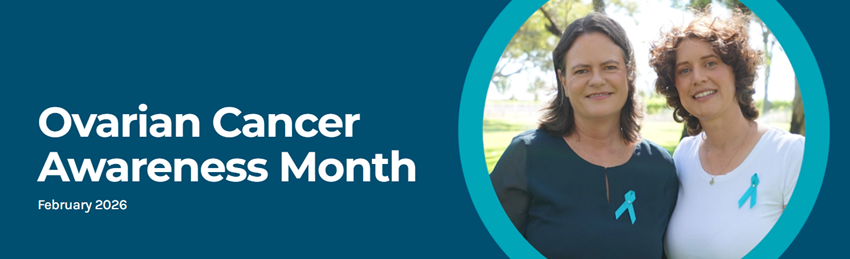
February is Ovarian Cancer Awareness Month, please urge your patients with a cervix to remain ever vigilant, as ovarian cancer symptoms are vague and women often think they are caused by other conditions and may ignore them.
Because it’s difficult to detect in its early stages, there are more deaths from ovarian cancer in Australia than any other gynaecological cancer.
Improving early detection of this disease by being aware of the symptoms is a good way to help improve ovarian cancer outcomes.
More information about ovarian cancer can be found on the Cancer Council WA website.
Resources for your practice
Ovarian Cancer Australia has a website full of resources and a helpline with a dedicated ovarian cancer nurse available.
Visit the Ovarian Cancer Research Foundation for further resources and information.

Webinar: Overview of refugee health
Presented by WA Primary Health Alliance
18 February (6pm to 8pm)

Join us for the first webinar in a six-part series about refugee health in primary care, presented in conjunction with WA Health.
The first webinar on Wednesday 18 February will provide an overview of refugee health and cover the following topics:
- The global and Australian context when working with refugees, asylum seekers and displaced people.
- The impact of adverse experiences and social determinants of health.
- The diversity that is present within refugee communities.
- The role of the Humanitarian Settlement Program (HSP) provider and refugee health services in WA and how these intersect with primary care.
To find out more, view the flyer and register today.
Honour-based violence in Culturally and Linguistically Diverse (CALD) communities
Presented by WA Primary Health Alliance
23 February (6pm to 8pm)
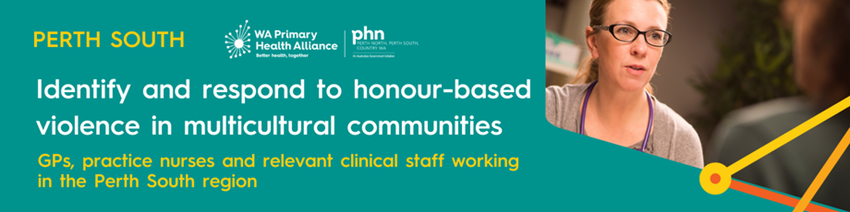
A practical session designed to help GPs, practice nurses and relevant clinical staff identify and respond to honour-based violence in culturally and linguistically diverse communities. Learn culturally safe, trauma-informed strategies and gain confidence in initiating sensitive conversations and making appropriate referrals.
APNA Mental Health First Aid
Presented by APNA and supported by WA Primary Health Alliance
3 March to 12 March (various locations)
Mental health matters. One in five Australians experience mental health concerns each year, and primary health care nurses are often the first point of support.
Join APNA’s Mental Health Education Program—designed for nurses, by nurses—to build the skills, knowledge, and confidence to make a real difference.
- Expert-led sessions by APNA nurse & licensed MHFA instructor.
- Practical strategies for early intervention.
Format: approx. 7 hours of online learning (to be done first) + hard-copy workbook posted to you + 5hr face-to-face workshop
Locations: South Metro Perth, Kalgoorlie, Geraldton, Broome, North Metro Perth, Bunbury
Places are limited – view the flyer for more information.
Webinars: The Big 5 proven activities for better mental health
Presented by WA Primary Health Alliance and MindSpot GP
19 and 31 March (12pm to 1pm)

What if supporting people’s mental health could be as straightforward as the advice we provide about diet and exercise?
WA Primary Health Alliance and MindSpot GP invite health professionals across WA to attend one of the upcoming webinars about The Big 5 evidence-based activities that are most strongly linked to better mental health.
To find out more, view the flyer and register for the regional webinar or the Perth webinar today.
Practice Manager Forum: Futureproofing your general practice
Presented by WA Primary Health Alliance
27 March (9am to 3pm)

Join us for an engaging and informative in-person event designed to support WA general practices with navigating key changes, embracing innovation and strengthening quality improvement.
General practice is evolving rapidly, from accreditation reforms and privacy legislation updates to the integration of AI and digital tools.
The Practice Manager Forum will bring together primary care professionals to explore these changes, share insights and connect with support programs that enhance practice sustainability and patient care.
To find out more, view the flyer and register today.
Building capacity in disaster preparedness and response for general practice
Presented by WA Primary Health Alliance
Ongoing e-learning training
These comprehensive eLearning modules are specifically designed to enhance participants’ knowledge and understanding of key emergency management principles and practices in Western Australia. Including modules that are specific to your role within general practice, from General Practitioners to Practice Managers. Through interactive, scenario-based learning, participants will explore:
- WA State Emergency Management Arrangements.
- Roles and responsibilities of Hazard Management Agencies.
- The 28 Prescribed Hazards.
- Command and Control structures in WA.
- The Australian Warning System (AWS).
- Core concepts of Prevention, Preparedness, Response, and Recovery (PPRR).
- Emergency preparedness’ relevance to primary health care.
Incentives:
- The module is available to all practices and will offer RACGP Continuing Professional Development (CPD) hours and other CPD options for other health professions.
- Get your practice prepared for disaster to minimise the impact it will have on the business during disaster and maintain business continuity.
- Meet RACGP standards for general practice, which will support you in your practice accreditation.
Find out more information and access the course here.
Menopause training and resources for health professionals
Presented Jean Hailes for Women’s Health and the Australasian Menopause Society (AMS)
Ongoing free online courses

Managing menopause in general practice
Key areas:
- Menopausal symptoms.
- Consultation and diagnosis.
- Menopausal hormone therapy.
- Safe and effective menopause management
This activity is accredited by ACRRM and RACGP.
Understanding menopause – for nurses and midwives
Key areas:
- Perimenopause, menopause and post menopause
- Menopausal symptoms
- The role of nurses and midwives in menopause management
This activity is endorsed by the Australian Primary Care Nurses Association (APNA) and the Australian College of Midwives (ACM).
View the flyer here for more information and to register.
Other Webinars, Events & Workshops
| STI Testing in Primary Care: Western Australia Presented by ASHM Ongoing learning module and webinar |
| Enhancing Syphilis Awareness: Engaging Communities and Health care Providers Presented by ASHM Ongoing learning module and webinar |
| Managing patient depression and suicidality in primary care Presented by Rural Health West February to June |
| WA HIV s100 Prescriber Course Presented by ASHM 7 February and 8 February |
| Wesley Lifeforce Primary Care Support Staff (non-clinical) Suicide Prevention Training 2026 (Connolly, Perth northern suburbs) Presented by Wesley Mission 9 February |
| Perth Gender Network Meeting Presented by RACGP 10 February |
| BreastScreen WA mobile visit to Carnarvon Presented by BreastScreen WA 10 February to 9 March |
| BreastScreen WA mobile visit to Byford Presented by BreastScreen WA 12 February to 18 March |
| PHPN Welcome to 2026 Sundowner (Hedland) Presented by Pilbara Health Professionals Network (PHPN) 13 February |
| Certificate in Sexual and Reproductive Health: In-person nurses’ course Presented by SHQ 16 to 19 February |
| Contraceptive Implant Theory: In-person training Presented by SHQ 16 February |
| BreastScreen WA mobile visit to Fremantle Presented by BreastScreen WA 16 February to 25 March |
| Cervical Screening Training: In-person Presented by SHQ 18 to 19 February |
| How to Build a High-Performing Medical Practice Presented by Rural Health West 20 February |
| PHPN Welcome to 2026 Sundowner (Karratha) Presented by Pilbara Health Professionals Network (PHPN) 20 February |
| De-escalation Skills Presented by Western Australian Association for Mental Health 24 February, 9 April and 29 June |
| Wesley Lifeforce Primary Care Support Staff (non-clinical) Suicide Prevention Training 2026 (Online workshop) Presented by Wesley Mission 25 February |
| BreastScreen WA mobile visit to Waroona Presented by BreastScreen WA 4 March to 20 March |
| Sexual and Reproductive Health Australia National Certificate for Doctors: (In-person) Presented by SHQ 9 to 13 March |
| Wesley Lifeforce Primary Care Support Staff (non-clinical) Suicide Prevention Training 2026 (Wanneroo) Presented by Wesley Mission 9 March |
| Understanding Vicarious Trauma: Tools for helping professionals Presented by Western Australian Association for Mental Health 11 March and 8 May |
| WA Rural Health Conference 2026 Presented by Rural Health West 14 March and 15 March |
| GP Education: Management of Pelvic Pain, Menopause and Perimenopause Presented by Luma 11 March |
| Melanoma March Presented by Melanoma Institute Australia 15 March |
| Course in Ear Wax Removal (Microsuction) Presented by Benchmarque Group 26 March |
| Course in Ear Wax Removal (Irrigation) Presented by Benchmarque Group 27 March |
| National Hepatitis B s100 Prescriber Forum Presented by ASHM 27 March |
| Wesley Lifeforce Primary Care Support Staff (non-clinical) Suicide Prevention Training 2026 (Busselton) Presented by Wesley Mission 14 April |
| Wesley Lifeforce Primary Care Support Staff (non-clinical) Suicide Prevention Training 2026 (Bridgetown) Presented by Wesley Mission 16 April |
| National Suicide Prevention Conference Presented by Suicide Prevention Australia 28 April to 30 April |
| Rural and remote retrieval weekend Presented by Rural Health West 7 to 10 May |
Acknowledgement
WA Primary Health Alliance acknowledges and pays respect to the Traditional Owners and Elders of this country and recognises the significant importance of their cultural heritage, values and beliefs and how these contribute to the positive health and wellbeing of the whole community.