
Issue 241 – 20 March 2026
|
Welcome to Practice Connect, a fortnightly update for practice managers, principals, nurses and administration staff on relevant issues, upcoming events and education. |
Medicare and MyMedicare updates
New GP NRA MBS items must be bulk billed from 1 March 2026

Since launching on 1 November 2025, the Bulk Billing Practice Incentive Program (BBPIP) has seen strong engagement, with more than 3,400 practices registering to date.
New MBS Items for Patient End Support (PES)
From 1 March 2026, new MBS items for Patient End Support (PES) services were introduced.
These items enable GPs and prescribed medical practitioners to provide face-to-face support to a patient during a video consultation with a specialist. The new PES items are classified as GP Non-Referred Attendances (GP NRA) services and must be bulk billed by Practices participating in the BBPIP.
For more information about the items, visit MBS Online – Patient End Support services and for a full list of BBPIP eligible services, visit Bulk billing incentives in general practice.
Promoting your bulk billing status
A reminder that practices participating in BBPIP are required to meet specific advertising requirements to help patients easily identify bulk billing services in their area.
To remain eligible, practices must:
- Register as a fully bulk billing practice in healthdirect Australia’s National Health Services Directory (NHSD). Find information here about how to register on NHSD.
- Display Medicare Bulk Billing Practice signage on-site (some practices, including those without a physical location, are not required to do this).
- Access the factsheet for BBPIP healthdirect and signage requirements here.
For more information, and to order Medicare Bulk Billing Practice signage, visit Bulk billing incentives in general practice.
Impact of the BBPIP
Participation in BBPIP is making a measurable difference.
National bulk billing rates increased to 81.4% between November 2025 and January 2026, representing a 4.3 percentage point rise compared to the same period the previous year. This is the largest year on year quarterly increase in bulk billing in 20 years, outside of the COVID pandemic period.
For further details, refer to the National GP Bulk Billing Snapshot – 1 November 2025 to 31 January 2026.
For further information, contact Practice Assist or your Primary Care Navigator on 08 6278 7900 or via email practiceassist@wapha.org.au
MyMedicare Minute from the Department of Health, Disability and Ageing
|
MyMedicare Minute – Week Two One key message. One minute to read. |
|
Updated MyMedicare Privacy Notice now published
What practices need to know
Why the notice has changed
These changes help patients feel confident that their information is being managed safely, respectfully and transparently. Resources The updated Privacy Notice is available on the Department of Health, Disability and Ageing website and via Services Australia. For any questions or support, please email mymedicare@health.gov.au |
Practice news
Supporting culturally responsive care in general practice

Practices across Western Australia care for patients from a wide range of cultural and linguistic backgrounds. To support practices in delivering safe, respectful and inclusive care, WA Primary Health Alliance (WAPHA) has updated its Multicultural Competency and Capability Framework.
The updated Multicultural Competency and Capability Framework supports general practices to better understand and respond to the needs of culturally and linguistically diverse patients.
Patients may face barriers such as language differences, unfamiliarity with the health system or cultural beliefs that influence how they seek and receive care. The framework encourages practices to consider how cultural factors can shape communication, access and treatment decisions.
Practical actions may include improving access to interpreters, using translated resources where appropriate, building cultural awareness among staff and creating welcoming environments for diverse communities. Strengthening cultural capability within practice teams can support clearer communication, stronger patient relationships and improved health outcomes.
WAPHA has also updated its Aboriginal Cultural Competency and Capability Framework and LGBTIQA+ Equity and Inclusion Framework. Together, the three frameworks strengthen WAPHA’s approach to cultural competency, equity and inclusion across the primary health care system.
They reinforce that culturally safe and inclusive care is a shared responsibility and an essential part of delivering high-quality primary care.
For further information on resources for patient care and practice processes for patients from a multicultural background, contact Practice Assist or your Primary Care Navigator on 08 6278 7900 or via email practiceassist@wapha.org.au
eNRMC medication management systems update for general practices servicing aged care homes
What is eNRMC?
It stands for Electronic National Residential Medication Chart, an Australian digital system for managing medicines in aged care homes, replacing paper charts to improve safety, reduce errors, streamline prescribing and administration by providing real-time, coordinated medication data for staff, practitioners and pharmacists.
Shifting deadlines
Delayed software readiness deadlines are postponing practitioners’ use of the system in practices serving residential aged care homes (RACHs).
- Overall Project Deadline Extension: The entire eNRMC implementation phase, originally due to end on 1 March 2026, is extended to 31 December 2026.
- While 8 out of 10 vendors have achieved compliance, providers (including Telstra Health with its MedPoint software) failed to meet the original deadlines, causing the government to push back requirements to prevent disruptions in aged care.
What will GPs be able to do once the eNRMC system becomes available?
- A prescriber will NOT be required to physically attend the RACH to renew or amend an eNRMC.
- While in-person visits remain essential for delivering comprehensive care, eNRMC systems improve care flexibility by allowing prescribers to access the system remotely. This enables them to prescribe medications during telehealth consultations or make urgent changes to a resident’s medication regimen, even when they are not physically present at the RACH.
For more information, please refer to eNRMC User Resource (pages 39-42). Please contact Practice Assist on 08 6278 7900 or via email practiceassist@wapha.org.au
WA Government launches Access Health WA campaign and website

As Western Australia prepares for the winter period ahead, the WA Government has rolled out a comprehensive new long term public-facing health access campaign to ensure the community can continue to access safe, timely, and appropriate health care during the highest-demand months.
The Access Health WA campaign aims to strengthen the WA health system and support the community, by increasing public awareness and understanding of the range of health services available in WA, including:
- Emergency departments
- Urgent care clinics
- General practitioners
- Pharmacists
- 1800MEDICARE
- WA Virtual Emergency Department
Designed to help Western Australians to confidently navigate the health sector, Access Health WA empowers people to make the right healthcare choices, understand alternatives to the emergency department, promote early and appropriate care seeking.
The Access Health WA platform reflects community needs and will allow people to search for credible information from trusted and reliable sources, that will support them to make informed decisions.
The new campaign highlights a significant commitment to the health and wellbeing of Western Australians and plays an essential role in delivering quality health care across the state.
Over time, Access Health WA aims to standardise and simplify guidance for the community and reduce the burden on stakeholders to explain the differences between health services.
Access Health WA makes it easier to know Where to go when.
For more information visit Access Health WA.
Advance Care Planning Week
Empowering communities with increased confidence and knowledge around end-of-life planning
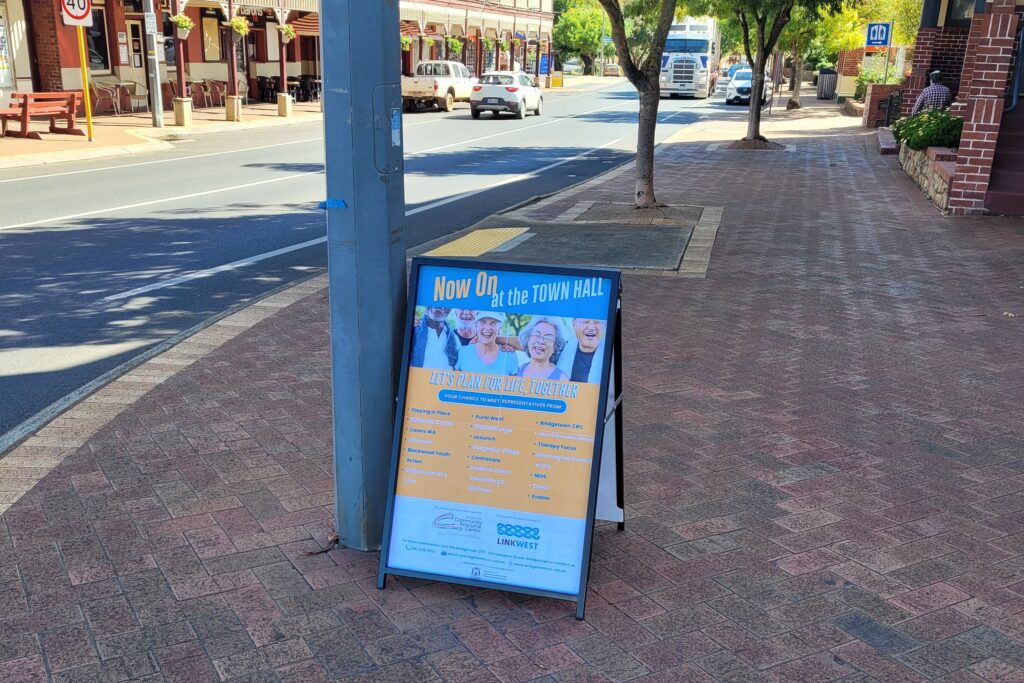
In celebration of Advance Care Planning Week (ACP), WA Primary Health Alliance (WAPHA) is proud to highlight one of our Greater Choice for At Home Palliative Care initiatives.
In partnership with Linkwest, we’re empowering communities with increased confidence and knowledge around end-of-life planning. Supporting people to plan ahead so they can be cared for with dignity and have their wishes respected at the end of life.
Last year over 1,100 people received information to support them to make informed decisions about advance care planning.
Across WA, 41 Community Resource Centres now have trained staff and volunteers helping their communities access end-of-life resources and specialist support.
From in-person and online workshops with Palliative Care WA, to National Palliative Care Week events in Pingelly and Karratha, our collaboration is building safer, supported spaces for communities across WA.
Many centres are also bringing together local stakeholders including GPs, nurses, hospital staff, funeral services and more to strengthen community access to care and increase advance care planning literacy.
For more information, visit the Practice Assist Advance Care Planning Tool Kit designed to assist general practices.
You can also read about supporting patients who wish to die at home in the January edition of GP Connect.
National Advance Care Planning (ACP) Week 16-22 March 2026

National Advance Care Planning (ACP) Week provides an opportunity to empower patients to think, talk, write and share about the care they would want if they were unable to speak for themselves.
This year’s theme is Your Story, Your Choice which encourages people to share their story, express their values and make choices that reflect what matters to them.
Why ACP matters:
- Decisions made are guided by a person’s beliefs, values, needs and preferences.
- Reduces unplanned hospitalisations and unwanted interventions.
- Decreases the length of stay in hospital in the last 12 months of life.
- Reduces stress, anxiety and depression in surviving relatives.
- Supports comprehensive proactive patient centred care.
Who to prioritise for ACP discussions:
ACP in general practice is best approached proactively with ACP discussions incorporated into routine care.
ACP should be prioritised:
- When completing >75+ Health Assessments and Indigenous Health Assessments.
- When dementia or cognitive decline is suspected.
- For patients with a life-limiting chronic condition.
- For patients with a terminal illness.
How you can support National ACP Week:
- Download and share ACP resources from Advance Care Planning Australia.
- Promote ACP Week 2026 through your communication channels.
- Schedule ACP conversations about future healthcare choices as part of routine health assessments and chronic condition management.
- Ensure ACP information and documentation is WA compliant.
- Promote and/or facilitate the uploading of completed ACP documents to My Health Record – Uploading an ACP document to BP Premier and My Health Record.
Further ACP information:
- Practice Assist ACP Toolkit.
- Clinician Assist WA – ACP Pathway.
- Primary Sense – Palliative Care Report.
- WA Department of Health – National ACP Week webinar.
- Palliative Care WA webinar – My Future Care – An introduction to ACP – National ACP Week.
- Cancer Council WA/PaSCE webinar – Advance Care Planning- Residential Goals In Aged Care.
- Palliative Care WA ACP support service (Advance Care Planning Support Service – Palliative Care WA).
- Advance Care Planning Australia – Values and Preferences statement for a person with impaired decision-making capacity (Person-with-insufficient-decision-making-capacity).
Quality improvement activity – Enhancing cultural safety in advance care planning (ACP)
National Advance Care Planning (ACP) Week provides a timely opportunity for practices to improve ACP staff education, ensuring staff lead culturally appropriate ACP discussions. This is especially important for multicultural communities in WA.
Initiatives for general practice to consider when introducing ACP discussions to CaLD patients include:
- Introduce ACP conversations early.
- Work with an accredited/certified interpreter and practice pre-briefing and debriefing.
- Utilising Auslan resources (Sensory Loss project – Palliative Care WA).
- Understand people’s cultural context, health literacy levels, their migration journey and experiences of healthcare from their own homeland.
- Understand the sensitivities/taboo of talking about dying/end of life – involve other people in the conversations e.g. family.
- Access easy/plain English resources where possible, keep translated information simple.
- Embrace cultural competency – ‘Diversity within diversity,’ avoid stereotyping.
Engaging CaLD communities in ACP requires a culturally sensitive approach. Completion of regular education and training empowers health professionals to be aware and responsive to the diverse values, beliefs and communication styles present among CALD individuals when discussing ACP and end-of-life care.
Quality Improvement Activity: ACP training – building confidence to lead culturally safe ACP discussions
This Plan-Do-Study-Act (PDSA) activity supports continuous quality improvement by increasing ACP training rates, facilitating staff to confidently discuss ACP in a culturally safe manner.
Our team of dedicated Quality Improvement Coaches are happy to assist with tailored QI support and development of activities for your practice, if you would like a QI Coach to provide your team support please contact us via our email qi@wapha.org.au
Immunisation and cancer screening updates
EOI for HESA accredited Immunisation Course – ’Understanding Vaccines and the National Immunisation Program’

WA Primary Health Alliance (WAPHA) is supporting nurses in general practice and aged care, and Aboriginal health practitioners to complete the ‘Understanding Vaccines and the National Immunisation Program’ Health Education Services Australia (HESA) accredited training program.
This expression of interest (EOI) is for registered nurses, enrolled nurses, nurse practitioners and Aboriginal health practitioners who require training on immunisation.
The program aims to equip health professionals with knowledge and skills to competently deliver a high quality and safe immunisation service.
It is self-paced learning and must be completed within a period of 20 weeks from the date of registration.
To apply Nurses and Aboriginal Health Practitioners must be:
- Registered with AHPRA; and
- Currently employed in residential aged care homes (RACHs) where vaccinating against COVID-19 is occurring; or
- Currently employed in a relevant health setting where vaccinating against COVID-19 is occurring.
Access the EOI here: Express your interest in Understanding Vaccines and the National Immunisation Program
For all queries, please email the WAPHA Immunisation team on immunisation@wapha.org.au
Infanrix Hexa expiry dates
Vaccines from manufacturer GSK which are composed of a syringe and a vial may have different expiration dates that are potentially causing confusion.
These products are manufactured separately, and syringes and vials with different expiry dates are often packaged together. This has been identified with GSK vaccines previously, and more recently, with Infanrix Hexa.
In instances where a vaccine requiring reconstitution comes with several components:
- Please note that the batch number on the box and the syringe or vial may be different.
- Please refer to the expiry date and batch number on the box when recording vaccination data into the Australian Immunisation Register (AIR), this is the correct detail for the product. Do not use the batch number on the vial or syringe.
- Please store all immunisations in their original packaging with the packaging closed until the time of vaccine administration to avoid confusion.
Ask a Respiratory Physician about the NLCSP
Presented by Primary Care Cancer Education
24 March (6pm to 7pm AWST)
Join this interactive session with Professor Fraser Brims, Respiratory Physician, developed specifically for GPs and primary care health professionals.
This is a unique opportunity to have your clinical and practical questions about the National Lung Cancer Screening Program (NLCSP) addressed, seek clarification on complex scenarios and follow discussions of real-world cases with a specialist.
The session will support evidence-based decision-making in general practice and provide practical insights you can apply to patient care.
Further information and register here.
Winter is coming! Protecting your patients through immunisation
Presented by WA Department of Health and RACGP
31 March (7pm to 8pm AWST)
In partnership with the WA Department of Health, RACGP is hosting an upcoming webinar for GPs focused on winter preparedness for general practice. The session will explore what to expect this flu season, including updates on influenza, FluMist, RSV and key information on timing and eligibility for immunisation programs.
Speaker: Professor Paul Effler, Senior Medical Advisor, Communicable Disease Control Directorate, Department of Health Western Australia.
More information and register here.
WA Health Influenza Update: Revised date
Presented by Department of Health Communicable Disease Control Directorate Immunisation Program
1 April (9.30am to 12pm AWST) Department of Health Theatrette, or online via MS Teams
The Department of Health Communicable Disease Control Directorate Immunisation Program invites WA immunisation providers to attend the 2026 WA Health Influenza Update.
If you have already registered, you do not need to register again. If you haven’t already registered, please register by clicking on the link below.
The session will be recorded and circulated post event.
Registration flyer link here.
Education and events
Practice Manager Forum: Futureproofing your general practice
Presented by WA Primary Health Alliance
27 March (9am to 3pm)

Join us for an engaging and informative in-person event designed to support WA general practices with navigating key changes, embracing innovation and strengthening quality improvement.
General practice is evolving rapidly, from accreditation reforms and privacy legislation updates to the integration of AI and digital tools.
The Practice Manager Forum will bring together primary care professionals to explore these changes, share insights and connect with support programs that enhance practice sustainability and patient care.
The speakers include David Osman (AGPAL), Megan Sheldon (MIGA) and Angela Mason (AVANT).
To find out more about the speakers or the forum, view the flyer and register today.
Webinars: The Big 5 proven activities for better mental health
Presented by WA Primary Health Alliance and MindSpot GP
31 March (12pm to 1pm)

What if supporting people’s mental health could be as straightforward as the advice we provide about diet and exercise?
WA Primary Health Alliance and MindSpot GP invite health professionals across WA to attend one of the upcoming webinars about The Big 5 evidence-based activities that are most strongly linked to better mental health.
To find out more, view the flyer and register for the regional webinar or the Perth webinar today.
Practice Manager Virtual Networking – April
Presented by WA Primary Health Alliance
2 April (11am to 12pm)

Join us at our second Practice Manager Virtual Networking Session, which will provide an opportunity for you to connect, discuss topics of interest, share information and raise questions with your WAPHA support team and other local general practices. These sessions will be held every two months.
When you register for each virtual session, you can indicate which topics you would like to be discussed by using the free text box.
To make the most of these interactive virtual sessions, you will need to have access to a microphone and camera, if possible.
To find out more, view the flyer and register today.
Immunisation – Winter Wellness Webinar
Presented by WA Primary Health Alliance
14 April (7pm to 8pm)

In recognition of the crucial role of GPs and vaccine providers in ordering, administering and educating patients, and ensuring vaccine coverage for all ages, WA Primary Health Alliance invites you to join Professor Paul Effler and Professor Chris Blythe as we discuss the following topics:
- The implementation strategies for the 2026 influenza program.
- The eligibility criteria for older adults, pregnant women and infants in the 2026 RSV program.
- The distribution process and availability of the immunisations.
- The new COVID-19 vaccine ATAGI guidelines.
To find out more, view the flyer and register today.
Building capacity in disaster preparedness and response for general practice
Presented by WA Primary Health Alliance
Ongoing e-learning training
These comprehensive eLearning modules are specifically designed to enhance participants’ knowledge and understanding of key emergency management principles and practices in Western Australia, including modules that are specific to your role within general practice, from General Practitioners to Practice Managers. Through interactive, scenario-based learning, participants will explore:
- WA State Emergency Management Arrangements.
- Roles and responsibilities of Hazard Management Agencies.
- The 28 Prescribed Hazards.
- Command and Control structures in WA.
- The Australian Warning System (AWS).
- Core concepts of Prevention, Preparedness, Response, and Recovery (PPRR).
- Emergency preparedness’ relevance to primary health care.
Incentives:
- The module is available to all practices and will offer RACGP Continuing Professional Development (CPD) hours and other CPD options for other health professions.
- Get your practice prepared for disaster to minimise the impact it will have on the business during disaster and maintain business continuity.
- Meet RACGP standards for general practice, which will support you in your practice accreditation.
Find out more information and access the course here.
Family, domestic and sexual violence (FDSV) eLearning modules
Presented by WA Primary Health Alliance
Self-paced online training options
WA Primary Health Alliance is making the following online modules available, at no cost, to general practice teams delivering care in Perth South.
Safer Families Centre of Research Excellence – University of Melbourne:
- Identifying and responding to domestic and family violence.
- Providing trauma and violence informed care in primary care.
- Addressing family violence: Aboriginal and Torres Strait Islander peoples.
- Recognising and responding to domestic, family and sexual violence experiences by ethnic and racial minority women.
- Recognising and responding to LGBTQA+ people impacted by DFV.
- Identifying and responding to child abuse and neglect.
- Six steps to support you to access and respond to elder abuse.
You will be able to select up to 3 modules and your access to the course is enabled for up to 5 years.
Each module is RACGP CPD accredited.
Register here to gain access in late March.
EOIs close 26 March.
Other Webinars, Events & Workshops
Acknowledgement
WA Primary Health Alliance acknowledges and pays respect to the Traditional Owners and Elders of this country and recognises the significant importance of their cultural heritage, values and beliefs and how these contribute to the positive health and wellbeing of the whole community.