
Issue 248 – 25 June 2026

|
Welcome to Practice Connect, a fortnightly update for practice managers, principals, nurses and administration staff on relevant issues, upcoming events and education. |
Quality improvement and data
The 10 QIMs: Using practice data to strengthen quality improvement and PIP QI participation
The 10 Quality Improvement Measures (QIMs) are nationally consistent measures used in the Practice Incentives Program Quality Improvement (PIP QI) to support data-driven improvement in general practice. They focus on preventive care, chronic disease management and key risk factor recording, helping practices understand their patient population and identify opportunities to improve care.
For practices participating in PIP QI, the QIMs form part of the quarterly de-identified PIP Eligible Data Set shared with the local Primary Health Network (PHN).

To receive the practice incentive payment, practices must submit this data and undertake continuous quality improvement activities, using the QIMs to identify priorities and track improvement over time.
What are the 10 QIMs?
The 10 QIMs currently cover:
- Patients with diabetes with a current HbA1c result
- Patients with a smoking status recorded
- Patients with height and weight recorded, with a derived BMI result
- Patients aged 65 years and over immunised against influenza
- Patients with diabetes immunised against influenza
- Patients with COPD immunised against influenza
- Patients with an alcohol consumption status recorded
- Patients with the necessary risk factors recorded to enable cardiovascular disease risk assessment
- Female patients with up-to-date cervical screening
- Patients with diabetes with a blood pressure result recorded
These measures help practices and PHNs understand patterns in care, improve data quality, and support targeted quality improvement activity based on the needs of the practice population.
What should practices be doing?
A practical approach is to start with data quality, team understanding and one manageable improvement focus. Practices can strengthen their QIM work by:
- Reviewing data quality and ensuring key fields are recorded consistently in the clinical software
- Confirming coding, diagnoses and preventive health data are entered correctly
- Using practice reports such as Primary Sense and the Primary Care Reporting Portal to identify care gaps and prioritise focus areas
- Involving the whole practice team in planning, testing and reviewing change ideas
- Documenting QI activities, such as meetings, PDSAs, audits and workflow changes, as evidence of continuous quality improvement. QI templates are available here
- Working with their WAPHA Quality Improvement Coach for support in these areas.
How can Primary Sense and the PCRP help?
Primary Sense supports practices by extracting de-identified data from the clinical information system for PIP QI submission and quality improvement reporting. It can help practices see where recording may be incomplete, identify cohorts relevant to the QIMs, and track progress over time.
The Primary Care Reporting Portal (PCRP) gives practices access to their My Practice Data Report through an interactive dashboard, making it easier to view QIM results, explore trends and use the data to guide improvement discussions with the practice team.
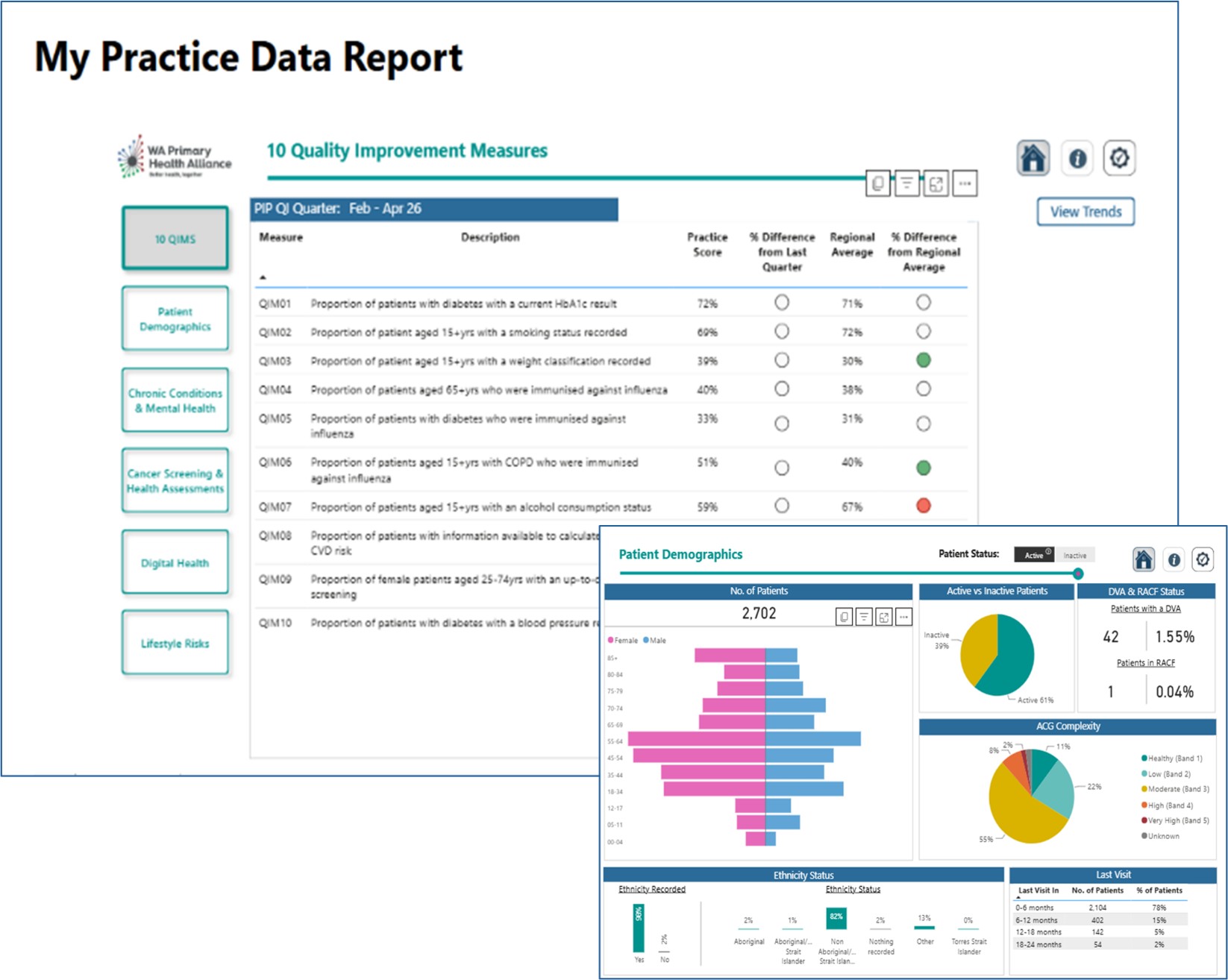
If you would like to discuss the 10 QIMs further or investigate options to use your data to guide your practice quality improvement, our team of dedicated Quality Improvement Coaches are happy to assist with tailored QI support and development of activities for your practice.
If you would like a QI Coach to support your team, please contact us via our email qi@wapha.org.au
Quality improvement (QI) webinars:
Catch up on previous webinar sessions by visiting the Quality Improvement YouTube series.
View our QI Bites videos – Primary Sense in Practice:
- Video 1: Accreditation Report
- Video 2: Health Assessments Report
- Video 3: PIP QI 10 Measures Report
- Video 4: CVD Patients for Screening, Recall and Treatments Report
Practice news
Update to RACGP infection prevention and control guidelines

The Royal Australian College of General Practitioners (RACGP) has updated the reprocessing section of the Infection prevention and control guidelines for general practices and other office-based and community-based practices (IPC Guidelines).
The updates align with Australian Standard AS 5369 – Reprocessing of reusable medical devices and other devices in health and non-health related facilities. These updates are necessary so that general practice aligns with nationally consistent, evidence‑based reprocessing standards, addressing changes in national expectations and reducing infection risk while supporting safe, high‑quality care.
The updated reprocessing section has been published within the current IPC Guidelines this week.
What has been updated and why:
The reprocessing section of the IPC Guidelines has been updated to strengthen patient safety, create national consistency, and provide accreditation clarity. Key updates include:
- introduction of a structured, risk‑based framework for reprocessing
- mandatory use of a washer–disinfector for pre-cleaning (manual cleaning alone is no longer sufficient unless specified by the device manufacturer)
- clearer requirements for training and competency of staff involved in reprocessing
- defined timeframes for initial treatment (ideally within 1 hour, no later than 4 hours)
- strengthened expectations for traceability, validation and equipment monitoring
- updated guidance for outsourcing, which now must be to accredited facilities, hospitals or accredited practices.
These updates support consistent, safe reprocessing practices across primary care and reduce variation that can lead to patient harm. They also align general practice with national safety expectations and the upcoming sixth edition of the Standards for general practices.
What this means for your practice:
Practices that reprocess reusable medical devices onsite may be affected by these updates. While many practices may already meet some requirements, others may need to:
- review and update reprocessing workflows
- modify or segregate reprocessing areas
- invest in a washer–disinfector or additional equipment
- update staff training and competency documentation
- revise outsourcing arrangements where applicable.
A transition period until 1 January 2028 will give practices time to plan, assess costs and implement changes before these requirements become mandatory for accreditation.
The updated IPC Guidelines are now available on the RACGP website, with an implementation period for changes to 1 January 2028.
Along with the updated guidelines, the RACGP has published a FAQ resource and video introducing new content. Ongoing support from the Standards Team is also available.
For further support, information or guidance, please contact Practice Assist or your Primary Care Navigator on 08 6278 7900 or via email practiceassist@wapha.org.au
Expressions of interest: Non-dispensing pharmacists in general practice
WA Primary Health Alliance (WAPHA) and the Pharmaceutical Society of Australia are seeking expressions of interest from general practices across WA’s three Primary Health Network regions (Perth North, Perth South and Country WA) to introduce non-dispensing pharmacists (GP pharmacists) into their practice.
Commissioned by WAPHA, this iteration of the program aims to support older adults in continuing to live in their communities through early intervention initiatives that promote healthy ageing, slow decline and support the ongoing management of chronic conditions.
Successful practices will have access to a non-dispensing pharmacist for approximately 15 hours per week, for the duration of the funding period (until June 2027). The pharmacist will be onsite and will require access to a dedicated consultation room.
To learn more about the eligibility criteria and submit an expression of interest, click here.
Update on fuel impact reporting
As fuel supply pressures ease, WA Primary Health Alliance (WAPHA) is concluding fuel impact reporting.
Thank you for sharing how the situation has affected your practice and patients. Your insights informed reporting to the Department of Health, Disability and Ageing and broader system coordination, ensuring the experience of general practice was represented.
Formal reporting has now concluded and the online reporting form on the WAPHA website will be discontinued.
If you experience ongoing impacts, please contact Practice Assist or your Primary Care Navigator on 08 6278 7900 or via email practiceassist@wapha.org.au
Consumer Medicines Line closure: what practices need to know

The Consumer Medicines Line (1300 633 424) will cease on 30 July 2026. The service has provided medicines information and supported consumers to report suspected adverse events from medicine use.
After the closure, consumers should contact their regular GP, nurse practitioner, midwife or community pharmacist first for medicines advice, including concerns about taking medicines safely or possible side effects.
If consumers cannot access their usual healthcare professional, they can contact 1800 MEDICARE (1800 633 422). This service is available 24 hours a day, seven days a week, with registered nurses providing advice and helping people find the most appropriate care.
Consumers and health professionals can report side effects or problems with medicines directly to the Therapeutic Goods Administration (TGA). Guidance is available for both consumers and health professionals:
- Overview of adverse event reporting for medicines | Therapeutic Goods Administration (TGA)
- Report an adverse event or safety problem | Therapeutic Goods Administration (TGA)
Practices are encouraged to review and update patient-facing resources, website content, referral processes and internal guidance documents that currently refer consumers to the Consumer Medicines Line closure.
Practice action:
- Update materials and processes that refer to the Consumer Medicines Line.
- Encourage consumers to contact their regular healthcare professional first for medicines advice.
- Promote 1800MEDICARE as an alternative support option when usual care is unavailable.
- Ensure staff know how to report suspected adverse events to the Therapeutic Goods Administration.
Trusted online information:
The Australian Commission on Safety and Quality in Health Care offers an online learning module for health professionals about reporting adverse events associated with medicines and vaccines. The course can be found here.
Should you require further information about the closure of the Consumer Medicines Line, please email QUM@health.gov.au
MyMedicare and Medicare updates
Update to changes to Assignment of Benefits from 1 July 2026

On 18 June 2026, the Federal Government announced amendments to the planned Assignment of Benefit process, which will take effect on 1 July 2026.
What’s new:
- Regulatory amendments to support a 12-month transition period.
- Verbal consent will be accepted in all settings for 12 months from 1 July 2026.
- From 1 July 2026, patients registered with MyMedicare, residents of aged care homes, and patients of Aboriginal Community Controlled Health Organisation (ACCHO) and Aboriginal Medical Services (AMS) will be able to make an enduring assignment of benefit for ongoing GP bulk billed services, either directly or through an authorised representative. Specifically:
- A patient registered with MyMedicare will be able to make one enduring agreement to receive services from all general practitioners at their MyMedicare practice, if offered.
- A patient of an ACCHO or AMS will be able to make an enduring agreement with the ACCHO or AMS and they will be able to have multiple agreements with multiple ACCHS or AMS.
- A patient living in a residential aged care home will be able to make multiple enduring agreements with different practitioners.
- Compliance will not commence until regulatory changes are complete and will begin with prevention and education.
These regulatory amendments are being progressed as a priority. The Department is regularly updating its frequently asked questions (FAQs) which clarify the Assignment of Benefit changes, including what the changes mean practically. These will be updated to reflect the enduring agreements and how these can be established.
The Department will use the 12-month transition period to explore other regulatory and legislative options to further reduce the administrative burden on both GP practices and patients while ensuring the integrity of Medicare is maintained.
The Department recognises the substantial efforts by those who are working towards implementation.
For further details on these changes click here.
For enquiries or further details regarding the Assignment of Benefit (AoB), please reach out to AssignmentofBenefit@health.gov.au
For further support to find information, establish efficient workflows or guidance on patient communication, please contact Practice Assist or your Primary Care Navigator on 08 6278 7900 or via email practiceassist@wapha.org.au
MyMedicare Minute from the Department of Health, Disability and Ageing
|
MyMedicare Minute – EIGHT One key message. One minute to read. |
|
Updated MyMedicare resources What’s been updated?
What practices need to know:
Resources All resources can be found on the Departments website here. Links: |
|
MyMedicare Minute – NINE One key message. One minute to read. |
|
Supporting patients to meet eligibility to register for MyMedicare MyMedicare registration is voluntary. To register, patients must meet eligibility criteria including recent face-to-face services. In some circumstances, patients may not meet these requirements due to extenuating or unforeseen circumstances that have limited their ability to access care. In these cases, an exemption may be applied by the practice when registering the patient. What to do first:
What practices need to know:
Resources A fact sheet has been developed and can be found on the Department’s website. Further guidance is available in the MyMedicare Program Guidelines (Section 6.4 – Exemption to patient eligibility requirements) or on the MyMedicare Registration Form. |
Immunisation and cancer screening updates
Extension of the Free Influenza Vaccine Program

The WA Government has extended its Free Influenza Vaccine Program until 31 July 2026, giving Western Australians more time to get vaccinated ahead of the peak winter period.
All Western Australians aged six months and older are eligible for a free influenza vaccine.
This follows one of the worst flu seasons on record in WA last year, with hospitals treating thousands of seriously ill patients across all age groups. Vaccination remains one of the most effective ways to protect individuals and the wider community.
To read the full announcement, click here.
FluMist update – expiry dates and vaccine errors
FluMist expiry dates:
The first batch of doses expires on 10 July 2026, followed by the next batch on 16 July 2026 and the final batch on 7 August 2026.
Providers should review their current FluMist stock, check expiry dates carefully, and place additional orders if needed to meet patient demand. WA Department of Health data shows that three quarters of children aged 2 to 11 years who received an influenza vaccination this season chose FluMist rather than the intramuscular vaccine.
For ordering support or further information, contact vaccineorders@health.wa.gov.au
FluMist vaccine errors:
The Therapeutic Goods Administration has issued a safety alert following multiple reports of FluMist, an intranasal live attenuated influenza vaccine (LAIV), being administered in error to children under 2 years of age.
LAIV is contraindicated in children under 2 years of age. In Australia, FluMist is registered only for children and adolescents aged 2 to less than 18 years.
The TGA asks clinicians to:
- Confirm the child is 24 months or older before administering FluMist.
- Review the FluMist Product Information before use.
Read the full alert here.
Expansion of the WA Health Japanese Encephalitis Virus Vaccination Program
The WA Health Japanese Encephalitis Virus (JEV) Vaccination Program has been expanded until allocated stock is exhausted or 31 October 2026, whichever occurs first.
The expanded program now includes:
- All residents in the Pilbara region
- Workers at mining company sites in the Kimberley and Pilbara regions
- Travellers to the Kimberley and Pilbara regions
People already eligible for a free JEV vaccine include:
- All residents in the Kimberley region
- People living or residing in specified Pilbara postcodes who spend at least four hours outdoors each day for unavoidable activities
- People who work directly with mosquitoes in the Kimberley or Pilbara regions, or who handle live JEV, such as laboratory workers and entomologists
Government-funded JEV vaccines can be ordered through Onelink. Allocated stock expires between August and October 2026, so please order accordingly.
See the provider email for further information here, sent to all immunisation providers via your Onelink account email address.
If you did not receive this email, please log onto Onelink and check your current email address on the account.
Adult pneumococcal schedule updates
From 1 July 2026, the adult pneumococcal vaccination schedule under the National Immunisation Program (NIP) will be updated.
- The 21-valent pneumococcal conjugate vaccine (21vPCV), Capvaxive®, will be added to the NIP and the adult immunisation schedule will be revised.
- For adults, Capvaxive® will replace Prevenar 13® and Pneumovax 23® on the NIP.
- Capvaxive® will be recommended and funded under the NIP for:
- Adults aged 65 years and over
- Aboriginal and Torres Strait Islander adults aged 25 years and over
- Adults aged 18 years and over with specified medical conditions that increase their risk of severe disease
- The changes lower the recommended age for pneumococcal vaccination, simplify the schedule, and broaden protection against additional strains of the disease.
The Department of Health, Disability and Ageing has provided the following resources to support communication about these changes:
- Adult pneumococcal vaccination – Program advice for health professionals
- Pneumococcal vaccination – Consumer fact sheet
Further information and resources will be available on the department’s website in the week before the 1 July 2026 program change.
Health professionals and stakeholders are encouraged to subscribe to the email list for the latest NIP updates.
WAPHA has created a Quality Improvement activity for practices around the changes and recalling eligible patients to ensure eligible cohorts have access to the new vaccine. You can access the Quality Improvement activity here.
Vaccine ordering
- Capvaxive will be available to order from mid-June but must not be administered before 1 July 2026.
- Prevenar 13 and Pneumovax 23 may continue to be used until 30 June 2026. From 1 July 2026, only Capvaxive will be funded for adults under the NIP.
From 1 July, dispose of any remaining Prevenar 13 and/or Pneumovax 23 stock and record it as wastage.
To read the WA Health Department Vaccine Updates and to subscribe to them click here.
Diphtheria declared Communicable Disease Incident of National Significance
In a statement released on 22 May 2026, Australia’s Chief Medical Officer, Professor Michael Kidd AO, declared diphtheria a Communicable Disease Incident of National Significance.
The declaration allows for enhanced coordination across all levels of government, enabling rapid deployment of vaccines, medications and workforce support, as well as nationally coordinated surveillance and public health guidance.
There have now been 148 cases of diphtheria reported in regional WA since the first case was notified in late December 2025, with the majority occurring among Aboriginal people in the Kimberley region. A smaller number of cases have been reported in the Pilbara and Goldfields regions. In response to the outbreak, the WA Immunisation Schedule and WA Aboriginal Immunisation Schedule have been updated to include expanded eligibility for diphtheria-containing vaccines.
Additional dTpa vaccines have been procured to support the outbreak response in the three regions and orders can be placed via Onelink. Ordering is currently limited to immunisation providers in the Kimberley, Pilbara or Goldfields regions, but will be monitored and expanded as required. Providers can use existing National Immunisation Program (NIP) funded dTpa vaccines already available while awaiting delivery of outbreak-specific stock, and report this use via an online form to support replenishment from state-funded supply. Please do not order NIP vaccines specifically for this purpose.
Read the WA Department of Health clinician alert from 17 June 2026 here.
The Education Requirements for Immunisation Provision table found on the WA Health Immunisation education page includes the education requirements for administering diphtheria-containing vaccines.
Also see the resources below for further information:
National Bowel Screening Program
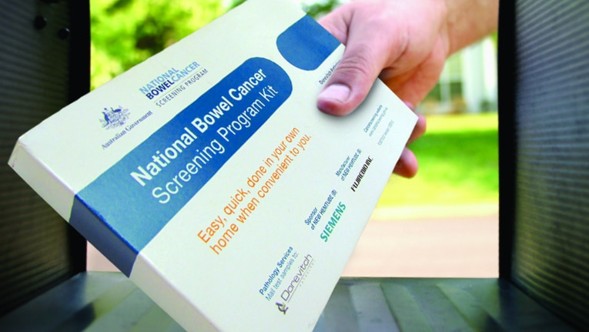
Recent data from the Western Australian Cancer Registry shows colorectal cancer remains the fourth most commonly diagnosed cancer in Western Australia and the second leading cause of cancer-related death.
Between January 2022 and December 2023, 6.3 million people were invited to participate in the program, with 41.7 per cent taking part. Because colorectal cancer often develops slowly, screening can support earlier detection and help reduce mortality and morbidity.
From 1 July 2024, people aged 45 to 49 became eligible to request a screening kit, expanding access to earlier detection.
This June, use the activities and resources from Cancer Council WA below to help raise awareness and encourage participation in screening.
Updated risk assessment guide for colorectal cancer
The updated guides for bowel, breast and skin cancer are now available to support clinical decision-making when patients present with symptoms in general practice.
Download a copy to assist with timely assessment and referral.
Clinical management and screening for bowel cancer eLearning module
This free online learning module is tailored for primary care health professionals, such as GPs, nurses and Aboriginal Health Workers. This module aims to define your role in bowel cancer prevention, early diagnosis and screening, offering practical tips and case studies to support your learning.
Improve participation in the NBCSP and earn CPD hours
Take part in a Quality Improvement activity using Plan–Do–Study–Act cycles to improve participation in the National Bowel Cancer Screening Program (NBCSP) (ages 45-74) via patient reminder prompts. This activity can earn you six CPD hours under measuring outcomes.
Integrate your practice with the National Cancer Screening Register (NCSR)
Integrate with the NCSR to view patient screening history, record results, and support timely follow-up. WA Primary Health Alliance (WAPHA) is currently assisting eligible practices to navigate the integration process, including practice visits, NCSR demonstrations, and hands-on support. For assistance, contact Violet.Corrigan@wapha.org.au
For further support please contact Practice Assist or your Primary Care Navigator on 08 6278 7900 or via email practiceassist@wapha.org.au
Research and surveys
Seeking GP practice owners and managers to participate in a national research program
GP practice owners, practice managers and clinic leaders involved in digital technology decisions are invited to take part in a national research program testing PC-IMPROVE, a new evidence-based tool designed to support Digitaltech-humanness in general practice.
Participating clinics will complete two online surveys over 16 weeks and receive a personalised report, a practical improvement guide and a final benchmarking summary. The program aims to help practices strengthen the integration of digital technology with human-centred care, supporting patient experience, staff wellbeing and clinic operations.
The research has ethics approval through The University of Queensland (2026/HE010638) and is funded by the Australian Research Council, the Australian Association of Practice Management (AAPM), the Australian Primary Health Care Nurses Association (APNA) and Inala Primary Care.
The final Digitaltech-humanness clinic improvement tool will be freely available to Australian general practices from late 2026. Insights from participating clinics will help ensure the tool is practical, useful and relevant to the needs of general practice teams.
Register your interest here.
Education and events
Webinar: Managing chronic kidney disease (CKD) in primary care
Presented by WA Primary Health Alliance
25 June (6.30pm to 7.30pm)

GPs and other primary health care clinicians are invited to join us for the second webinar in this series with Kidney Health Australia.
This webinar will take a deep dive into managing chronic kidney disease (CKD) with a focus on chapter two of the CKD Management in Primary Care handbook (5th edition).
To find out more, view the flyer and register today.
Rockingham Preventative Health Forum – Strengthening immunisation and cancer screening in general practice
Presented by WA Primary Health Alliance
30 June (6pm to 7pm)

WA Primary Health Alliance invites all clinical staff to attend our Rockingham Preventative Health Forum.
This face-to-face event will provide information about the National Immunisation Program (NIP), vaccine safety and administration, and the national cancer screening programs.
To find out more, view the flyer and register for the Rockingham Forum today.
Webinar: Simplifying Pneumococcal Vaccination Across the Lifespan
Presented by The Nursing and Midwifery Board of Australia
2 July (4.30pm to 5.45pm)

Join the Immunisation Coalition for the Professor Allan Cripps Memorial Tribute Webinar on pneumococcal disease.
This educational webinar will examine Australia’s changing approach to pneumococcal vaccination, including the introduction of the simplified two-vaccine National Immunisation Program (NIP) schedule.
Designed for GPs, nurses and pharmacists, the session will offer practical guidance on using Prevenar 20 for children and adolescents under 18 years, and Capvaxive for adults aged 18 years and over. Expert speakers will review the epidemiology and burden of pneumococcal disease in Australia, discuss challenges in vaccination coverage and uptake, and identify opportunities to strengthen protection across the lifespan through streamlined vaccination pathways and catch-up strategies.
Register here.
Designated Registered Nurse Prescribing Webinars
Presented by WA Department of Health and WA Primary Health Alliance
Metro Webinar: 22 July (6pm to 7pm) and Country Webinar: 23 July (6pm to 7pm)

WA Department of Health and WA Primary Health Alliance invite GPs, general practice staff and other interested primary health care professionals to learn more about the Nursing and Midwifery Board of Australia’s designated registered nurse (RN) prescribing endorsement and application in primary care settings.
To support meaningful and evidence-based Q&A, we invite you to submit questions when registering.
Given the evolving nature of this new endorsement, these webinars will not address operational matters relating to MBS billing, remuneration implications associated with additional qualifications or specific clinical governance issues.
To find out more, view the flyer and register for the Metro Webinar or the Country Webinar today.
Other Webinars, Events & Workshops
| BreastScreen WA mobile visit to Tambellup Presented by BreastScreen WA 26 June to 29 June |
| Designated registered nurse prescribing: Pathway to practice Presented by Nursing Midwifery Board of Australia 29 June |
| Endometriosis in Primary Care: Diagnosis, Management and Referral Pathways Presented by RACGP and Goldfields Health Professionals Network 30 June |
| BreastScreen WA mobile visit to Gnowangerup Presented by BreastScreen WA 30 June to 3 July |
| Viral Hepatitis in Primary Care Day – Scholarships available Presented by ASHM 4 July |
| BreastScreen WA mobile visit to Booragoon Presented by BreastScreen WA 6 July to 7 August |
| BreastScreen WA mobile visit to Jurien Bay Presented by BreastScreen WA 9 July to 3 August |
| Ask Us Anything Series – Hepatitis B Edition Presented by ASHM 14 July |
| BreastScreen WA mobile visit to Lake Grace Presented by BreastScreen WA 21 July to 27 July |
| RSV vaccination for older people Presented by Benchmarque Group 22 July and 23 July |
| BreastScreen WA mobile visit to Dumbleyung Presented by BreastScreen WA 28 July to 30 July |
| Chronic Conditions and Loneliness Course Presented by eCentreClinic 29 July to 23 November |
| Impact Cafe: Seniors Support Sector Presented by Western Australian Community Impact Hub 3 August |
| FDV safety planner webinar Presented by Women’s and Newborn Health Service 12 August |
| Australasian Viral Hepatitis Conference Presented by Hepatitis WA 12 to 14 August |
| Aboriginal Health Conference 2026 Presented by Rural Health West 16 August |
| Course in Ear Wax Removal (Microsuction) Presented by Benchmarque Group 10 September |
Acknowledgement
WA Primary Health Alliance acknowledges and pays respect to the Traditional Owners and Elders of this country and recognises the significant importance of their cultural heritage, values and beliefs and how these contribute to the positive health and wellbeing of the whole community.