
Issue 252 – 20 August 2026
|
Welcome to Practice Connect, a fortnightly update for practice managers, principals, nurses and administration staff on relevant issues, upcoming events and education. |
MyMedicare and Medicare updates
Bulk Billing Practice Incentive Program payments
Bulk Billing Practice Incentive Program (BBPIP) payments have been disbursed to eligible practices and providers for the period 1 April to 30 June 2026. Please note, timeframes for payments may vary across financial institutions.
If practices or GPs think they were due a payment and have not yet received it, they can contact Services Australia’s Medicare Provider line on 132 150 (option 2) for assistance. More information about BBPIP is available on the Australian Government Department of Health, Disability and Ageing website.
For further information or support on the BBPIP program for your practice, contact Practice Assist on 08 6278 7900 or email practiceassist@wapha.org.au
Medicare Mental Health Check In campaign and resources

A national communication campaign to raise awareness of the Medicare Mental Health Check In launched on 10 August 2026 and will run for 10 months, promoting early help-seeking among people facing mild mental health challenges such as low mood, stress and anxiety.
The campaign will promote the free online support available through Low-intensity Cognitive Behavioural Therapy (LiCBT) tools, which can be accessed independently or with guidance from a qualified mental health practitioner via telehealth for those who would like extra support.
To help people recognise early signs of distress and understand their support options, resources are available on the website, including fact sheets, posters and explainer videos.
Resources are also available for health professionals, Aboriginal and Torres Strait Islander people and multicultural communities.
MyMedicare Minute from the Department of Health, Disability and Ageing
|
MyMedicare Minute One key message. One minute to read. |
| MyMedicare registration makes patients eligible for enduring assignment of benefit (AoB) agreements. Patients can only have one MyMedicare registration. Changing registration impacts MyMedicare-linked benefits.
What practices need to know:
What practices should do now:
Resources: Further information on the enduring AoB can be found here. Further information on MyMedicare can be found here. |
Feature – Cancer Screening
National Breast Screening Program

BreastScreen Australia is a joint initiative of the Australian, state and territory governments that aims to reduce illness and deaths from breast cancer through early detection. Women aged 40 and over can access a free screening mammogram every two years, with women aged 50 to 74 actively invited to participate.
Between 1985–1989 and 2011–2015, 5-year relative survival rates from breast cancer improved from 73% to 91%.
Research demonstrates that encouragement from the GP and Practice Nurse will increase the likelihood of women attending a screening mammogram. Although a doctor’s referral is not essential, general practice is valued as having a fundamental role in encouraging women to have a screening mammogram and in the management of screen detected breast lesions.
BreastScreen WA delivers more than 130,000 screening mammograms each year. For every 1,000 women screened, around 950 will receive a normal result, about 50 will be recalled for further tests, and up to 6 may have breast cancer detected.
Breastscreen WA has permanent locations in Perth and regional sites. They also have Breastscreen mobile vans that tour regional and remote areas on a rotating basis. Find a location near your clinic here.
Factsheets for GPs are available here.
National Cervical Screening Program

The National Cervical Screening Program (NCSP) aims to prevent cervical cancer through regular Cervical Screening Tests, which detect human papillomavirus (HPV) before it can lead to cervical cell changes.
Eligible women and people with a cervix aged 25 to 74 should be encouraged to screen regularly, as most cervical cancers occur in people who have never screened or do not screen routinely.
Participants can choose clinician-collected or self-collected testing. Self-collection should be offered in-clinic where possible, with clear instructions and follow-up to ensure samples are returned promptly.
Eligible people can collect their own vaginal sample in a private space, with instructions and a swab provided by a healthcare professional, to overcome barriers to regular screening, such as discomfort with speculum exams.
Self-collection can occur in other settings at the discretion of the requesting healthcare provider and with the recommended self-collection swab.
Further information and resources:
National Bowel Cancer Screening Program
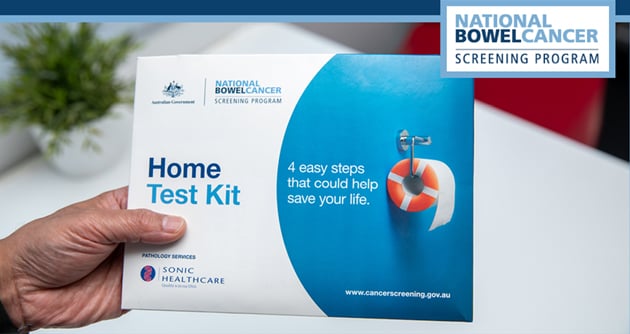
Recent data from the Western Australian Cancer Registry shows colorectal cancer remains the fourth most commonly diagnosed cancer in Western Australia and the second leading cause of cancer-related death.
In Western Australia participation rates in the National Bowel Cancer Screening Program were 41.5% (in 2020-2021), with the highest rates reported in the Augusta, Margaret River and Busselton region of 48.8%.
Because colorectal cancer often develops slowly, screening can support earlier detection and help reduce mortality and morbidity.
From 1 July 2024, people aged 45 to 49 became eligible to request a screening kit, expanding access to earlier detection.
Updated risk assessment guide for colorectal cancer
The updated guides for bowel, breast and skin cancer are now available to support clinical decision-making when patients present with symptoms in general practice. Download a copy to assist with timely assessment and referral.
Clinical management and screening for bowel cancer eLearning module
This free online learning module is tailored for primary care health professionals, such as GPs, nurses and Aboriginal Health Workers. This module aims to define your role in bowel cancer prevention, early diagnosis and screening, offering practical tips and case studies to support your learning.
Improve participation in the NBCSP and earn CPD hours
Take part in a Quality Improvement activity, using Plan–Do–Study–Act cycles to improve participation in the NBCSP (ages 45-74) via patient reminder prompts. Use the activities and resources from Cancer Council WA to help raise awareness and encourage participation in screening.
Screening Saves Lives campaign
The Screening Saves Lives campaign is a joint initiative of the National Bowel Cancer Screening Program, BreastScreen WA, the National Lung Screening Program and the WA Cervical Cancer Prevention Program. It aims to improve awareness and participation in cancer screening among LGBTQIA+ communities.
The campaign responds to evidence that LGBTQIA+ people may be less likely to participate in screening due to concerns about discrimination or feeling unsafe when accessing healthcare.
A Stakeholder Communications Toolkit and orderable resources, including the Screening Saves Lives flyer, are available to help practices promote inclusive, lifesaving screening programs.
The Beyond the Binary: Improving Healthcare Access for LGBTQI+ Patients – YouTube webinar covers the importance of using inclusive language and culturally competent care with LGBTQIA+ patients. It covers strategies to create welcoming environments in practices, addressing factors influencing LGBTQIA+ community participation in cancer screening and providing information on available support services.
The Australian Cancer Nursing and Navigation Program
The Australian Cancer Nursing and Navigation Program (ACNNP) aims to ensure all people with cancer have access to high quality and culturally safe care for all cancer types across the country.
The program is free to access and helps guide families, friends and carers to support patients to navigate the health system.
The program has multiple components including:
- Cancer care nursing services
- Cancer navigation services
- Specialist support services
Read the latest newsletter and subscribe here.
Practice news
Digital health tools training resources for your general practice team

General practice teams seeking to build confidence in digital health tools can access a range of training resources designed to support everyday use in practice. The following resources provide professional development, practical guidance and topic-specific learning opportunities.
- Digital Health Training and Support (CPD accredited professional development and education)
- Practice management specific training
- Using My Health Record in general practice
- Electronic prescriptions and active script list in your practice
- Introduction to active script list for prescribers
- Clinical safety in digital health – introductory
- Digital health security awareness
- Using online conferencing and telehealth technologies securely
- Cyber security considerations when working remotely or working from home
- Pre-recorded webinars for healthcare providers
For further information on other digital health topics, refer to:
To further support your general practice team, the Australian Digital Health Agency provides useful communication materials on digital health resources that include a QR code to help staff access additional information.
If you would like support on the use of digital health tools in your practice, contact Practice Assist on 08 6278 7900 or via email practiceassist@wapha.org.au
care finders program: Kimberley
WA Primary Health Alliance (WAPHA) is seeking to engage a suitably qualified provider to deliver the care finders program across the Kimberley region with full service delivery to commence by 1 January 2027 and conclude on 30 June 2029. Care finders support senior Australians who are not able to arrange services without intensive support and do not have a family member or friends who can help.
Closing date for submissions is 10 September 2026.
Referrals to WACHS Goldfields Specialist Outpatient Services Transitioning to CRS
Upcoming change for referrers: Referrals to WA Country Health Service (WACHS) Goldfields Public Specialist Outpatient Services
From Tuesday 8 September, all external referrals (from GPs, nurse practitioners, and private specialists) to 15 WACHS Goldfields public medical-led outpatient specialties will be managed through the Central Referral Service (CRS). This means the CRS will be the single intake point for non-immediate referrals to these services.
This change supports ongoing outpatient reform to streamline referral processes and improve access to specialist care.
Key primary care referrers have been advised of the change and are being supported through Q&A sessions and training resources.
See the flyer here for further information and contact details for support for your practice.
WACHS would like to thank you for your continued support as they work to improve access to public specialist outpatient services in the region.
Launch of national miscarriage education and awareness program

The Australian Government Department of Health, Disability and Ageing (DHDA) has launched a new miscarriage education and awareness program called Miscarriage Matters.
To help people better support those who have experienced miscarriage, the program includes the following fact sheets:
- What you can say or do
- Learn the facts about miscarriage
- Understanding how experiences of miscarriage can be different
The fact sheets are also available in Arabic, Punjabi, Simplified Chinese, Traditional Chinese and Vietnamese.
For further information, visit the DHDA website.
Supporting dementia risk reduction
In July and August 2026, the Australian Government Department of Health, Disability and Ageing (DHDA) sent a letter to all Australians aged 50 with information about reducing dementia risk and delaying onset and progression.
GPs may have patients bring in the letter or a dementia risk assessment report and ask for support.
The letter includes a QR code to the DHDA website with a link to CogDrisk, a personalised risk assessment tool.
The website also has resources for health professionals, Aboriginal and Torres Strait Islander people and multicultural communities.
Nursing in Primary Health Care Program
For more than a decade, the Australian Primary Health Care Nurses Association (APNA) Nursing in Primary Health Care Program (NiPHC) has helped over 2,000 nurses learn, grow and lead in their careers. You could soon join them, thanks to new funding from the Australian Government Department of Health, Disability and Ageing.
Choose from three tailored programs designed by nurses for nurses, building the confidence, knowledge and practical skills you need to deliver high-quality care and work to your full scope of practice. Just as importantly, they will support you in doing what primary health care nurses do best: keeping Australians healthy, at home and out of hospital.
Learn more here.
Immunisation updates
AIR due and overdue rules for Pneumococcal and Influenza vaccinations

In May the Australian Immunisation Register (AIR) updated the due and overdue rules for both the Pneumococcal and Influenza vaccinations.
As a result, some parents may receive advice from AIR and/or Centrelink stating that their child is due for immunisations.
If a child is only due for an influenza vaccination, their Immunisation History Statement will continue to show as “up to date”.
This update does not affect eligibility for family assistance payments.
Read the AIR update here.
Call for presentations – Public Health Update
The Communicable Disease Control Directorate (CDCD) is seeking presentations for Immunisation Day on 5 November 2026.
Western Australian general practices working in immunisation and disease control are invited to showcase 2026 projects, quality improvement activities or effective practice.
Presentation topics may include vaccine-preventable disease outbreak management, challenging scenarios or areas for further exploration. The Public Health Update will be attended by public health nurses, managers, physicians, epidemiologists and government and research project officers.
To submit a presentation and learn more visit the Public Health Update Abstract submission form.
Submission deadline: COB Friday 18th September
500 editions of Vaccine Updates

The Vaccine Updates electronic newsletter was introduced in August 2011 by the WA Department of Health Immunisation Program to update immunisation providers on program changes and alerts in a timely manner.
Over 5,000 immunisation providers now receive up to date information on all major policy and vaccine programs in Western Australia.
View the 500th edition and subscribe here if you are not already subscribed to the newsletter.
RSV update
Presented by Immunisation Coalition
3 September (4.30pm to 5.30pm AWST) online
This webinar from Immunisation Coalition will provide an overview of RSV epidemiology, disease burden and immunisation rates for pregnant women, infants up to 2 years old, and an update on the newly NIP listed RSV vaccine Arexvy, for first nations people 60 years and over and adults 75 years and over. Other areas covered will include safety and efficacy, and initiatives to increase vaccination rates across the different age groups.
This information will be of interest to healthcare professionals who provide advice and vaccination for RSV in pregnant women, babies, young infants and older adult populations.
Register here.
Research and surveys
Public consultation – Mental Health Commission Disability Access and Inclusion Plan 2027-2029
The Mental Health Commission is currently developing its Disability Access and Inclusion Plan (DAIP) 2027-2029 to improve access and inclusion for people with disabilities. They are inviting feedback from people with disabilities, carers, families, advocates, service providers and community members.
How to contribute feedback:
- Complete the online survey DAIP Public Consultation Surveys 2026
- Provide feedback over the phone by calling the voicemail service at 08 6553 0360
- Email feedback to mhc.daip@mhc.wa.gov.au
Submissions close Monday 31 August 2026. Following analysis, the Mental Health Commission will publish a summary of feedback and explain how it has informed the DAIP.
Health promotion event
Wear it Purple Day 2026

Wear It Purple Day is Friday 28 August 2026.
Wear It Purple Day was created to ensure every LGBTQIA+SB young person knows they are seen, supported and never alone.
This year’s Wear It Purple Day theme is “Colours of Courage”.
Colours of Courage celebrates the many different forms of courage shown by LGBTQIA+SB young people, allies and communities every day.
Register your event
Planning something for Wear It Purple Day? Register your event here and join thousands of schools, workplaces and communities across Australia.
Download resources
Access free posters, activity ideas, social media graphics and workplace toolkits here.
Learn more here.
Education and events
Webinar: PIP QI made simple
Presented by WA Primary Health Alliance
2 September (12pm to 1pm)

Join us for a practical webinar that will provide an overview of the Practice Incentives Program Quality Improvement (PIP QI) Incentive and what it means for your practice.
To find out more, view the flyer and register today.
Other Webinars, Events & Workshops
| BreastScreen WA mobile visit to Williams Presented by BreastScreen WA 20 August to 25 August |
| BreastScreen WA mobile visit to Claremont Presented by BreastScreen WA 24 August to 4 September |
| BreastScreen WA mobile visit to Dunsborough Presented by BreastScreen WA 24 August to 5 November |
| Syphilis Update Discussion Presented by ASHM 26 August |
| Mesothelioma in primary care: From recognition to ongoing management Presented by Cancer Council 1 September |
| New and Developing Care Pathways for Vulnerable and Complex Patients Presented by South Metropolitan Health Service 3 September |
| Course in Ear Wax Removal (Microsuction) Presented by Benchmarque Group 10 September |
| BreastScreen WA mobile visit to Koorda Presented by BreastScreen WA 7 September to 9 September |
| WA Sepsis Grand Round Presented by Child and Adolescent Health Service 10 September |
| BreastScreen WA mobile visit to Mukinbudin Presented by BreastScreen WA 10 September to 16 September |
| BreastScreen WA mobile visit to Nedlands Presented by BreastScreen WA 14 September to 2 October |
| BreastScreen WA mobile visit to Lamington Presented by BreastScreen WA 18 September to 22 October |
| Integrating Digital Resources into Mental Health Care Presented by Black Dog Institute 23 September |
| Perform Peripheral Intravenous Cannulation and Iron Infusion Presented by Benchmarque Group 12 November |
Acknowledgement
WA Primary Health Alliance acknowledges and pays respect to the Traditional Owners and Elders of this country and recognises the significant importance of their cultural heritage, values and beliefs and how these contribute to the positive health and wellbeing of the whole community.