
Issue 254 – 17 September 2026

|
Welcome to Practice Connect, a fortnightly update for practice managers, principals, nurses and administration staff on relevant issues, upcoming events and education. |
Medicare and MyMedicare updates
A healthy start at three: Medicare’s new kids check

Subject to the passage of legislation, the Medicare 3 Year Old Healthy Kids Check is planned to commence on 1 November 2026. The new service forms part of the Australian Government Department of Health, Disability and Ageing’s Thriving Kids initiative and aims to identify developmental needs earlier and connect children and families with appropriate support.
General practice will be an important and accessible point of care, supporting families through early assessment, advice, monitoring and referral where required.
What is changing?
From 1 November 2026, general practitioners (GPs) and prescribed medical practitioners will be able to use time-tiered health assessment items 701–707 and 224–227 to deliver the Medicare Healthy Kids Check. The service will be available once per eligible child in their lifetime.
The check will assess a child’s physical health, social and emotional wellbeing, and development. It will help identify children who may benefit from:
- Monitoring or intervention in primary care
- Referral to appropriate services, including Thriving Kids supports
- Further assessment, when required
What can practices do now?
While further implementation details are expected, practices can begin preparing by:
- Reviewing recall and reminder systems
- Identifying children approaching their third birthday
- Planning how GPs and practice nurses will work together
- Briefing the practice team about the new check
- Monitoring MBS Online for final implementation guidance
Early preparation will help practices support families to access the right care at the right time.
Resources
- MBS Online Medicare Healthy Kids Check fact sheet: MBS Online Medicare Healthy Kids Check
- Australian Journal of General Practice: A guide to the 3-year-old health check for general practice
Further support
For support, contact Practice Assist on 08 6278 7900 or email practiceassist@wapha.org.au
GPACI accreditation exemption ending 31 December 2026

General practices currently registered for the General Practice in Aged Care Incentive (GPACI) should be aware that the current accreditation exemption for eligible non-accredited practices will end on 31 December 2026.
The exemption was introduced to support non-traditional practices, including some sole providers and mobile or outreach services delivering care in residential aged care, rural and remote communities, disability residential settings, and other priority populations. Under the GPACI Program Guidelines, practices, providers and patients must be registered with MyMedicare to participate in GPACI, with accreditation remaining a core requirement under the National General Practice Accreditation Scheme. For more information, visit Accreditation for general practice.
Practices currently relying on the exemption are encouraged to review their accreditation status and plan ahead to continue to be eligible for MyMedicare and GPACI beyond 31 December 2026.
For more information or support, contact Practice Assist on 08 6278 7900 or email practiceassist@wapha.org.au
MyMedicare Minute from the Department of Health, Disability and Ageing
MyMedicare Minute
One key message. One minute to read.
Bulk Billing and MyMedicare
MyMedicare and Bulk billing – what practices need to know
The Bulk Billing Practice Incentive Program (BBPIP)
Resources
|
Feature – care of older adults
Dementia Action Week: 21 to 27 September 2026
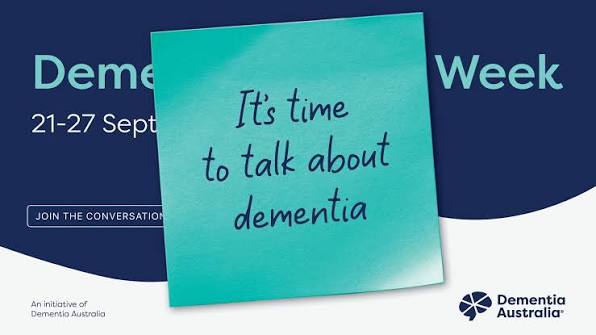
“It’s time to talk about dementia” is the theme of this year’s Dementia Action Week from 21 to 27 September. While some cases of dementia cannot be avoided, up to 45% of cases globally could be delayed or prevented by addressing 14 modifiable risk factors.
The Australian Government Department of Health, Disability and Ageing website has links to dementia risk reduction resources, including a personalised dementia risk reduction tool called CogDrisk, and resources for health professionals, Aboriginal and Torres Strait Islander people and multicultural communities.
Free, confidential support is also available through Dementia Australia via the National Dementia Helpline on 1800 100 500, 24 hours a day, 7 days a week.
GPs, nurses and other health professionals can also access free Continuing Professional Development (CPD) dementia training and education through Dementia Training Australia.
Care finders – supporting older patients with complex needs to access services

The care finders program provides free, intensive, face-to-face support to help eligible older people access aged care services and connect with other community supports. Care finders can assist with older people to engage with My Aged Care, arranging assessments, attending appointments, identifying suitable service providers, understanding service agreements, and linking people with health, housing, mental health and other community services.
For GPs, care finders offer a practical referral option for patients who may be at risk of missing out on support due to complex circumstances or limited informal support. By working alongside primary care, care finders help to ensure underserved older people can access the services they need to remain safe, connected and supported in their community.
To learn more about eligibility and how the program works, watch the care finders overview video: Care finders – supporting older patients with complex needs to access services.
To locate a care finder service in your area, visit the My Aged Care directory: Help from a care finder.
For eligible patients who need additional support to navigate aged care, a care finder referral can provide meaningful assistance.
Quality improvement
Care of older adults: focus on frailty

Australia’s population is ageing. More than one in three general practice encounters are with people aged 65 years and over. Older adults often have complex health needs, making regular health and functional assessments important for identifying unmet needs and enabling early intervention. General practice teams play a crucial role in supporting older adults to maintain their health and independence as they age.
A key goal for patients, practices and the broader health system is to prevent or delay functional decline, which can reduce quality of life and increase healthcare costs. Through continuity of care, primary care is well placed to recognise risk factors and early signs of frailty and functional decline.
Guidance on frailty assessment, management and referral advice for older adults is available through Clinician Assist WA Health and Frailty Assessment for Older Adults pathway.
Using Primary Sense to identify patients for review
Practices with access to Primary Sense can use the Frailty Care Management report, available through the Primary Sense desktop application. The report identifies patients with frailty indicators who may require review or confirmation of their frailty status. Practices can select a cohort of patients for review using any of the frailty indicators and apply their usual recall processes for the selected patients.
Quality improvement activity
Plan-Do-Study-Act (PDSA): Identifying and recalling this patient cohort provides a practical opportunity for a quality improvement activity. Practice teams can adapt a PDSA template to guide the process.
Further resources
- RACGP – Older persons’ health
- Improving the delivery of primary care for older people – PMC
- RACGP – Frailty
Access previous webinar recordings
Missed a previous webinar? Watch the recordings on the QI Channel: Quality improvement series – YouTube.


Practice news
Standards for general practices (6th edition) now available

The Royal Australian College of General Practitioners (RACGP) released the Standards for general practices (6th edition) on 26 August 2026.
The 6th edition introduces important updates for general practices and provides an opportunity to review current systems, identify gaps and prepare for future transition requirements.
The updated Standards reflect contemporary general practice, with a stronger focus on governance, digital health, patient participation, continuous quality improvement (CQI), artificial intelligence and environmental sustainability.
What’s new in the 6th edition?
Key updates include:
- Four core standards and an optional point-of-care testing standard
- Strengthened governance, planning, risk management, privacy and digital security requirements
- New focus areas including artificial intelligence, environmental sustainability and climate resilience
- Greater emphasis on patient participation, CQI, staff wellbeing and clinical risk management
Resources:
- Standards 6th Edition Hub
- Mapping of the Standards for general practices – 6th edition to 5th edition
Start preparing now:
- Review the RACGP 6th edition Standards and mapping resource to understand the key changes
- Check policies, processes, CQI activities, digital health and risk management systems
- Plan next steps with your team and seek guidance as needed
Accreditation transition to the 6th edition
Accreditation currently continues against the 5th edition while transition arrangements are finalised. Practices can start reviewing the 6th edition and considering any updates needed to existing systems, policies and quality improvement activities.
Further transition information will be communicated by the Australian Commission on Safety and Quality in Health Care.
Further support
For support, contact Practice Assist on 08 6278 7900 or email practiceassist@wapha.org.au
Upcoming webinar: RACGP 6th Edition Standards – Changes and Considerations for General Practices
Presented by RACGP
8 October (1pm to 2pm AWST) online
Register here for this free webinar.
National consultation on evaluation of mental health services and supports – Value in Mind project
Take part in a national consultation on how mental health services and supports should be evaluated for public funding in Australia as part of the project with “Value in Mind: Assessing the Economic Value of Mental Health Services and Supports in Australia” (Monash University Human Research Ethics Committee project ID 53282).
The project, led by Monash University and commissioned by the National Mental Health Commission, aims to support decision-makers to make evidence-based mental health investment decisions.
As part of the first stage of this work, a set of criteria is being developed that will be used to assess the value of mental health services and supports in Australia. Your input well help inform the development of this criteria list.
They are seeking input from a broad range of stakeholders to contribute, including people with lived and living experience of mental health services as consumers and/or carers, clinicians and service providers, policymakers and planners, researchers, and anyone with an interest in mental health services in Australia.
About the survey:
In this survey, they are seeking your views on:
- which criteria should be included when assessing the value of mental health services
- how important each criterion is
- how each criterion should be defined and measured
The survey takes approximately 30 minutes to complete and can be done online at a time that suits you.
The survey will be open until 27 September 2026 at 11:59pm (AEST).
Immunisation and cancer screening updates
Diphtheria outbreak: third severe respiratory case reported
There have been 234 diphtheria cases notified in the WA outbreak, mostly among Aboriginal people.
The third case of severe respiratory diphtheria was recently notified in metropolitan Perth.
Clinicians are urged to:
- Ensure children, adolescents and adults are up to date with scheduled diphtheria-containing vaccine
- Promote vaccination to all Aboriginal people in WA, and to all people in the Kimberley, Pilbara, Goldfields or Midwest, who have not received a diphtheria-containing vaccine in the last five years
- Maintain a low threshold to test for diphtheria in patients with suspicious skin lesions/wounds and/or pharyngitis/tonsillitis, particularly if epidemiological risk factors (e.g. contact with a case) or clinical features raise greater suspicion (e.g. pharyngeal/tonsillar exudate)
- Notify suspected or confirmed cases to your Public Health Unit or call 1800 434 122 if after hours
The Diphtheria CDNA National Guidelines for Public Health Units have now been published online.
Refer to WA diphtheria outbreak guidance, WA diphtheria outbreak guidance for primary and acute care and Therapeutic Guidelines for detailed treatment recommendations.
View the Infectious Diseases Health Alerts for Clinicians 7 September 2026.
Australia’s yellow fever entry requirements
The Australian Government Department of Health, Disability and Ageing recommends that travellers arriving from yellow fever risk countries or areas be vaccinated against yellow fever.
Australia does not refuse entry to travellers who have not had, or cannot prove they have had, a yellow fever vaccination.
On arrival in Australia, travellers must declare whether they have visited a yellow fever risk country or area in the previous six days. If they have, they may be asked to provide a yellow fever vaccination certificate.
Travellers who cannot provide a valid vaccination certificate will be referred to a Biosecurity Officer, issued an action card and allowed to continue through border processing. The action card advises travellers to seek medical attention if they develop symptoms of yellow fever within six days of arriving in Australia.
In Australia, the yellow fever vaccine can only be provided by an accredited practitioner at an approved Yellow Fever Vaccination Centre (YFVC). State and territory health authorities approve YFVCs and practitioners and can provide advice on the application process in their jurisdiction.
Further information on Australia’s yellow fever requirements is available in the National Guidelines for Yellow Fever Vaccination Centres and Providers and the Yellow fever fact sheet.
Vaccination Co-administration page
The Immunisation Coalition has launched a new ‘Vaccine Co-administration’ webpage, designed to make it easier for healthcare professionals to quickly find guidance on administering vaccines to patients at the same visit.
Information is sourced directly from the Australian Immunisation Handbook, with links to the relevant handbook sections for further guidance.
The Immunisation Coalition is currently trialling this page and is encouraging users to provide them with feedback. This can be completed directly on the page.
View the Vaccination Co-administration page here.
National Lung Cancer Screening Program and National Cancer Screening Register

The National Lung Cancer Screening Program (NLCSP) commenced on 1 July 2025. This Australian Government Department of Health, Disability and Ageing (DHDA) initiative supports the early detection of lung cancer in high-risk individuals who:
- Are aged between 50 and 70 years
- Currently smoke tobacco cigarettes or have a history of cigarette smoking, having quit within the past 10 years
- Have no signs or symptoms of lung cancer
- Have smoked the equivalent of one pack a day, or approximately 20 cigarettes per day, for at least 30 years
When assessing a patient’s smoking history and eligibility for the program, requesting practitioners should use their clinical judgement and the most accurate information available.
The NLCSP is a targeted screening program. Invitations to participate are not issued automatically by the National Cancer Screening Register (NCSR). The program uses low-dose computed tomography (CT) scans to support earlier detection of lung cancer, when treatment is more likely to be effective. Its objective is to save lives and improve participant outcomes.
The National Cancer Screening Register supports the NLCSP by:
- Managing participant information and issuing reminders to eligible individuals once they are enrolled in the program
- Providing healthcare providers with participant screening histories, excluding CT scan images
- Supporting mandatory reporting by radiologists to ensure lung cancer screening data is recorded accurately
- Collecting screening program data, including clinical diagnosis reports, to inform program pathways, support appropriate care, improve monitoring and evaluation and identify opportunities for continuous improvement
- Collecting histopathology and cytology results via HL7 from integrated pathology laboratories to ensure diagnostic data is captured and available to inform program pathways and clinical decision-making
Further information is available from the following sources:
- DHDA website: National Lung Cancer Screening Program
- DHDA website: National Cancer Screening Register
Practices may be eligible to integrate the NCSR with their practice software to support more efficient access and use of screening information.
For further information, contact Practice Assist on 08 6278 7900 or email practiceassist@wapha.org.au
Pertussis update 2026
Presented by Immunisation Coalition
23 September (4.30pm to 5.30pm AWST) online
Join the Immunisation Coalition for the latest Pertussis Update webinar.
This webinar provides viewers with an update regarding pertussis epidemiology, the burden of disease, current infection and vaccination rates, and recommendations across ages.
Register here.
COVID-19 vaccination in 2026: preparing for the transition to the National Immunisation Program (NIP)
Presented by National Centre for Immunisation Research and Surveillance
24 September (10am to 11.30am AWST) online
Join National Centre for Immunisation Research and Surveillance (NCIRS) for a practical webinar exploring what the transition of COVID-19 vaccines to the National Immunisation Program (NIP) means for immunisation providers.
Hear from experts on the latest evidence for COVID-19 vaccination, the rationale behind updated recommendations and how to prepare for implementation under the NIP.
Expert speakers will cover:
- Changes to COVID-19 disease epidemiology, vaccine eligibility and funding
- The updated recommendations and their practical application
- Practical tips to support patient conversations and decision-making
- Considerations for priority populations
- Changes to vaccine ordering and delivery arrangements.
Register here.
Education and events
Practice Manager Virtual Networking – October
Presented by WA Primary Health Alliance
1 October (11am to 12pm)

Join us for our October Practice Manager Virtual Networking Session, which will provide an opportunity for you to connect, discuss topics of interest, share information and raise questions with your WA Primary Health Alliance (WAPHA) support team and other local general practices.
When you register for each virtual session, you can indicate which topics you would like to be discussed by using the free text box.
To make the most of these interactive virtual sessions, you will need to have access to a microphone and camera, if possible.
To find out more, view the flyer and register today.
Webinar 5: Providing holistic health care to children from refugee-like backgrounds
Presented by WA Primary Health Alliance and WA Health
13 October (6pm to 7pm)

Join us for the fifth webinar in this series about refugee health in primary care, presented in conjunction with WA Health.
This webinar will provide an insight into the health of children from refugee-like backgrounds, the ongoing impact of their experience and the importance of a multidisciplinary team approach to improve outcomes.
To find out more, view the flyer and register today.
Building capacity in disaster preparedness and response for general practice
Presented by WA Primary Health Alliance
Ongoing eLearning training
These comprehensive eLearning modules are specifically designed to enhance participants’ knowledge and understanding of key emergency management principles and practices in Western Australia, including modules that are specific to roles within general practice, from General Practitioners to Practice Managers. Through interactive, scenario-based learning, participants will explore:
- WA State Emergency Management Arrangements
- Roles and responsibilities of Hazard Management Agencies
- The 28 Prescribed Hazards
- Command and Control structures in WA
- The Australian Warning System (AWS)
- Core concepts of Prevention, Preparedness, Response, and Recovery (PPRR)
- Emergency preparedness’ relevance to primary health care
Benefits:
- The module is available to all practices and will offer RACGP Continuing Professional Development (CPD) hours and other CPD options for other health professions
- Get your practice prepared for disaster to minimise the impact it will have on the business during disaster and maintain business continuity
- Gain information and insights to support your practice in meeting the RACGP standards for National General Practice Accreditation
Find out more information and access the course here.
WA Ear and Hearing Health Forum 2026
Presented by Rural Health West
5 November and 6 November

Rural Health West on behalf of their partners the Aboriginal Health Council of WA and the WA Child Ear Health Strategy invite you to attend the WA Ear and Hearing Health Forum 2026.
The Forum will be hosted at Parmelia Hilton Perth on Thursday 5 & Friday 6 November 2026. The two-day Forum will feature a plenary program showcasing community led ear health (and related) programs, research initiatives and innovative approaches to delivering culturally safe ear and hearing health care to children.
Don’t miss this opportunity to expand your knowledge and skills and help drive collaboration in ear and hearing health across WA! Registrations close Friday 23 October.
Find out more and register today.
Other Webinars, Events & Workshops
| BreastScreen WA mobile visit to Lamington Presented by BreastScreen WA 18 September to 22 October |
| Integrating Digital Resources into Mental Health Care Presented by Black Dog Institute 23 September |
| LGBTIQA+ Cancer Care Education Series Presented by ASHM 6 October |
| Hepatitis C for Nurses and Midwives Presented by ASHM 8 October |
| Sexual health management and care for nurses and midwives Presented by ASHM 9 October and 10 October |
| Viral Hepatitis in Primary Care Webinar Series Presented by ASHM 14 October |
Acknowledgement
WA Primary Health Alliance acknowledges and pays respect to the Traditional Owners and Elders of this country and recognises the significant importance of their cultural heritage, values and beliefs and how these contribute to the positive health and wellbeing of the whole community.