
Issue 256 – 15 October 2026

Welcome to Practice Connect, a fortnightly update for practice managers, principals, nurses and administration staff on relevant issues, upcoming events and education.
Medicare and MyMedicare updates
MBS changes for 1 November 2026

From 1 November 2026, several changes to the Medicare Benefits Schedule (MBS) will take effect. The updates include new telephone items for GP chronic condition management plans, the Medicare Healthy Kids Check for three-year-olds, medication review access, revised telehealth requirements and several administrative updates.
Thriving Kids Initiative
As part of the Government’s Thriving Kids Initiative, the Medicare Healthy Kids Check will be introduced for children aged three years. Recommended by the Thriving Kids Advisory Group, the check aims to support the early identification of developmental delay and neurodevelopmental differences to connect children and families with appropriate supports or referrals where needed.
The check does not have a new MBS item number and can be billed once per child using existing time-tiered health assessment items 701 to 707 for general practitioners or 224 to 227 for prescribed medical practitioners.
Further information is available at MBS Online – Medicare Healthy Kids Check.
Transition to GP chronic condition management plans
The transition period for legacy GP Management Plans (GPMPs) and Team Care Arrangements (TCAs) will end on 30 June 2027, after which a new GP Chronic Condition Management Plan (GPCCMP) will be required for continued access to allied health and domiciliary medication management review services.
Other key changes to general medical services
- Four new telephone attendance items will allow general practitioners and prescribed medical practitioners to prepare or review a GP chronic condition management plan by telephone. Items 92033 and 92034 apply to general practitioners, while items 92063 and 92064 apply to prescribed medical practitioners
- Participating nurse practitioners will be able to refer patients for bone mineral densitometry services described in items 12306 to 12322
- Telephone-based preparation and review of GP chronic condition management plans will count towards existing timing requirements. Preparation services are generally limited to once every 12 months and review services once every three months, unless exceptional circumstances apply
- Modified Monash (MM) location classifications will now be applied to align with the 2023 categories. Practices should check whether their revised classification affects the bulk billing incentive items they claim
- The term “residential care home” will replace “residential aged care facility” across relevant MBS tables and determinations, with no changes to fees
- Nurse practitioner telehealth items will align with standard telehealth eligibility requirements, including the 12-month rule unless an exemption applies
For more information and future updates, visit the MBS Online News webpage.
MBS Quick Guides
Download the latest MBS Quick Guide and MBS Telehealth Quick Guide to stay up to date with changes relevant to your practice. The MBS Quick Guide covers key general practice items, condensed into a handy printout.
For support with MBS changes, contact the Practice Assist Help Desk on 08 6278 7900 or via email at practiceassist@wapha.org.au
MyMedicare Minute from the Australian Government Department of Disability and Ageing

The Australian Government Department of Disability and Ageing “MyMedicare Minute” series provides bite-sized information to help general practice staff build their understanding of key MyMedicare updates.
Nominate your bank account to receive MyMedicare incentives
If you’re a provider or practice registered for MyMedicare, you need to keep your bank details updated to get your incentives.
Read the MyMedicare Minute edition for more details.
Practice news
South West Practice Manager and Practice Nurse Forums bring practices together
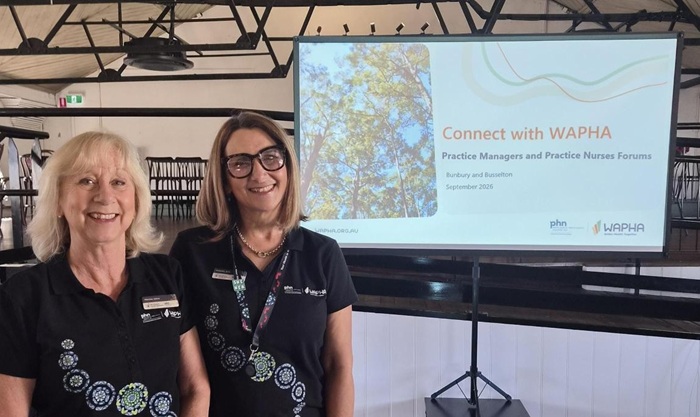
Marina Johns, Regional Integration Manager South West and Natacha Smit, Primary Care Navigator South West, WA Primary Health Alliance (WA)
WA Primary Health Alliance recently brought together practice managers, practice nurses and other general practice staff for two South West Practice Manager and Practice Nurse Forums, held in Bunbury on 23 September and Busselton on 24 September.
The forums provided an opportunity for local practice teams to connect, network and hear about practical updates and resources relevant to primary care. The program covered practice support topics including MyMedicare, Assignment of Benefits, accreditation change to RACGP 6th Standards, Better Access mental health changes, Healthy Kids Checks, upcoming WAPHA events and training and Clinician Assist.
Participants also heard from Rural Health West and the Rural Clinical School of WA about the South West Health Professionals Network and training hubs. Local commissioned services were showcased by South West Aboriginal Medical Service (SWAMS) and Oseca Health, covering a range of mental health, aftercare and chronic disease services available across the region.
The forums attracted staff from practices across Bunbury and surrounding communities, as well as Busselton, Dunsborough and Margaret River, providing a valuable opportunity to strengthen connections across the South West primary care community.
A big thank you to everyone who attended and contributed to the conversations, and to our presenters for sharing their knowledge and resources.
For information about upcoming events, visit the Practice Assist events page.
Perimenopause and menopause patient resources

Ahead of World Menopause Day on 18 October, information and resources are available to help health professionals support patients experiencing perimenopause and menopause.
Health professionals play an important role in supporting patients through this stage of life.
Available resources include:
- A poster to encourage patients to discuss potential symptoms during consultations
- A brochure on common symptoms, management and support options
- A symptom checklist patients can bring to appointments
- An infographic showing common symptoms and experiences
Access resources for your patients and learn more about the Australian Government Department of Health, Disability and Ageing’s National Menopause and Perimenopause Awareness Campaign.
Perimenopause and menopause training and clinical guidance
A range of free training and resources are available for health professionals to help build confidence and knowledge in patient-centred menopause care, including:
- Jean Hailes for Women’s Health Menopause Education Program
- Webinars covering menopause basics, mental health and menopause, and musculoskeletal conditions
- Information sheets and evidence-based modules available through the Australian Menopause Society
- The Quality Use of Medicines (QUM) Alliance resources, including a clinical guide and decision aid
Work is also underway on Australia’s first perimenopause and menopause guidelines. They are being developed with health organisations to provide evidence-based advice for health professionals and patients.
Keep up to date with the development of the clinical guidelines.
Waiting room resources about eating disorders for general practices

The InsideOut Institute for Eating Disorders has worked with lived experience consultants and the InsideOut GP Hub team to develop new waiting room resources for general practices.
The resources are designed to help practices create a more supportive environment for people experiencing eating disorders, improve staff knowledge and connect patients and carers with evidence-based support.
For further information, refer to the waiting room resources on the InsideOut website.
Primary care cultural safety resources
To support Aboriginal and Torres Strait Islander people with accessing culturally safe health care, the Partnership for Justice in Health has developed the following primary care cultural safety resources:
- Client-facing poster (Culturally safe care is a right, not a privilege), which highlights the health rights of Aboriginal and Torres Strait Islander patients
- Staff-facing poster (Cultural safety, it involves all of us), which promotes organisational responsibility, reflective practice and systemic safety
- Cultural safety poster pack brief, which outlines practical placement recommendations and guidance for driving cultural safety conversations in clinical settings
Visit the Partnership for Justice in Health website to download the free resources.
MND information for health care professionals
Information about motor neurone disease (MND) for health care professionals and service providers is available on the MND Australia website.
The information includes an overview of MND, the different types, diagnosis and symptom management, with an emphasis on a coordinated, multidisciplinary team approach to care.
To find out more, visit the health care professionals section on the MND Australia website.
Mental health
Medicare Mental Health offers free and confidential support

Medicare Mental Health is an Australian Government initiative that helps people access the mental health and wellbeing services that are right for them. Medicare Mental Health offers free and confidential support online, by phone or in person.
Medicare Mental Health website
The Medicare Mental Health website provides information about the available services as well as evidence-based digital mental health resources and online programs. To find out more, visit the website at medicarementalhealth.gov.au
Medicare Mental Health phone service
People can call Medicare Mental Health on 1800 595 212 between 8.30am and 5pm weekdays (except public holidays) for free mental health and wellbeing support. Callers will speak to a trained professional who can help them access local mental health services and support.
Medicare Mental Health Centres
Medicare Mental Health Centres offer free, confidential mental health information, services and support for adults aged 18 years and over. The centres are staffed by qualified professionals and people with lived experience of mental health challenges. No referral, diagnosis, appointment or Medicare card is required to access support. Find the nearest centre.
Medicare Mental Health Check In
Medicare Mental Health Check In provides free, online mental health support for people aged 16 years and over. The online service offers early support, before mental health challenges escalate, through evidence-based low-intensity cognitive behavioural therapy. People can work through the online tools on their own or with the support of a qualified mental health practitioner via telehealth.
Medicare Mental Health eReferral
While no referral is needed for a person to access Medicare Mental Health, referrals are welcomed. GPs can refer directly into the Medicare Mental Health intake system using the HealthLink SmartForm within their clinical software. For further details, watch the demonstration video about the referral process in HealthLink or visit the WAPHA website.
More information about Medicare Mental Health
To find out more about the free mental health and wellbeing services that are available and information for health professionals, visit the Medicare Mental Health website.
Immunisation and cancer screening updates
BreastScreen WA’s “Your Most Important Photo” campaign

This October, BreastScreen WA has launched its latest Breast Cancer Awareness Month campaign, “Your Most Important Photo”, reminding women aged 50 to 74 that a free, 15-minute screening mammogram is the best way to detect breast cancer early.
Early detection means treatment can be easier and women can get back to making memories sooner. Remind patients that it’s just a few minutes every two years, and it’s free. No referral is required.
General practices can show their support by downloading digital assets for use on their websites and social media channels. Limited-edition campaign posters and hard-copy resources are also available that can be ordered online for display in practices.
Patients can book online via the BreastScreen WA website or by calling 13 20 50.
2026 cancer screening packs for health care providers
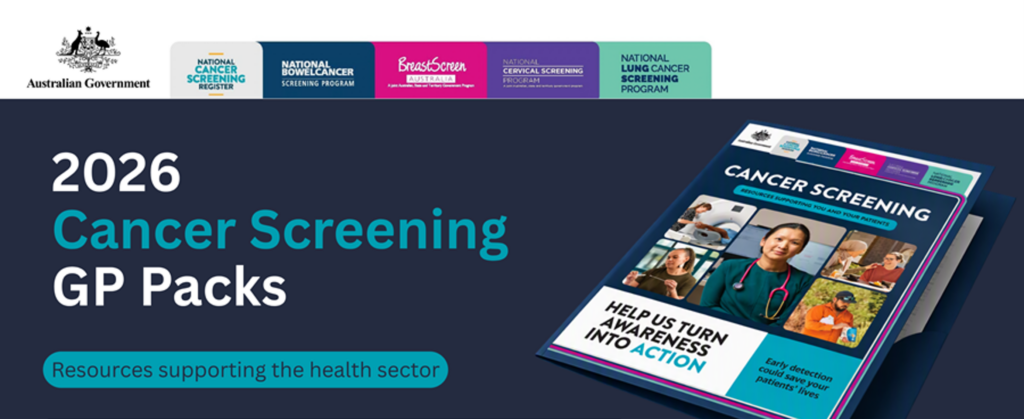
The Australian Government Department of Health, Disability and Ageing is supporting health care providers to discuss cancer screening with patients and increase participation in national screening programs.
Designed for busy primary care settings, the 2026 packs provide GPs with practical conversation starters and easy-to-use guidance on screening eligibility, pathways and options, helping turn awareness into participation.
Some resources, including fact sheets and posters, are available in other languages. More information and digital copies of the packs’ printed materials are available on the Cancer Screening Toolkit for Health care Providers webpage.
The Australian Immunisation Register vaccine type field option has changed

From 1 October, one of the options in the Australian Immunisation Register (AIR) vaccine type field has changed from “NIP/Commonwealth” to “National Immunisation Program (NIP)”.
Select the “NIP” field option when recording a NIP-funded vaccine. This change doesn’t affect vaccine eligibility, reporting requirements or historical vaccination records.
Find out more about the National Immunisation Program on the Australian Government Department of Health, Disability and Ageing website.
Diphtheria vaccination reminder for Aboriginal people in Perth
The WA Department of Health has issued a reminder for Aboriginal people living in Perth to check that they are up to date with their diphtheria vaccinations.
Diphtheria booster vaccine doses are available for people who have not had one in the past five years and who are:
- Aboriginal, or
- residing in the Kimberley, Pilbara, Goldfields or Midwest regions, or
- have regular face-to-face contact with Aboriginal communities in these regions
Refer to the latest diphtheria alert for further information.
Population to personalised: A cancer screening and early detection update
Presented by Cancer Council WA
7 November (8.30am to 1pm AWST) – hybrid (in-person and online attendance)
Overview: A half-day symposium on the current state of cancer screening and early detection in Australia, spanning national programs, emerging tools, and their implications for primary care.
Target audience: GPs, practice nurses, nurse practitioners, pharmacists, allied health professionals and Aboriginal health workers/practitioners.
Find out more and register here.
Education and events
Rural Generalist Single Employer Model (RG SEM) online information sessions
Presented by WA Country Health Service (WACHS)
26 October to 28 October (various times available)
Calling general practices in country WA that would like to be part of training the next generation of rural doctors.
The RG SEM trial supports trainees to complete Royal Australian College of General Practitioners or Australian College of Rural and Remote Medicine training across primary care and hospital settings.
WACHS will host four tailored online practice information sessions via Microsoft Teams for general practitioners, practice managers and other practice staff interested in learning more about the RG SEM trial. Please ensure you have access to Microsoft Teams before the session.
The sessions will provide an overview of:
- The RG SEM trial and how it works
- Benefits for participating practices
- Benefits for rural generalist trainees
- Roles and arrangements
- Questions and discussion
Please note: Registering for an information session does not commit your practice to participating in the RG SEM trial. The sessions are intended to provide information and allow practices to explore whether participation may be suitable for their organisation.
For further information about the sessions, view the flyer or contact the RG SEM team at WACHS.SEM@health.wa.gov.au
Building capacity in disaster preparedness and response for general practice
Presented by WA Primary Health Alliance
Ongoing eLearning training
These comprehensive eLearning modules are specifically designed to enhance participants’ knowledge and understanding of key emergency management principles and practices in Western Australia, including modules that are specific to roles within general practice, from general practitioners to practice managers. Through interactive, scenario-based learning, participants will explore:
- WA State Emergency Management Arrangements
- Roles and responsibilities of Hazard Management Agencies
- The 28 Prescribed Hazards
- Command and Control structures in WA
- The Australian Warning System (AWS)
- Core concepts of Prevention, Preparedness, Response and Recovery (PPRR)
- The relevance of emergency preparedness to primary health care
Benefits:
- The modules are available to all practices and will offer RACGP Continuing Professional Development (CPD) hours and CPD options for other health professions
- Get your practice prepared for disaster to minimise the impact it will have on the business during a disaster and to maintain practice continuity
- Gain information and insights to support your practice in meeting the RACGP standards for National General Practice Accreditation
Find out more and access the course here.
National Training – Initial Assessment and Referral (IAR) for mental health care
Presented by Australian Government Department of Health, Disability and Ageing
October and November (two online options available)
The Initial Assessment and Referral (IAR) Guidance and Decision Support Tool (IAR-DST) are designed to establish a national, standardised approach to conducting initial mental health assessments and support general practitioners and other health professionals to recommend the most appropriate level of care for a person seeking mental health support. The IAR-DST is an Australian Government Department of Health, Disability and Ageing initiative bringing together information from various sources, including Australian and international evidence and advice from leading experts.
There are two options to complete the training.
- Online live workshop:
The first component covers:
- The IAR, supporting guidance and stepped care in Australia
- The domains, levels of care and IAR-DST
The second component is a practical activity covering:
- Applying the IAR-DST to a consumer scenario
- Clinical judgement and supported decision-making
- eLearning Module
The self-paced eLearning module is for health professionals experienced in mental health assessment or treatment, as well as intake interviewers, care navigators and non-clinical staff. It can be completed at a convenient time and place.
Find out more and access the course here.
WA Ear and Hearing Health Forum 2026
Presented by Rural Health West
5 November and 6 November

Rural Health West on behalf of their partners the Aboriginal Health Council of WA and the WA Child Ear Health Strategy invite you to attend the WA Ear and Hearing Health Forum 2026.
The Forum will be hosted at Parmelia Hilton Perth on Thursday 5 and Friday 6 November 2026. The two-day Forum will feature a plenary program showcasing community-led ear health (and related) programs, research initiatives and innovative approaches to delivering culturally safe ear and hearing health care to children.
Don’t miss this opportunity to expand your knowledge and skills and help drive collaboration in ear and hearing health across WA! Registrations close Friday 23 October.
Find out more and register today.
Other webinars, events and workshops
| Supporting sexual health in domestic, family and sexual violence and women’s health services Presented by Centre for Women’s Safety and Wellbeing and ASHM 19 October |
| BreastScreen WA mobile visit Wyalkatchem Presented by BreastScreen WA 26 October to 27 October |
| Planetary health and the heart Presented by Heart Foundation 28 October |
| BreastScreen WA mobile visit Goomalling Presented by BreastScreen WA 28 October to 4 November |
| Hepatitis B prescriber update Presented by ASHM 3 November |
| Webinar for health professionals: Medicare Mental Health Check In Presented by Australian Government Department of Health, Disability and Ageing 4 November |
| Opportunities for sexual health in AOD settings: A whole of service response to syphilis Presented by ASHM 8 November |
| BreastScreen WA mobile visit Narrogin Presented by BreastScreen WA 9 November to 22 December |
| BreastScreen WA mobile visit Walpole Presented by BreastScreen WA 9 November to 11 November |
| BreastScreen WA mobile visit Denmark Presented by BreastScreen WA 12 November to 8 January |
| De-escalation skills: Core concepts Presented by WA Association for Mental Health 13 November |
| Recurrent urinary tract infections and bladder pain Presented by WA Pelvic Pain Foundation of Australia 14 November |
| GP education: Screening in women’s health Presented by LUMA 18 November |
Acknowledgement
WA Primary Health Alliance acknowledges and pays respect to the Traditional Owners and Elders of this country and recognises the significant importance of their cultural heritage, values and beliefs and how these contribute to the positive health and wellbeing of the whole community.