
Issue 236 – 8 January 2026
|
Welcome to Practice Connect, a fortnightly update for practice managers, principals, nurses and administration staff on relevant issues, upcoming events and education. |

Bulk Billing Practice Incentive Program
The Bulk Billing Practice Incentive Program (BBPIP) supports practices and providers to deliver more bulk billed services for all Medicare-eligible patients.
New eligibility assessments for the Bulk Billing Practice Incentive Program
General practices and providers can now monitor and confirm eligibility for BBPIP incentive payments with new BBPIP eligibility assessments available through Services Australia.
Through HPOS, practices and providers participating in BBPIP can use:
- Forecast assessment to check eligibility requirements, monitor bulk billing percentages,
- and estimate practice payments at any point in the quarter.
- Final assessment to confirm if requirements for BBPIP payments have been met and view
- the final payment after the end of the quarter.
- BBPIP payment details to view the Services Australia incentive payment for each quarterly
- assessment period, available after the quarter ends.
- MYMEDM05-MyMedicare – Bulk Billing Practice Incentive Program (BBPIP) Health Professionals Education Module includes detailed information and screenshots of the forecast tool on slides 5 – 10. Please click on the ‘Forecast Assessment’ button on slides 5, 6.

BBPIP Payments
If a practice is registered and meets program requirements, the first BBPIP incentive payment will be made in January 2026.
To ensure smooth payment, practices should:
- Check the registration start date.
- Each GP at your practice has individually logged into PRODA and added bank account details for BBPIP. See Adding provider bank account details for BBPIP for step-by-step instructions. This can be done up to one year after the BBPIP payment is due, however it is recommended that account details are entered as soon as possible to avoid delays in payments.
- Keep accreditation up to date.
- Link all providers with separate provider numbers for each site.
Practices and providers can access forecast assessments, and from mid-January 2026 can review assessments. Practices can opt out and opt back in to BBPIP.
Education resources are now available via the Services Australia website. Practices can order bulk billing signage materials online.
For more information on payments and assessment tools, visit the Department of Health, Disability and Ageing Information updates for BBPIP or Services Australia Bulk Billing Practice Incentive Program.
MyMedicare webpage updated on the Practice Assist website
The latest MyMedicare update on the Practice Assist website makes it easier to find resources for implementing MyMedicare tools, supporting safer, more efficient, and higher quality healthcare.
Subjects included in the program include:
- Bulk Billing Incentive MBS items
- The Bulk Billing Practice Incentive Program (BBPIP)
- New eligibility assessments for the Bulk Billing Practice Incentive Program
- BBPIP payments
- Changes to Mental Health item numbers under Better Access redesign
- Increased rebates for Long-Acting Reversible Contraception
- MBS Telehealth arrangements
- Changes to MBS Chronic Disease Management Framework from 1 July 2025
- Chronic Conditions Management (CCM) Activation Series
- Strengthening Medicare General Practice in Aged Care – Quality Improvement Toolkit
- Patient information about MyMedicare
- Other MBS information
Practice Assist pages and Tool Kits will continue to be reviewed and updated as we receive new information and to ensure you are kept up to date.
For further information on all of the above changes, or if you would like to provide feedback and suggestions about the Practice Assist website, contact Practice Assist or your Primary Care Navigator on 08 6278 7900 or via email practiceassist@wapha.org.au

Practice Assist news and updates
Happy New Year from the team at Practice Assist, we look forward to another year of working with you and your practice team.
For support with your general practice enquiries, contact Practice Assist or your Primary Care Navigator on 08 6278 7900 or via email practiceassist@wapha.org.au
2026 General Practice Assist Year Planner
The Primary Care Navigator team have created a General Practice 2026 Year Planner to remind you of important dates including:
- PIP and WIP quarters
- Shared Health Summary Uploads
- Events and Training
- Practice Connect newsletter publication dates
- Other consideration for your practice
The General Practice 2026 Year Planner allows you to customise to your practice needs once printed.

Practice Assist Hours
From 5 January we will be making the following changes to our service:
- Operating hours will be from 8:30am to 4:30pm Monday to Friday excluding public holidays.
- Our phone number is changing to 08 6278 7900, with the 1800 number no longer in operation.
We look forward to continuing to support WA general practices in 2026.
Practice Assist Website Maintenance
Practice Assist would like to advise that over the next few weeks the Practice Assist website will be undergoing some maintenance to ensure that we are up to date and functioning well to support general practice in WA.
This maintenance may cause some temporary interruptions to website access.
If you experience any issues accessing our website and would like support from the Practice Assist team please contact Practice Assist or your Primary Care Navigator on 08 6278 7900 or via email practiceassist@wapha.org.au
Practice Assist Digital Health Tool Kit and webpage updated

The Digital Health Tool Kit on the Practice Assist website has been updated to streamline access to resources to support implementation and adoption of digital health tools that support safer, more efficient and higher quality healthcare.
Subjects included in the tool kit include:
- Healthcare Identifiers (HI) Service, Provider Digital Access (PRODA) and Health Professionals Online Services (HPOS)
- My Health Record
- Electronic Prescriptions
- Secure Messaging
- eRequesting / eOrdering
- Telehealth and Virtual Care
- Provider Connect Australia
- Digital capacity for general practice
Practice Assist pages and Tool Kits will continue to be reviewed as we receive new information and to ensure you are kept up to date.
Visit the Practice Assist website now for resources related to the running of your practice. We welcome your feedback and suggestions via email to practiceassist@wapha.org.au or calling 08 6278 7900.
Advance Care Planning (ACP) Tool Kit now on Practice Assist

Practice Assist has published an Advance Care Planning (ACP) Tool Kit, which is designed to assist general practices in Western Australia with undertaking ACP as part of routine care.
The ACP Tool Kit provides easy access to a range of information, resources and educational opportunities, organised under the following topics:
- Overview of ACP and the ACP process
- WA ACP guides and documentation
- ACP legislation and law
- ACP in general practice
- Culturally safe and inclusive resources
- ACP support and assistance
- ACP videos for health professionals
- ACP and voluntary assisted dying (VAD)
To assist with ACP in general practice, the tool kit features targeted information and quality improvement initiatives to embed ACP into routine health assessments, which can help ensure ACP conversations occur proactively with patients.
For further information about the ACP Tool Kit, call Practice Assist on 08 6278 7900 or email practiceassist@wapha.org.au
Start the new year safe and aware

The holiday period has ended, and we commence 2026 in a very warm summer for Western Australian. WA is still experiencing its high-risk period with threats of heatwaves, fires, floods and storms impacting the state.
Help your patients, and practice, begin the year well‑prepared by directing them to reliable safety and emergency information.
Who is at risk?
- Patients with asthma or respiratory illnesses.
- Children, older people, pregnant women, people experiencing homelessness and those living with a disability.
- Patients living with chronic conditions and/or on multiple medications.
- Patients that are unable to respond due to dementia, disability, or other factors.
- Those impacted by environmental factors e.g., outdoor workers.
- Aboriginal population living in remote areas.
How can general practice assist?
Encourage patients at most risk to prepare and plan:
- Encourage the use of reliable and up to date emergency information (Emergency WA).
- Have sufficient medications on hand,
- Review care plans for patients with asthma or respiratory conditions.
- Encourage patients to utilise digital health tools such as My Health Record, which can assist patient care during emergency situations.
Here are 6 key resource webpages that will help you to move into the new year better prepared:
- Road Travel – look before you leave – Check to make sure roads are open and be aware of traffic hazards ahead of leaving.
- Emergency WA – Save this site on your computer or download the app on your phone to always be aware of new and emerging concerns in your area.
- Australian Warning System – Learn about the Australian warning system so you know when to prepare, stay or go during emergencies.
- Heatwaves and Be prepared for extreme heat – Learn about the risk of heat to yourself and family from the Department of Health.
- Bushfires and Bushfire plan – Learn about bushfires and complete a bushfire plan using the quick and simple templates available through Department of Fire and Emergency Services.
- Cyclones and Storms – Read about cyclones and storms and learn about how you can prevent, prepare, respond and recover from cyclones and storms.
Free accredited training in disaster preparedness for general practice
Provided at no cost to the practice, “Building capacity in disaster preparedness and response for general practice” is a bespoke, accredited online learning package from WAPHA designed to equip GPs, and practice teams to manage patient flow, prioritise resources, and maintain continuity of care, particularly for those with chronic conditions and mental health needs.
Learn more about this available training here.
New trauma-informed care resource for general practice teams
The Healing Foundation has released its easy to use fact sheet designed specifically to support GPs, practice managers and clinic staff to provide trauma informed, survivor-centred care for Stolen Generations survivors and their families.
The fact sheet outlines how certain clinical situations, such as rushed consultations, unclear explanation of procedures, or authoritative tones can unintentionally trigger trauma. It also offers simple ways GPs can help survivors feel safe and respected, including taking extra time to explain processes, offering choice, and working with Aboriginal and Torres Strait Islander health organisations where possible.
The GP guide, co-developed with survivors and sector partners, includes practical, day-to-day tips.
“Survivors have told us what harm looks like and how we can be safer, and these resources reflect their voices and lived experience,” The Healing Foundation CEO Shannan Dodson said.
“By listening to survivors and applying trauma-informed, culturally safe approaches, we can ensure older Stolen Generations survivors receive the care, respect and understanding they deserve.”
Download the GP fact sheet:
Decommission of the NPS MedicineWise and Doctor’s Bag mobile applications
In January 2023, the MedicineWise (MWA) and Doctor’s Bag (DBA) mobile applications were transitioned from the former NPS MedicineWise to the Australian Commission on Safety and Quality in Health Care (the Commission). MWA enables consumers and health professionals to track their medicines and access health and medicines information. The MWA was launched in June 2017. The DBA presents health professionals with medicines information during a medical emergency for medicines subsidised via the Pharmaceutical Benefits Scheme. The DBA was launched in May 2015.
The Commission has conducted a review of both apps to assess:
- the uptake of the apps by consumers, carers and clinicians
- the utility of the apps
- the resources required to maintain the apps
- quality, safety and privacy risks
- alternate products available in the market
Key findings relating to the MWA were that usage and retention of the app were low, the value proposition is not unique nor competitive and that the effort required to maintain safety, quality, and privacy are significant, when considered in proportion to the low number of active users.
Key findings relating to the DBA were that usage was low and those users reported limited value in the DBA, as General Practitioner’s typically referred to published guidelines when verifying dosages and administrative requirements.
Based on the findings of this review the Commission has made the decision to decommission both mobile applications at midday AEDT, Tuesday 10 February 2026.
The MWA will no longer have full functionality on users’ devices after the discontinuation date. Communications have been sent directly to users of the MWA along with guidance on how to find alternate products and instructions on how they can download or remove their data.
Although users of the DBA will be able to continue to use the app as it is native to the device, it is not recommended given the information provided in the app will no longer be updated.
If you require further information, please email QUMCustomerService@safetyandquality.gov.au
Maintain benzathine benzylpenicillin stock in your Doctors Bag
The TGA has reported that the current Bicillin L-A (benzathine benzylpenicillin, Pfizer) shortage has been extended until 23 January 2026.
Lentocillin S 1200 benzathine benzylpenicillin is a TGA-approved, PBS-listed alternative (see About the shortage of Bicillin L-A). It is a powder requiring reconstitution with a diluent (packaged with the powder) which contains lidocaine to reduce the pain associated with treatment.
Benzathine benzylpenicillin should be prioritised for use in the following conditions:
- Treatment and secondary prophylaxis of acute rheumatic fever (ARF), and secondary prophylaxis of rheumatic heart disease (RHD).
- Patients who require treatment for group-A streptococcal infection of the respiratory tract and skin who are at high risk of acute rheumatic fever, rheumatic heart disease or acute poststreptococcal glomerulonephritis (APSGN), where oral therapy is not acceptable or the likelihood of non-adherence is high.
- Treatment for syphilis in proven or suspected cases, or if identified as a sexual contact of syphilis.
To ensure your patients’ access to benzathine benzylpenicillin:
- Maintain adequate stock in your doctor’s bag.
- Contact your local public health unit if urgent supply is needed for a patient with infectious syphilis, or contact a public sexual health or infectious diseases clinic to refer the patient for urgent treatment.
- Be aware that emergency supplies are available directly from Pfizer Australia (call 1800 675 229 for information).

More measles cases detected
There were 63 cases of measles identified in WA in 2025, with many of these cases being from returning overseas travellers.
View the full list of recent exposure sites here.
Measles is a highly contagious but preventable through vaccination.
WA Health has issued a reminder to people who are travelling overseas during the Christmas and new year holidays to ensure that they are fully protected against measles.
Patients can receive another dose of MMR vaccine if they are unsure if they have previously received two doses.
Patients born after 1965 who do not have evidence of having received two doses of a measles vaccine can access a government-funded MMR vaccine from their GP.
Infants that are travelling can also receive a government – funded MMR from 6 months of age from their GP. If an infant receives an MMR vaccine before 12 months of age, they will still need to receive two further doses after 12 months of age.
For further information of the Measles Immunisation Program, click here.

New ATAGI statement on the importance and safety of Hepatitis B vaccine at birth
The Australian Technical Advisory Group on Immunisation (ATAGI) has recently published advice on the importance and safety of Hepatitis B vaccine at birth and reaffirmed its recommendations for infants and children.
This early protection is a key part of Australia’s National Immunisation Program, helping reduce Hepatitis B among children and into adulthood.
It is important that all children complete the full Hepatitis B vaccine series, as household transmission remains a significant risk. Up to 50% of children who become infected in childhood have acquired hepatitis B infection from household contacts who don’t know they are infected.
Further details about hepatitis B vaccination, including effectiveness and safety, can be found in the Australian Immunisation Handbook – Hepatitis B chapter.
View the full ATAGI statement (11 December) here.
Immunisation requirements for childcare services, kindergarten and schools

In July 2019, the “No jab, no play” legislation came into effect aimed at increasing the vaccination rates of children in Western Australia and to better protect the community from vaccine preventable notifiable infectious diseases.
Under the No jab No Play legislation a child’s immunisation status must be up-to-date according to their Australian Immunisation Register (AIR) immunisation history statement to be permitted to enrol into long day care, family day care, pre-kindergarten or kindergarten.
To assist education sector to implement this legislation, general practices need to ensure children are up to date with their immunisations prior to enrolling.
How can you help:
- Recall any child turning 4 due for vaccination
- Checking AIR for all children attending the practice
- Offer catch up plans for those in need
- Print off AIR statements for parents to show schools
For further information and resources regarding the No Jab No Play requirements, click here.
The AIR “Planned catch-up for overdue vaccines” tick box
An Australian Immunisation Register (AIR) planned catch-up gives individuals additional time to receive vaccines overdue under the National Immunisation Program (NIP) for the purpose of being eligible for family assistance payments and enrolment in early learning services.
Planned catch-ups are:
- only valid once
- available to individuals under 20 years of age
- only valid for 6 months.
A vaccination provider can indicate a planned catch-up where:
- all overdue vaccines were unable to be administered at the appointment
- serological testing for natural immunity has been ordered and results are pending
- vaccines required for administration have been ordered
- a child is being enrolled into an early childhood service.
For further information on the catch up tick box and how to record a catch up, click here.
ABRYSVO – Shelf life extension
Pfizer Australia Pty Ltd advises that, following the Therapeutic Goods Administration (TGA) approval, the shelf life of some listed batches of ABRYSVO is extended an additional 48 months.
The requirement to store ABRYSVO in a refrigerator (2°C – 8°C) prior to reconstitution remains unchanged.
If you have stock with the affected batches, you will be mailed stickers with your vaccine delivery starting in two weeks.
Steps that you need to take and affected stock are listed in the latest Vaccine Update here.
If you are not already subscribed to Vaccine Updates or did not receive the email already, subscribe today.
Immunisation Coalition webinars
The Shingles Update webinar from November 2025 is now available to view on the Immunisation Coalition website.
In addition to this webinar, The Immunisation Coalition has a catalogue of webinars from the past 12 months (and prior) all available to watch on demand via their YouTube channel.
To view the Shingles Update, click here.
To see the catalogue of other webinars, click here.

National lung screening campaign

The It’s Good to Know (IGTK) campaign is now live to raise awareness and participation in the National Lung Cancer Screening Program.
The campaign aims to raise broad awareness of the National Lung Cancer Screening Program among eligible Australians (Aged 50 to 70 with a history of smoking) with a focus on priority audiences and encourage conversation with their healthcare provider about lung cancer screening.
Visit lungcancerscreen.org.au for more information and access to resources.
Bowel cancer screening education

The GPEx National Bowel Cancer Screening Program learning hub is designed for GPs, nurses, practice staff, Aboriginal health workers, tertiary specialists, and allied health professionals.
The hub includes:
- CPD-accredited training and events
- Downloadable resources and up-to-date clinical guidance
- Practical tools to help boost screening participation
Access the learning hub here.
WACCPP – Out and about in WA
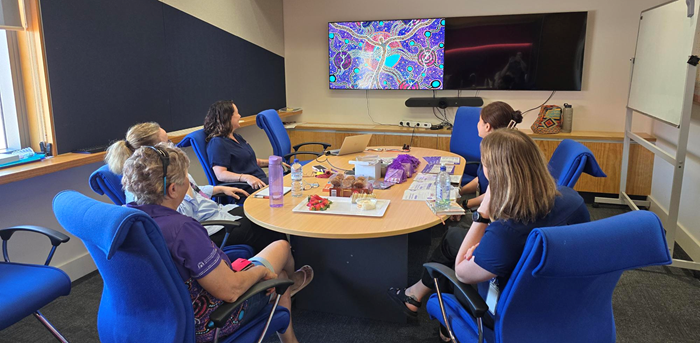
During 2025 The WA Cervical Cancer Prevention Program (WACCPP) team have been attending health promotion and health education events to engage both community and health professionals in discussions about cervical screening.
The team reached thousands of women and people with a cervix (and their health professionals).
If you are thinking of hosting an event in 2026 the WACCPP is happy to be involved.
They can host an information stall, run an education session or tailor an education event for a range of health professionals including GP’s, practice nurses and managers.
They also have a range of resources to display (on loan) and handout.
To book WACCPP, email them cervicalscreening@health.wa.gov.au
To access and order resources, click here.
To request loan equipment, click here.

Help improve team-based primary health care
Do you work as a general practice nurse, nurse practitioner, physiotherapist, or an Aboriginal and/or Torres Strait Islander health worker or practitioner?
The University of Sydney is conducting a national research project to learn more about how you support care in:
- general practices
- Aboriginal Medical Services
- Aboriginal Community Controlled Health Services.
The project will use the OCEAN tool, a safe online platform that collects de-identified information from 100 patients per health professional about:
- the health service
- the health professional’s background and experience.
This research will help to understand what you do and what skills you use. It will also support better teamwork in primary health care and help shape future health policies.
Learn more about the project by visiting ocean.sydney.edu.au or by contacting the research team by phone or email.
Phone: 1800 2 OCEAN (1800 262 326)
Email: ocean.study@sydney.edu.au
Registered Nurse Prescribing Endorsement – Consultation Opportunity
On the 30 September 2025, the Nurses and Midwifery Board of Australia published the Endorsement for scheduled medicines designated RN prescriber, which will allow suitably qualified registered nurses to prescribe scheduled medicines 2, 3, 4 and 8 in partnership with an authorised health practitioner.
Registered nurses will be required to undertake an approved postgraduate course of study, and are authorised to prescribe within a clinical governance framework, under a prescribing agreement with an autonomous prescriber, and in accordance with their scope of practice and state and territory medicines and poisons legislation and regulations.
Amendments to the Medicines and Poisons Regulations 2016 are required to authorise designated registered nurse prescribers to issue prescriptions.
Additionally, the Pharmacy Board of Australia recently announced a prescribing endorsement will be developed for pharmacists, and once this occurs, pharmacists will similarly require a prescribing authorisation under the medicines and poisons regulations.
The Western Australian Department of Health is undertaking consultation on regulatory amendments to support prescribing by designated registered nurse prescribers and pharmacists.
Stakeholders working across all health settings, (hospitals, community health, primary care, aged care and justice settings for example) are encouraged to participate.
Details of the consultation, including a discussion paper and an online survey are available on the Department’s Consultation Hub here.
Stakeholders are encouraged to complete the online survey. Responding via the online survey ensures accurate capture of your opinion about each consultation question you answer.
The consultation closes on 2 February 2026.

Nurse Forum 2026 – Primary Care Nurses Day Celebration
Presented by WA Primary Health Alliance
4 February (5:30pm – 8pm)

WA Primary Health Alliance (WAPHA) invites you to attend the Nurse Forum 2026 – Primary Care Nurses Day Celebration.
With the theme of Sustaining Primary Care Nursing: Wellbeing in Practice, the forum aims to provide a dedicated and supportive space for practice nurses from across our region to connect, reflect and strengthen their role within primary care.
To find out more, view the flyer and register today.
Practice Manager Virtual Networking Session
Presented by WA Primary Health Alliance
5 February (11am to 12pm)
Join us for the first Practice Manager Virtual Networking Session to connect, discuss topics of interest, share information and raise questions with your WAPHA support team and other local general practices.
When you register, you can indicate which topics you would like to be discussed. The topics could be about anything that is important to your practice or information on practice-related matters such as accreditation, reform measures, incentives, MyMedicare, digital health, quality improvement, immunisation, cancer screening or WAPHA programs and projects.
To find out more, view the flyer and register for session one today.
APNA Mental Health First Aid
Presented by APNA and supported by WA Primary Health Alliance
3 March to 12 March (various locations)
Mental health matters. One in five Australians experience mental health concerns each year, and primary health care nurses are often the first point of support.
Join APNA’s Mental Health Education Program—designed for nurses, by nurses—to build the skills, knowledge, and confidence to make a real difference.
- Expert-led sessions by APNA nurse & licensed MHFA instructor
- Practical strategies for early intervention
Format: approx. 7 hours of online learning (to be done first) + hard-copy workbook posted to you + 5hr face-to-face workshop
Locations: South Metro Perth, Kalgoorlie, Geraldton, Broome, North Metro Perth, Bunbury
Places are limited – view the flyer for more information.
Practice Manager Forum: Futureproofing your general practice
Presented by WA Primary Health Alliance
27 March (9am to 3pm)

Join us for an engaging and informative in-person event designed to support WA general practices with navigating key changes, embracing innovation and strengthening quality improvement.
General practice is evolving rapidly, from accreditation reforms and privacy legislation updates to the integration of AI and digital tools.
The Practice Manager Forum will bring together primary care professionals to explore these changes, share insights and connect with support programs that enhance practice sustainability and patient care.
To find out more, view the flyer and register today.
Free accredited training in disaster preparedness for general practice
Presented by WA Primary Health Alliance
Ongoing e-learning training
Western Australia faces recurring bush fires, floods and other natural disasters, and GPs are the local health professionals working in the community before disasters strike and remain after responders leave.
Provided at no cost to the practice, “Building capacity in disaster preparedness and response for general practice” is a bespoke, accredited* online learning package from WAPHA designed to equip GPs, and practice teams to manage patient flow, prioritise resources, and maintain continuity of care, particularly for those with chronic conditions and mental health needs.
Taking approximately 12 hours to complete (at your own pace), with modules tailored to specific roles within the practice team, participants will learn:
- Practical strategies for disaster preparedness, response, and recovery in primary care
- Maintaining continuity of care and managing patient demand during crises
- Resource prioritisation and supporting priority populations
- Coordinating with local health districts, emergency services and public health agencies
- Building practice resilience, safety systems and structured disaster management processes.
*RACGP Accredited for 11.5 hours (6 EA, 3 RP and 2.5 MO).
Nurse Re-entry Program – Supporting Nurses and Practices
The Nurse Re-entry Program is an Australian Government initiative supporting general practices to build their capability by hosting nurses in supervised placements. The program helps nurses who haven’t practised in the last 5-10 years to return to the workforce through paid, supervised placements in general practice. The program also supports nurse practitioners transitioning into general practice.
Eligible nurses are matched with accredited general practices to complete their placement, meet NMBA requirements and regain full registration.
This program also benefits practices by strengthening their teams, training nurses in-house and creating efficiencies. Eligible practices may receive a grant to support participation and there is no obligation to employ the nurse permanently after the placement is complete.
They coordinate the matching process, confirm supervision requirements and provide resources to guide you.
Expressions of interest are now open. Nurses can submit an EOI to return to practise and practices can submit an EOI to host a placement.
For more information, contact the Nurse Re-entry Program team via email.
Rural and remote retrieval weekend
Presented by Rural Health West
7 to 10 May (Karijini National Park)
Join Rural Health West in one of Australia’s greatest and most spectacular landscapes – the truly magnificent Karijini National Park.
By day be spellbound by the contrasting Pilbara blue skies against the classic red rock formations, as you wind your way through gorges to undertake emergency medical scenarios. At night, socialise under a canopy of stars with fellow participants.
The weekend provides participants with the opportunity to learn about the management of medical emergencies in a remote environment with limitations in equipment, personnel and resources.
Register here.
Other Webinars, Events & Workshops
| STI Testing in Primary Care: Western Australia Presented by ASHM Ongoing learning module and webinar |
| Enhancing Syphilis Awareness: Engaging Communities and Health care Providers Presented by ASHM Ongoing learning module and webinar |
| BreastScreen WA mobile visit to Esperance Presented by BreastScreen WA 5 December to 18 March |
| Standard One of the National Palliative Care Standards Presented by Palliative Care Australia 18 December |
| BreastScreen WA mobile visit to Nannup Presented by BreastScreen WA 6 January to 13 January |
| BreastScreen WA mobile visit to Tom Price Presented by BreastScreen WA 7 January to 12 January |
| BreastScreen WA mobile visit to Paraburdoo Presented by BreastScreen WA 13 January to 15 January |
| BreastScreen WA mobile visit to Narrogin Presented by BreastScreen WA 15 January to 29 January |
| National Hepatitis B s100 Prescriber Course Presented by ASHM 3 February and 10 February |
| WA HIV s100 Prescriber Course Presented by ASHM 7 February and 8 February |
| Certificate in Sexual and Reproductive Health: In-person nurses’ course Presented by SHQ 16 to 19 February |
| Contraceptive Implant Theory: In-person training Presented by SHQ 16 February |
| Cervical Screening Training: In-person Presented by SHQ 18 to 19 February |
| De-escalation Skills Presented by Western Australian Association for Mental Health 24 February, 9 April and 29 June |
| Sexual and Reproductive Health Australia National Certificate for Doctors: In-person Presented by SHQ 9 to 13 March |
| Understanding Vicarious Trauma: Tools for helping professionals Presented by Western Australian Association for Mental Health 11 March and 8 May |
| WA Rural Health Conference 2026 Presented by Rural Health West 14 March and 15 March |
| Course in Ear Wax Removal (Microsuction) Presented by Benchmarque Group 26 March |
| Course in Ear Wax Removal (Irrigation) Presented by Benchmarque Group 27 March |
| National Hepatitis B s100 Prescriber Forum Presented by ASHM 27 March |
Acknowledgement
WA Primary Health Alliance acknowledges and pays respect to the Traditional Owners and Elders of this country and recognises the significant importance of their cultural heritage, values and beliefs and how these contribute to the positive health and wellbeing of the whole community.